The secret lives of big cats: Q&A with WWF-Canada’s Rinjan Shrestha
Over the 15 years that Rinjan Shrestha, WWF-Canada’s lead specialist on Asian big cats, has worked here, he’s conducted critical research and supported international conservation efforts of wild tigers, snow leopards and clouded leopards as well as elephants and rhinos.
So we sat down with Rinjan, who told us how a couple of baby big cats got him into this field and where his crucial conservation work is heading.
You originally trained in forestry, but your early work in Nepal changed the course of your career. What’s the story behind this photo?
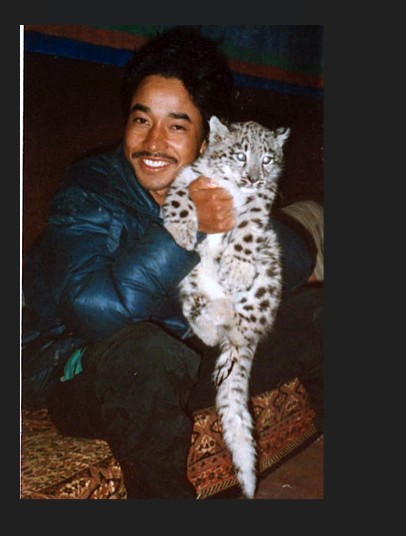
That picture was taken in 1995, during my first assignment with an environmental organization. As soon as I completed my undergrad degree, I joined a national NGO in Nepal, and they had an opening in a remote area called Mustang. My job was to oversee the reforestation work there.
One day, a local herder brought an orphaned baby snow leopard to our office. It was not more than two or three weeks old. Unfortunately, the cub died after two days.
Later, another herder brought an orphaned lynx. We thought lynx had disappeared from that part of the world because there had been no reports or sightings in the previous 30 years. I didn’t even know that it was a lynx, it was so small. But we were the only NGO working in that area, and we had a field office that was accessible to local people. My supervisor asked me to bring the lynx down to headquarters.
The lynx slept with me for two months. Eventually, I brought it to a zoo, and it survived for 15 years!
After joining WWF-Canada in 2013, you were part of a historic expedition to track snow leopards in Nepal. Why is that so important?
We know very little about snow leopards. They live in some of the remotest regions in Asia, such as the Himalayas, so studying them is notoriously challenging. To protect them, we really need to know how large an area they need, what habitat they prefer, and whether they have adequate food. This is why we track them — to understand their secretive world.
You put GPS collars on four snow leopards and collected location information from them every four hours for almost two years. (Read the peer-reviewed study here.) What was the most surprising thing from that data?
We learned that snow leopards need large swaths of habitat, about 100 times more than what we originally thought. It means that to provide adequate space for snow leopards to roam, we need to connect isolated patches of protected areas through what we call “biological corridors.” Another finding was that we recorded the highest altitude for any wildcat: nearly 6,000 metres above sea level.
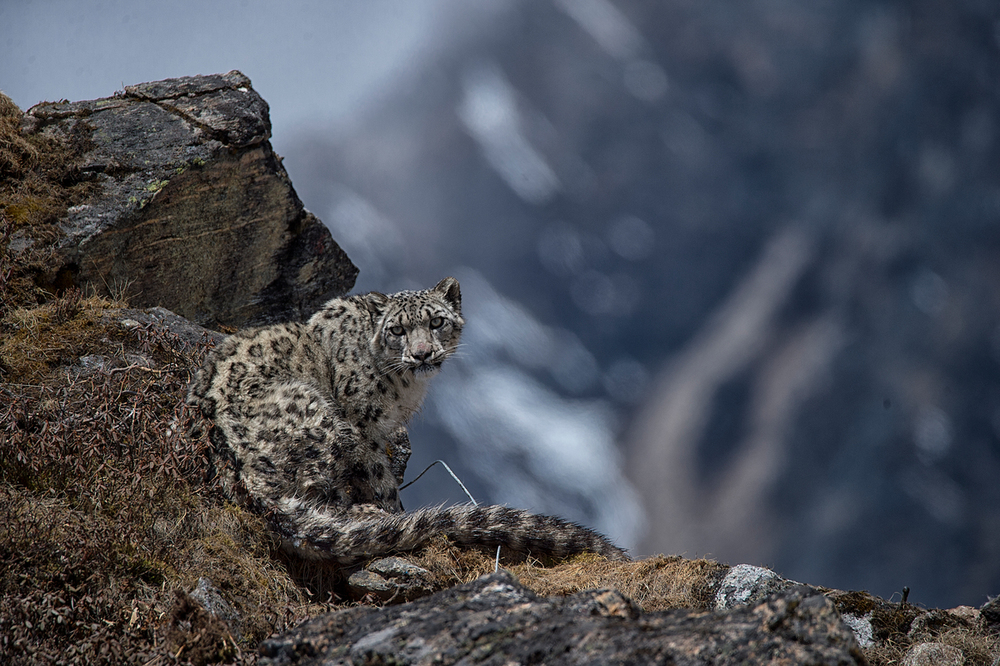
© Sanjog Rai / WWF-Nepal
Also, they make frequent international trips to neighbouring countries — spending nearly third of their time outside of Nepal. This reinforces the fact that conserving snow leopards is not just a job for one country.
Can you describe some of the challenges facing snow leopards?
Human-snow leopard conflict is one of the fundamental issues. Snow leopards have killed livestock, sometimes a hundred at a time. It’s devastating for people. Snow leopard habitats also are increasingly being converted for human uses — roads, dams, settlement, etc. — so habitat degradation and fragmentation is another threat. Finally, climate change impacts: As their alpine habitat gets warmer and wetter, the tree line moves up. That pushes snow leopard habitat up, making it narrower and narrower.
How do we build support for conservation with those communities when they’re facing those kinds of pressures?
Without the support of local people, we would not be able to do anything. We need to hear their voices as well.
One highlight is an insurance program supported by WWF and other conservation partners called the Livestock Insurance Scheme. If livestock gets killed, locals will be covered for their loss. They contribute the equivalent of around five to ten dollars per year, with the rest being covered through an endowment fund that WWF helped build. The losses are covered using the interest generated from the endowment.
Another solution is predator-proof corrals that we’re distributing so predators like snow leopards cannot kill livestock. For other human-wildlife conflict involving other species in the lowlands of Nepal, we’ve also seen success with biofencing [a natural barrier that farmers create using fragrant crops like mint, lemon and chili instead of traditional fences to deter wildlife] and a local school bus initiative to keep children safe.
For some here in Canada, Nepal can feel just so incredibly far away. When you speak to international audiences, what do you want people to understand about why protecting big cats matters?
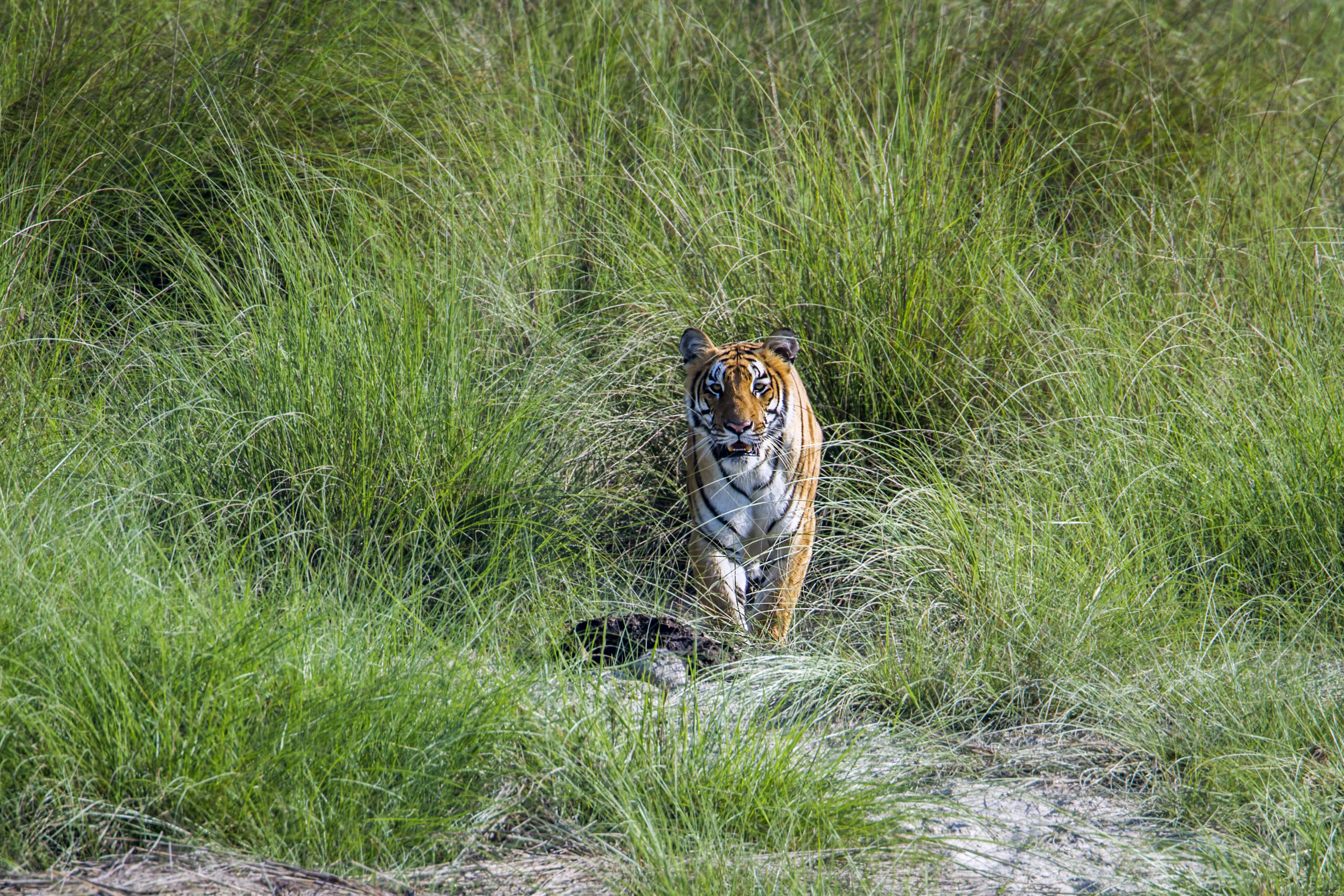
Big cats are an invisible thread that holds elements of ecosystems together. If it frays, everything would fall apart. When we protect tiger habitat or snow leopard habitat, we’re also protecting the entire ecosystems that millions of people depend on for clean air and water, healthy forests, livelihood and climate resilience.
Finally, I think big cats inspire us in a unique way. Whether someone lives in Toronto, Kathmandu or anywhere else in the world, these animals remind us of the beauty and diversity of our planet.
Once a species is lost, we cannot bring it back. Protecting big cats is really about protecting a shared natural heritage that belongs to all of us, regardless of where we live.