Canada’s new nature strategy, explained: Q&A with MP Steven Guilbeault
Canada has made a big promise: to protect 30 per cent of its lands and waters by 2030. But what does that actually look like on the ground, and what will it take to get there?
Megan Leslie recently sat down with MP Steven Guilbeault for an episode of Good Nature to explore the federal government’s recently released nature strategy from the inside out. Here’s an edited except from that conversation. Watch the full episode on YouTube now.
Let’s dig into this strategy and exactly what’s in it. What stands out to you and how does it differ from other attempts to do work on nature?
Steven Guilbeault: I think the strategy is a clear commitment by our government to make good on that promise that we made to Canadians and to the world in 2022 in Montreal at the Conference of Parties Convention on Biological Diversity (COP15), where 194 countries committed to protecting 30 per cent of the planet by 2030. And to do a range of other things like work on restoration, work on invasive species, and work to reduce subsidies that are harmful to nature. And the nexus on nature and reconciliation — we’ve started more and more to work with Indigenous Peoples.
You’ve been doing that at WWF for a long time. But some of this work is groundbreaking. That’s a very important thing to understand — this continued commitment. Close to $4 billion over five years is not pocket change. But we have probably the best idea we’ve ever had of how we get to achieve that goal of protecting 30 per cent by 2030.
What do we mean when we’re talking about “protection”? People might imagine that we put up a fence — that it’s so special, no one’s allowed to go there.
The International Union for the Conservation of Nature (IUCN) defines what can be considered protected. The gold standard would be your national park, where there can be no industrial activity. There can be light economic activity like ecotourism and things like that.
Then you have other levels of conservation where you will allow certain activities. Not too far from my riding is the Saguenay–St. Lawrence Park, which is a marine protected area, but there is commercial navigation and some fishing there. There’s lots of tourism, ecotourism, whale watching. All of these more economically driven activities are done first and foremost with a conservation lens.

You have different levels of conservation, of protection. In an urban park, for example, maybe that nature has already been pretty affected by human development. Maybe we want to restore more than we want to protect in those areas.
We’re on our way to 30 by 30, but we also have a “Build Canada” initiative focusing on accelerated development. Could this nature strategy support a different way of thinking about “building”? Not just adding infrastructure, but strengthening our natural systems that are already working for us?
Oh, absolutely. You are starting to see it with some projects. We can do more than one thing at a time. But when you’re in government, there’s competing priorities. There’s the health sector, there’s social issues. Everything that’s happening in the world right now — our NATO commitment and defense certainly has taken a front row seat. So whenever we can make it easier for governments to do that, the better.
And also just acknowledging what nature is doing for us. I mean, yes, fisheries, yes, lumber, but what about clean air? What about absorbing ecosystem carbon? What about absorbing floods? Slowing down fires? It’s not this neutral space with no value.
Absolutely. Parks Canada published this fascinating study. They actually put a value on the ecological services rendered by the areas they manage: more than $500 billion per year. So, for those people who aren’t interested in nature for the sake of protecting nature, there is a really good financial and economic argument to be made for doing that.
The strategy has three pillars, and the second is that the federal government will map out where the biodiversity is in Canada, where the carbon is in the ecosystem. (At WWF-Canada, we piloted this idea a few years ago to help us better understand where we can site projects.) What else do you know about this ecosystem carbon mapping?
We know, for example, that wetlands in Northern Ontario are one of the world’s largest carbon sinks. Not just Canada, not just North America. The world. You want to fight climate change? The last thing you want to do is to allow for massive development to go into that specific area.
When it comes to nature, what we do not only matters for Canada and Canadians, but for the world. We’re the second largest country by size. We have some of the most diverse ecosystems. Protecting some of Canada will make a difference for the entire planet.
Yes. it is such an opportunity here in Canada. A lot of what we’re seeing from this strategy focuses on the actual land and waters. Does this strategy also support species at risk?
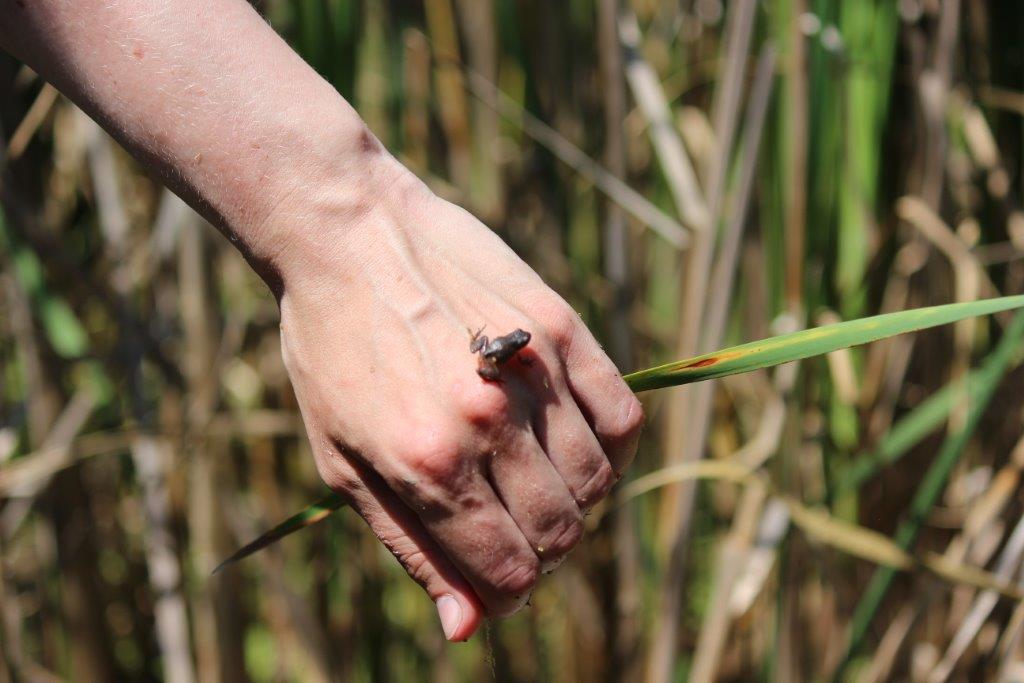
It does. When I was environment minister and nature minister, one of the conversations we started having was looking at this issue of species at risk one species at a time. Maybe we need to take a bit more of a holistic look at this and look at ecosystem protection. Those species then become your indicators of how well or not well an ecosystem is doing.
There’s so much work to do when you’re trying to do it one species at a time. There’s money in the strategy for species that are at risk, but it’s also an opportunity for us to look at how can we be more efficient at protecting those species.
Where does restoration fit into this strategy? Because we’ve also made a commitment to restoring 30 per cent of degraded lands and waters. It’s not really promoted in this strategy.
We didn’t talk enough about it in the strategy, but I think it is embedded into many elements. The work we will be doing to develop urban parks, for example, will largely be work of restoring ecosystems that have been degraded. Many of the programs are working with organizations like WWF and others to help acquire lands and protect them and restore them. Usually we look at iconic ecosystems or emblematic ecosystems in Canada, and we say, ‘We want to protect this.’ We need to do that.
But often they are not necessarily the most accessible for most Canadians. Where those restoration efforts matter the most is certainly closer to where we find most of the Canadian population.
Where the humans are.
I suspect that in the coming years, as we advance in the implementation of the strategy, restoration will take a larger role. I’m convinced that we will map out fairly quickly the route to 30 per cent. There are a number of projects that are on the go where WWF and Parks Canada and other organizations and municipalities, and even sometimes private sector corps persons, have been working on projects that will be mature very soon. So those numbers are going to increase rapidly, and we know which projects are more mature than others and which ones we can bring over the finish line in the coming years. As we’re able to advance rapidly on conservation, we will be able to shift our attention more on restoration.
Last question: It is one thing to have a document that lays out what needs to happen to get to those 30 by 30 goals, but we actually have to do it. So what would you like to see over the next year as far as implementing this strategy goes to meet that 2030 deadline?
We announced one new national park and one marine protected area as part of this strategy. We have a long way to go. We committed to creating basically 35 urban parks, national parks, and marine protected areas. We will have to pick up the pace on those.
Government tends to come up with these complex processes as almost a form of protection to make sure that the money is well spent and we can explain every dollar. There are ways of doing that without necessarily having this really heavy bureaucratic approach. If we can do that, it’s going to accelerate achieving the goals that we’ve set.
I’m hoping that we can, by working together, spare nature from what is happening with climate change, which is an issue that has become highly politicized, highly partisan. Protecting the good conditions of life on Earth should not be a partisan issue. Unfortunately, climate has certainly been caught in these culture wars. We need to all be careful collectively to make sure that it doesn’t happen to nature.
I’m hoping that this strategy, by enabling us to work with organizations like WWF, but also the private sector, the financial sector, will make it more of a societal movement as opposed to this thing that could be perceived by some as being a government-only thing, or an environmentalist-only thing.
We all need to step up, and I think that is sage advice.