From farm to frog: Here’s how to restore a wetland habitat
The sound of water gurgling up from the ground mixes with the squelch of rubber boots mucking about in the water, mud and plant life. But that’s not the only soundtrack in this southeastern Ontario field.
“What I noticed when we first got here were the sounds of the Western chorus frog. It was my first time hearing them, so that was really exciting,” said James Casey, a senior restoration specialist at WWF-Canada, of the threatened species.
This is exactly what our team and the folks from South Nation Conservation (SNC), a conservation authority, were hoping to find when they visited the site of a restored wetland, about an hour southwest of Ottawa.
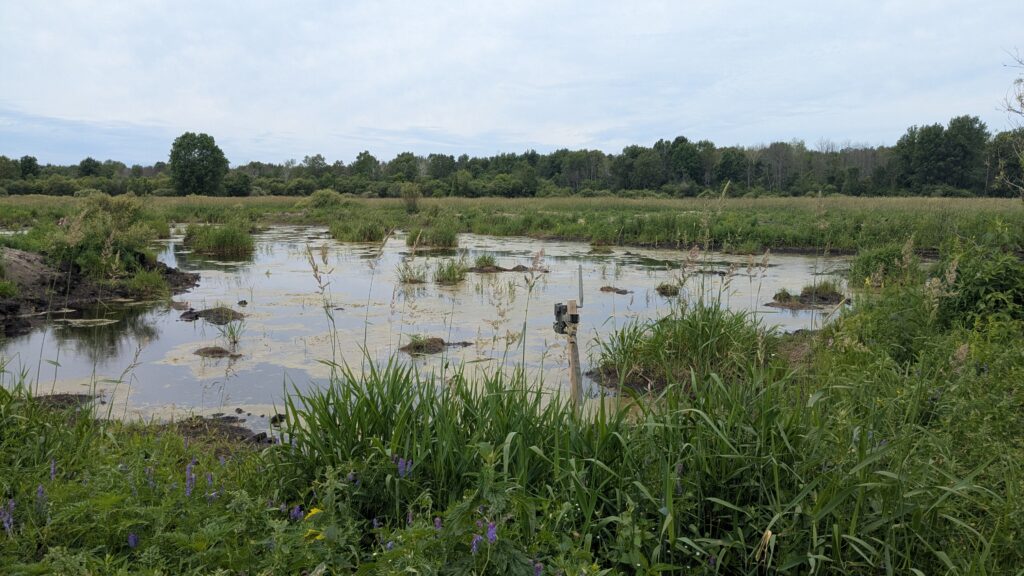
A year-and-a-half ago, SNC bought this former agricultural field and homestead in hopes of restoring its natural wetland state. It takes a lot of planning and physical labour to return a converted landscape to its original form — and that’s exactly what the SNC set out to do, supported by funding from WWF-Canada’s Nature and Climate Grant Program.
The first step was to figure out how to reverse the impacts from past users who had created drainage to give crops a chance to grow. The primary answer was ponds, so they designed the 10-hectare site to determine where to place them and how deep and wide they should be. Then they considered where to create additional habitats, such as rock piles, and what types, and how many, plants to include.
When Catherine Paquette, WWF-Canada’s freshwater specialist visited the site in early December she could see the groundwater rising up to fill the ponds as they were being dug.
“When I went back in April, I could see the 15 or so ponds doing exactly what they were supposed to be doing — holding water and creating habitats.” A site visit a couple of months later yielded even more results. “It’s very green and a beaver has even started building a mini dam in one of the ponds, which is further raising the water levels,” she says.
Using wildlife cameras, the SNC team observed all sorts of species already appreciating their hard work: moose, deer, wild turkeys, bobcats, wetland birds and even black bears. What’s more is that different types of ponds encourage different species to show up. Deeper ponds that stay wet all year are great for beavers, wading birds and turtles — including the painted turtle, a species of special concern — while shallower ponds encourage salamanders to show up.
“Wetlands are biodiversity hotspots, so they’re amazing for all sorts of wildlife, turtles, frogs and birds,” says Casey. The site is also close to a Provincially Significant Wetland, which means it’s protected from development, creating even more space and connectivity for local species.
But that’s not all, adds Michelle Cavanaugh, team lead of special projects at SNC. “Wetlands matter for a whole host of reasons. They’re also really great at storing floodwaters, which is especially important in the springtime” to protect downstream properties in the community.
“We were really fortunate to be able to work with World Wildlife Fund Canada on this project,” she adds. The work is slated to be completed later this fall, with ongoing maintenance to ensure water keeps flowing where it should and wildlife keep thriving in their new habitats.