
A salamander with superpowers: 10 absolutely amazing axolotl facts
The axolotl (pronounced ak-suh-lah-tulh) is wildly popular — and it’s not hard to see why. This astonishing amphibian, which never grows up but can grow new limbs, is as adorable as it is fascinating.
Though it may seem like axolotls are everywhere right now (including being the newest member of our symbolic adoptions collection), they are disappearing from the wild.
Here are 10 awesome axolotl facts, plus how you can help create a healthier natural world for wildlife and us all.
Their name is rooted in Aztec mythology
Native to Mexico, their name is derived from two ancient Aztec words: Alt, which means water, and Xolotl, which is the Aztec god of fire and lightning. The deity Xolotl is often represented as a dog, which is why axolotls are sometimes called “water dogs.” In Aztec myths, Xolotl also transformed himself into a salamander to avoid being sacrificed.
They exist in different colours
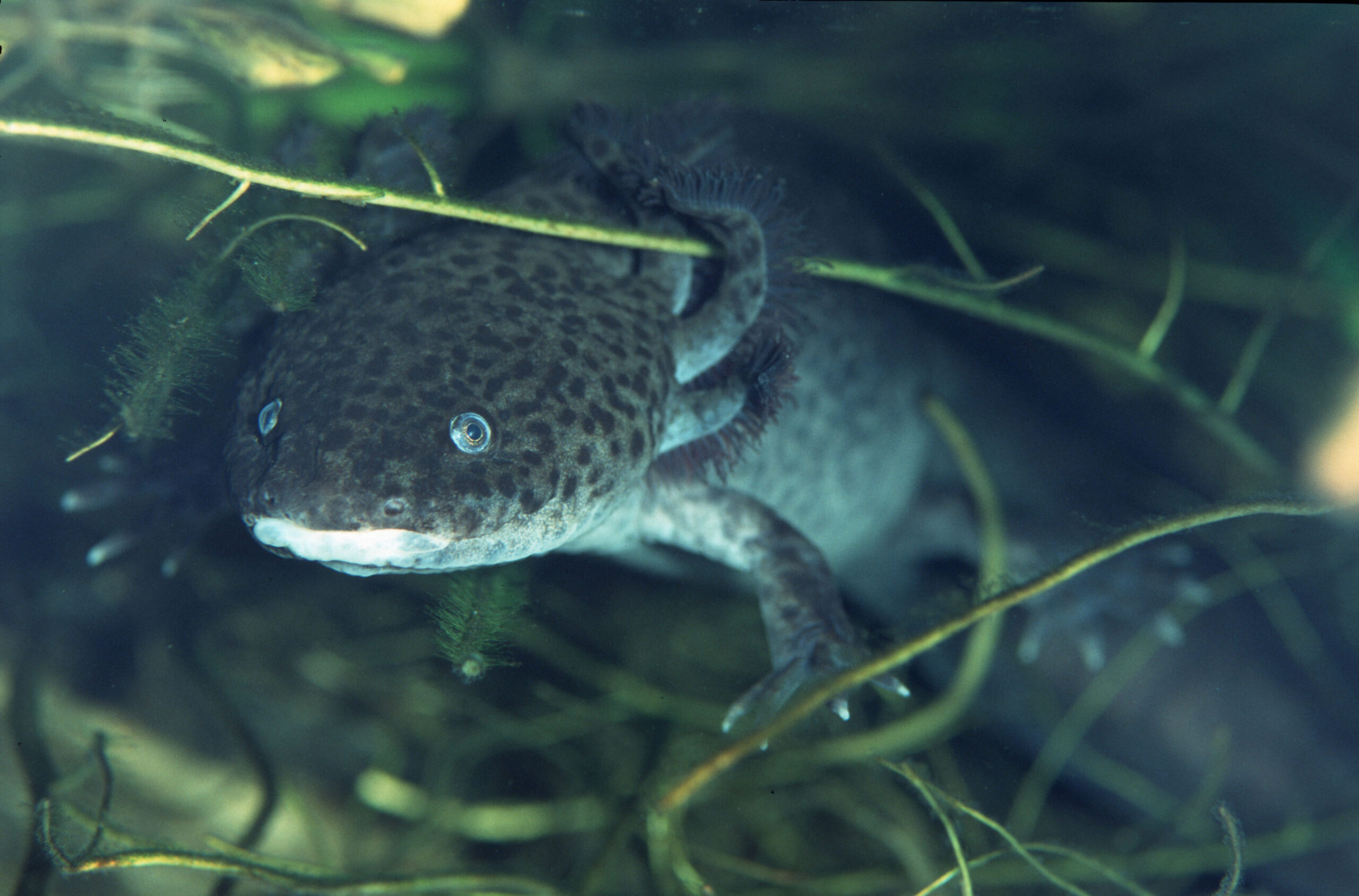
Wild axolotls tend to be black or mottled brown, helping them blend into murky waters, though some varieties have white skin and pink or red gills.
It only looks like they’re smiling
Axolotls are adored for their wide-set eyes, round heads and friendly “grins.” But their permanent smile isn’t an expression of emotion. Rather, their mouth shape naturally curves upward.
Axolotls are the Peter Pans of salamanders
After transitioning from an egg to a tadpole-like larvae, most salamander species go through a process called metamorphosis. When this happens, their gills shrink, they develop lungs, and they start to live either partially or fully on land.
Axolotls, however, stay in the larval stage and live underwater their whole lives. When an animal stays in its juvenile form, scientists call this neoteny. Axolotls also seem to “pause” their biological clock when they are about four years old.
Though they appear forever-young, axolotls do get bigger — reaching up to 30 cm long.
They breathe through the sides of their head
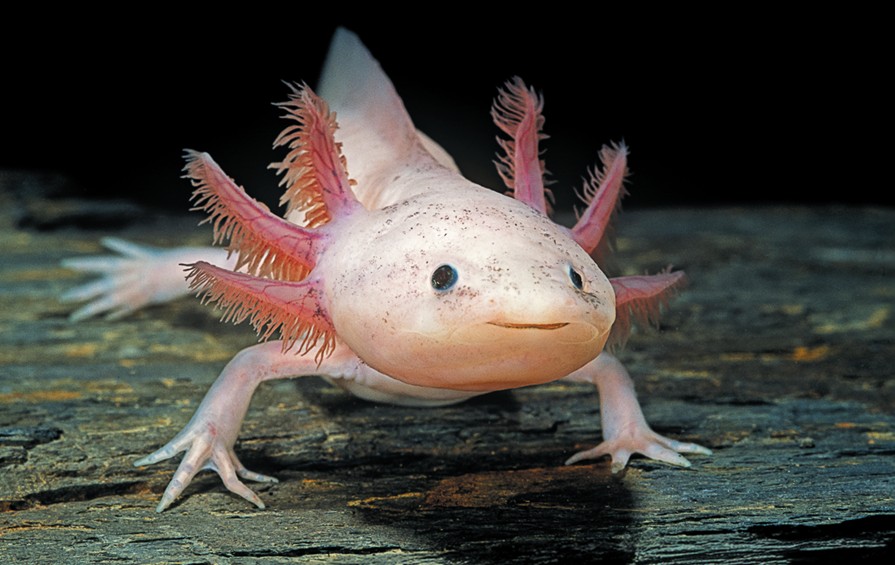
Axolotls are known for the feathery spikes that stick out the side of their heads. These spikes are more than just a defining feature; they are actually gills that allow axolotls to breathe oxygen underwater. Other amphibians don’t keep their gills but because of neoteny, axolotls do.
They can grow new legs!
Axolotls aren’t born with legs, they develop a few weeks later. If an axolotl loses its leg, it can regrow it. And it’s not just legs. Axolotls have the extraordinary ability to regenerate their arms, feet, toes and tails, as well as their hearts, spines and brains. They can also accept organs and limbs from other axolotls!
Unlike humans, axolotls don’t heal by forming scar tissue. Their cells return to a developmental state, allowing them to perfectly repair and sprout body parts as if they were growing them for the first time.
Axolotls are carnivores with poor sight
Axolotls eat insect larvae, small crustaceans, mollusks and fish. They are suction feeders, which means that they suck up prey from the bottom of the lake without chewing, just like a vacuum.
When it comes to finding food, axolotls rely on water vibrations to sense their prey. Their eyes can detect movement and shadows. However, if their prey is standing still, it’s more difficult for axolotls to catch them.
Their genome is 10 times larger than ours
Of all the amphibian species, axolotls have the largest sequenced genome (the complete set of DNA for a given species). Learning more about the axolotl genome could help scientists better understand their regenerative superpowers and potential applications for humans.
Their natural habitat is degraded
In the wild, axolotls are only found in three bodies of water near Mexico City: Lake Chalco, Lake Chapultepec, and the canals of Lake Xochimilco. Unfortunately, habitat loss and pollution are threatening these populations.
Invasive species introduced to these lakes are are also putting pressure on axolotls. Carp and tilapia, for example, prey on axolotl eggs and compete with them for food.
Axolotls are Critically Endangered
While commonly found in household aquariums and research labs today, axolotls are nearly extinct in the wild. They are listed as Critically Endangered on IUCN Red List of Threatened Species list. Sadly, there are fewer than 1,000 adult axolotls living in the wild today.
When you symbolically adopt an axolotl, you help wildlife thrive
Wildlife populations around the world, including here in Canada, are trending in the wrong direction. When you adopt an axolotl, you’re supporting important conservation efforts that restore and protect habitats so wildlife can thrive.
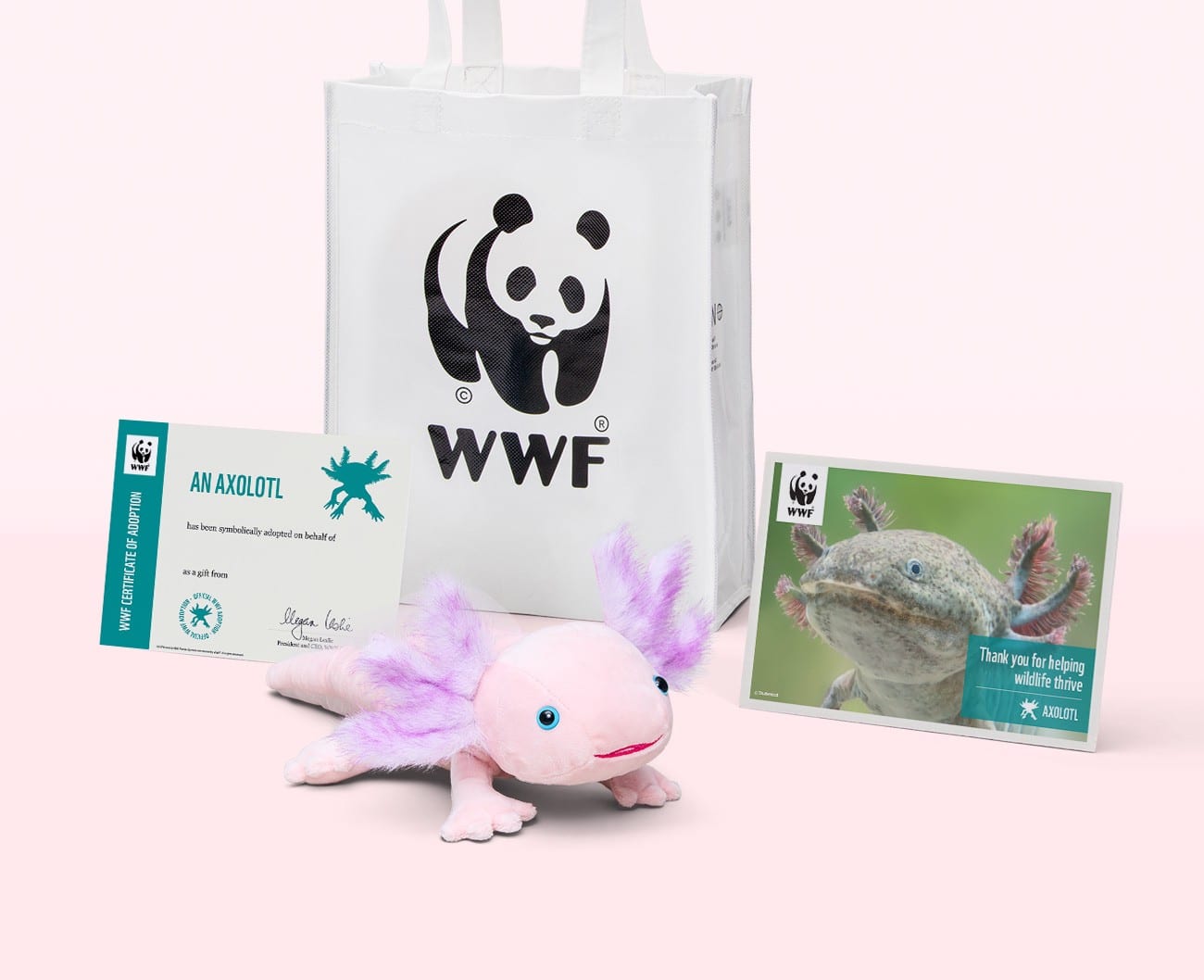
Each symbolic adoption kit includes a true-to-life plush animal designed with our species experts, an educational poster with facts about the chosen species and conservation work your gift makes possible, and a personalized adoption certificate — all wrapped up in a reusable (and optional) tote bag.
To symbolically adopt an axolotl or for more gifts that help wildlife thrive, visit wwf.ca/shop.