
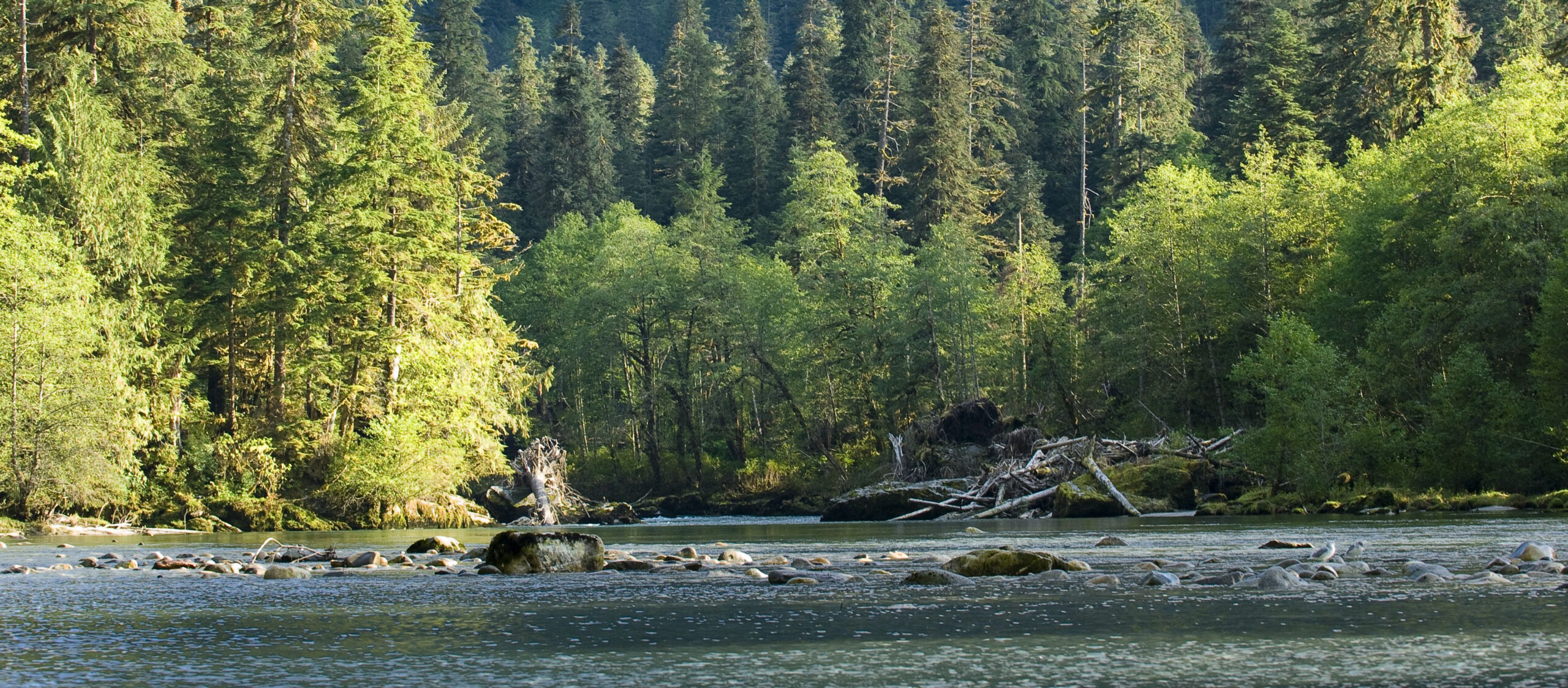
© Andrew S. Wright  / WWF-Canada Khutze Estuary in the heart of the Great Bear Rainforest, British Columbia, Canada

Mapping Primary Forests

WWF-Canada is working to better understand how to define, identify and locate primary forests in Canada.

What are primary forests?

Definitions vary, but in the simplest terms, primary forests are areas that have not been majorly impacted by human activities such as logging, road building and pesticide use. They are composed of native plant and tree species which were not planted by humans. WWF-Canada is working to better understand primary forests, their importance for forest stewardship and where they are located.

Forests that have regrown after a major human-caused disturbance, like logging, are not considered primary. However, Indigenous usage (e.g., for food, medicine, culture) and stewardship does not disqualify a forest from being considered as primary.

© WWF-Canada / Steph Morgan

What is the issue?

While significant work has been done to map intact forest landscapes, caribou habitat, high carbon stocks, biodiversity hotspots and other important aspects of forests in Canada, a map of primary forests has not yet been produced largely because of varying definitions and parameters for classifying them.

Public agencies at different levels, civil society organizations, consumer companies sourcing forest products, and other private sector actors may be interested in adopting policies that aim to protect and steward primary forests. Without a map that shows where primary forests are, developing and effectively applying policies is obviously difficult. For example, without such a map, companies that have committed to avoid sourcing products from primary forests are left to use maps of “intact forest landscapes” or “old-growth forests” and make assumptions that may not be accurate.

What WWF-Canada is Doing

WWF-Canada sparked a much-needed dialogue between environmental organizations, academics, government, industry and Indigenous organizations about what primary forests are and made progress toward developing a method to map them in Canada.

Literature review

WWF-Canada supported a review of how primary forests are currently defined, identified and classified. The review was conducted by Habitat, a Montreal-based environmental solutions company.

Prototype mapping methodology

WWF-Canada worked with the University of Maryland’s Global Land Analysis and Discovery (GLAD) laboratory who developed a prototype mapping methodology for “structurally stable mature forests ” in Canada — i.e. native-tree forests that haven’t been logged or burned in recent decades and aren’t fragmented by roads, towns or industrial development — which is an important step toward mapping primary forests.

Engagement through dialogue

With the Firelight Group, an Indigenous-owned consultancy, we hosted two regional workshops in B.C. and Ontario. We were joined by researchers, corporations, government agencies, Indigenous organizations and environmental NGOs who provided essential input on primary forest definitions, potential uses for a map, prototype mapping methods, and how the project could be refined for the next phase.

A refined mapping methodology

WWF-Canada took what we learned and developed a refined methodology for mapping primary forests in Canada. Our report includes the detailed workflow, the types of data that are required, a discussion of decisions that need to be made, and options that should be considered so that users can adapt the methods for specific purposes. Users can follow the workflow to make their own map, including making use of their own data where available, and making decisions that will create a map that best suits their needs.