
Restoring the land after wildfires: What I learned during a field visit to the B.C. Interior
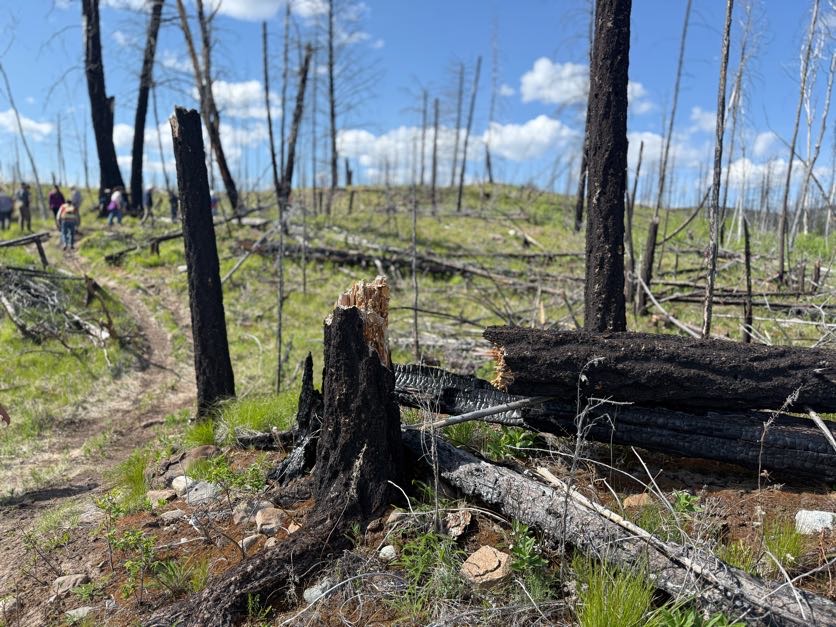
The first thing I noticed when arriving at Elephant Hill, the site of a wildfire that burned almost 192,000 hectares over 76 days in 2017, was the quiet — no rustling leaves or chirping birds. As I stepped over the uneven terrain here in B.C.’s south-central Interior, I saw fallen trees all over the ground and burnt trunks in the distance.
That devastation would turn out to be foreshadowing.
While 2017 was the province’s worst-ever fire season at the time, with 1.2 million hectares burned, it was trumped the next year when 1.35 million hectares were scorched. That damage surged to 2.84 million hectares in 2023 with another two million burned over 2024 and 2025.
But I also noticed an unlikely sign of hope on the second day: moose scat. Our group got notably excited about this proof of life. There was also grass and weeds growing around it, breaking up the endless charred bark that had once been a forest of spruces, fir and pines prior to the 2021 Flat Lake fire that burned 75,000 hectares near the Cariboo town of 100 Mile House.
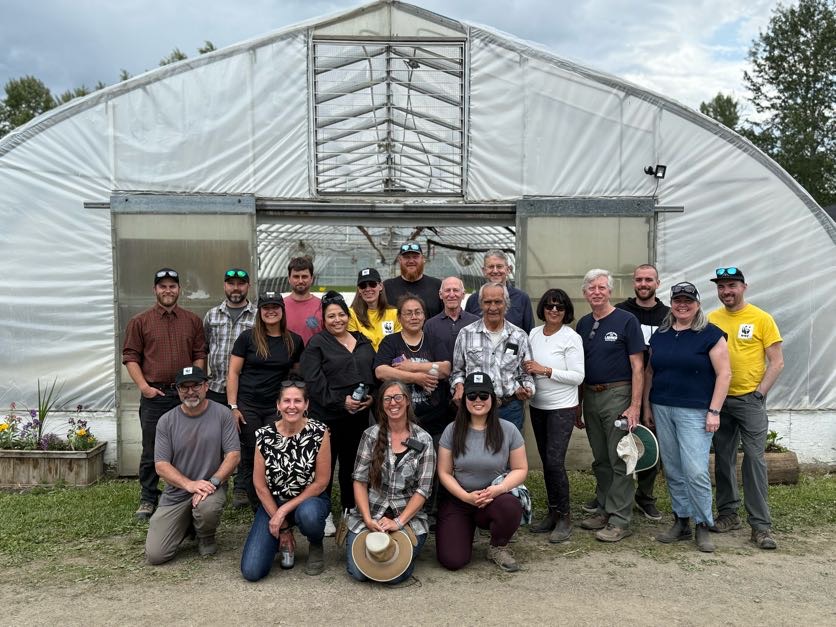
These were my first impressions of my three-day trip to the forests in Secwépemc traditional territory, a couple hundred clicks north of Kamloops, with a group of funders and WWF Board members.
We’d come to see the progress of the post-wildfire reforestation work led by the Secwepemcul’ecw Restoration and Stewardship Society (SRSS) with support from other local partners like Innovatree.
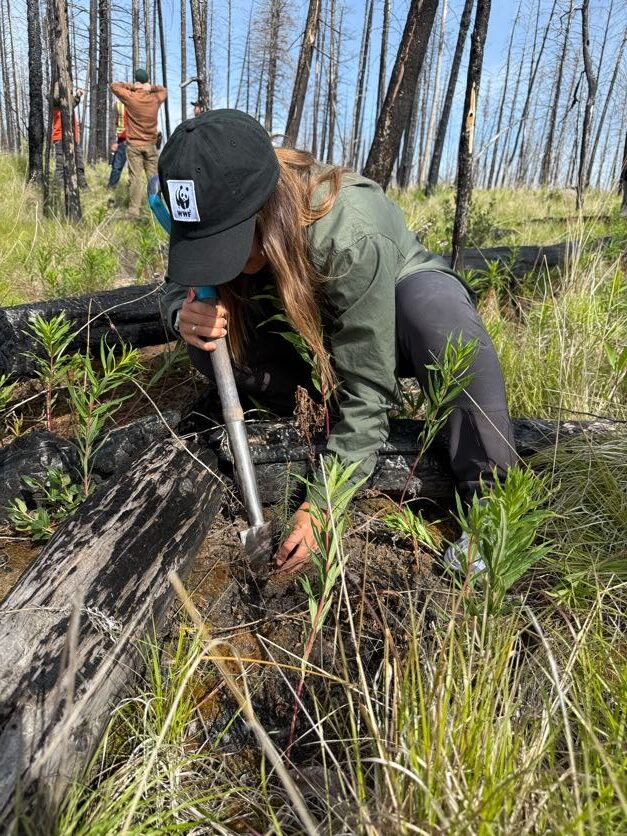
Last year, SRSS planted 922,784 trees across 482 hectares — bringing the total supported by WWF since 2021 up to 2,024,023 trees and 1,159 hectares.
I was awed by the beauty of the Cariboo mountains to the east and Coast mountains to the west, and marvelled at the rivers criss-crossing the land in between.
But I was also deeply struck by the devastation. Through my work, I knew this region had suffered intense and extensive wildfires — SRSS formed in the wake of the 2017 Elephant Hill fire. Seeing it with my own eyes was something else. It made me realize how urgent and crucial restoration work is — not only for the land and wildlife, but also for the people who call this place home.
As we enter another field (and fire) season, I’m reflecting on five things I learned last summer.
Biodiversity is the best defense
Restoration isn’t just about planting trees — it’s about planting a diverse mix of species that help build resilience against future wildfires. One of the key parts of restoring this region to a healthy forest ecosystem is planting deciduous trees, like aspen, birch or cotton wood. Offering higher moisture content, thicker bark and more shade than evergreens, they play a vital role in fire resistance.
It’s also important to use native plants that are culturally significant to local First Nations and have long thrived alongside wildfires in this region and are valued for their medicinal and food properties, including bitterroot, soopolallie, huckleberry, wild onions and wild strawberries.
Respect the power of the understory
”Understory,” a word I heard a lot on this trip, refers to the layer of vegetation under the canopy (the treetops) and above the forest floor.
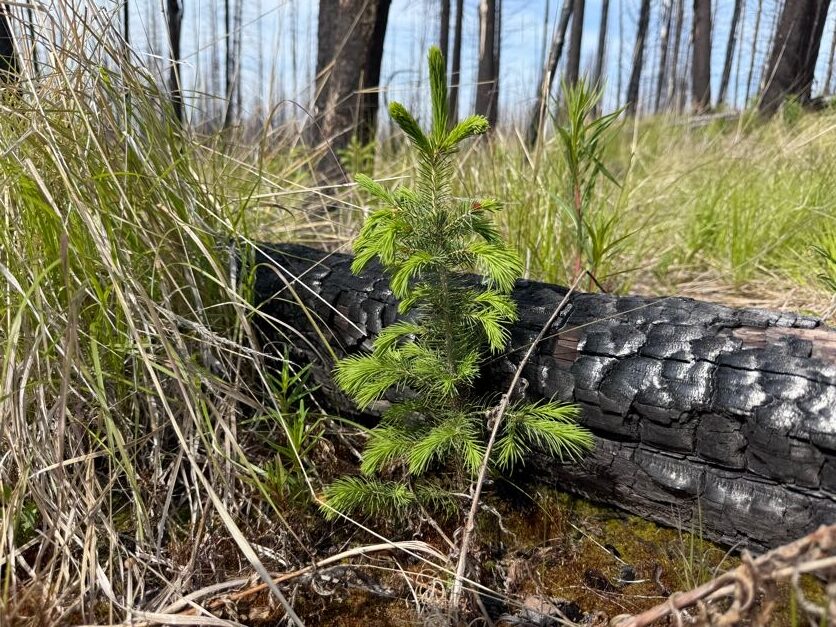
Populated by smaller plants such as shrubs, wildflowers and fungi as well as seedlings and saplings, the understory maintains healthy soil and provides habitat for wildlife, making it essential to successfully regenerate the land and ensure the forest’s long-term health.
It takes a grove of people to grow a forest of trees
We often hear that it takes a village to raise a child — during this trip, I learned it also takes a lot of experts and resources to grow a healthy forest. From preparing soil and planting seedlings to ongoing care, trees need help to thrive on degraded and burnt ground. Guided by Indigenous knowledge and scientific data, WWF-Canada’s partners are working hard to reforest and steward these fire-impacted ecosystems.
From seed to tree
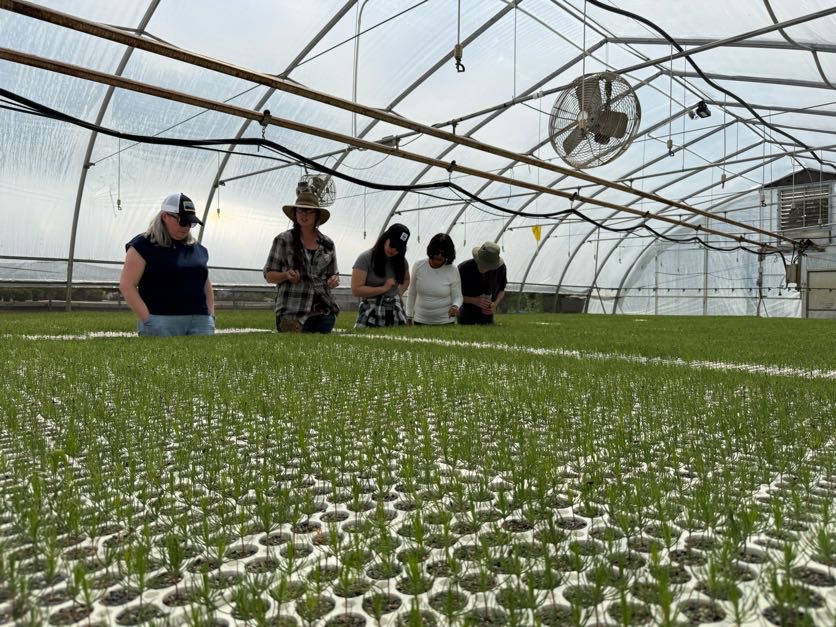
On the second day of our trip, we visited a local nursery near Canim Lake, about a half-hour drive from the city of 100 Mile House, which specializes in growing native species for re-introduction programs. Angela Kane, CEO of SRSS, told us about the ongoing challenge of accessing enough seeds, especially culturally significant species, because of worsening wildfire seasons, logging and other impacts on the land. SRSS and its partners are working alongside local communities and nurseries to start seed collections programs.
Reforestation is working, and it’s rooted in innovation
Thanks to innovative techniques, led by WWF-Canada partners like Innovatree Carbon Group, we’re witnessing restored forests not just surviving, but thriving. Smart technologies — like soil-moisture sensors (funded in partnership with Bell Canada and RBC Foundation) and the use of biochar, a type of charcoal, to enrich degraded soils — are proving to be transformative.
The work isn’t over, as vast areas still need restoration, but signs of success are already visible.
I left Interior B.C. with hope and a deeper appreciation for the land, the people who care for it and the funders who make this work possible like the Barrett Family Foundation, the Peter Gilgan Foundation and the Ronald S. Roadburg Foundation who joined me on this trip — funders who were able to double their investments through the support of the Government of Canada’s 2 Billion Trees program.
This work is about more than just planting trees — it’s about building a legacy of healthy forests that our grandchildren (and eventually their grandchildren) will thank us for.