Planting partnership: How we’re working with farmers to help restore the Wolastoq watershed
It doesn’t take much time near the Wolastoq to understand why that word means “beautiful and bountiful river” in the language of the Wolastoqiyik, or “people of the beautiful river.” The 700-kilometre waterway, also known as the Saint John River, is replete with natural wonders, from bright little wood ducks nesting along its shores to the once-mighty, and currently at-risk, wild Atlantic salmon swimming upstream to spawn.
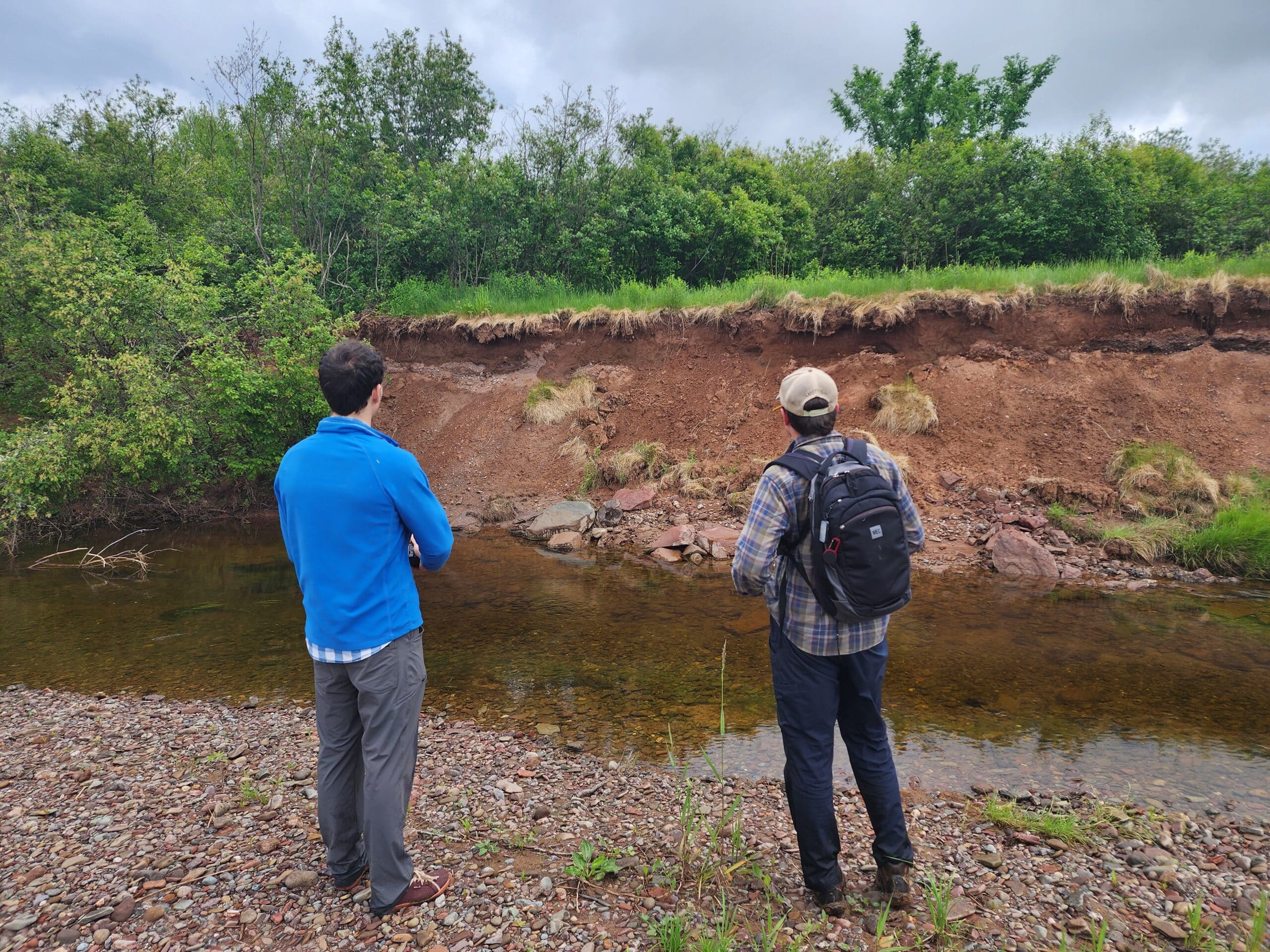
Yet the beauty and bounty of the whole Wolastoq watershed is also at risk.
In recent decades, increased development and agricultural and forestry activities have been polluting the water and destabilizing the riverbanks along with removing vast swaths of old-growth forests.
This habitat degradation has been further compounded by increasing climate impacts like super storms and record flooding, all of which is threatening the survival of nearly 50 at-risk species.
Since 2012, WWF-Canada has been supporting the work of several New Brunswick conservation organizations to tackle this much-needed restoration work in the Wolastoq watershed. Together, we’re making steady progress and always seeking out new partners, like farmers with field- and pasture-adjacent waterways.
We’re also notching some key wins, including an analysis on how, and how much it will cost, to recover 40 of those at-risk species, and the successful revegetation of previously eroding riverbanks using 65,000 trees across 53 hectares on 44 agricultural planting sites.
What makes our collaborative approach work? We spoke with Kristyn Lyons, WWF-Canada’s restoration and regeneration associate specialist, and Lauren Verner, Nature NB’s conservation program coordinator, to find out.

What makes the Wolastoq so special?
Lauren Verner (LV): The Wolastoq has been a traditionally important and sacred watershed for Wolastoqiyik people who have been here since time immemorial. It’s also a place high in biodiversity. When so many plants, animals, birds and other species are all working together in an interconnected ecosystem, it’s our responsibility to work to preserve their habitats.
Why is the Wolastoq restoration work focused on riparian zones — that is, the buffer between land and water?
Kristyn Lyons (KL): Human activity doesn’t happen in a bubble. When we’re dealing with working landscapes — places where people are engaged in agriculture or other activities — we see the effects downstream. In places like the Wolastoq, we find it is effective to focus restoration specifically in riparian zones because this lets nature-based climate solutions do a lot of the work for us.
LV: For example, we plant a lot of native trees and shrubs in riparian zones, largely because the roots of native plants hold everything together. They hold the soil in place.
KL: Also, rivers need to move, and grow, and fluctuate. So when there’s nothing there to absorb excess water, that can lead to flooding. But when we vegetate the riparian zone, it’s like introducing a sponge. For example, a mature silver maple, a tree native to the watershed, can take up 200 litres of water an hour. So restoring the riparian zone helps mitigate flooding and stop erosion. It helps everything downstream, increases habitat for wildlife and has a cascading effect of positive impacts.
What role do farmers and other landowners play in this work?
KL: Many farmers see what is happening. They are losing acreage to eroding banks. They’re experiencing more flooding.
LV: We couldn’t do this without the support of landowners, so we try to share information and knowledge. We’ll have conversations with farmers, where we’ll ask, ‘Did you know if you plant all these native flowers, this could increase your pollinators, and therefore increase your crop yield?’ Or, ‘Did you know that if you plant some shrubs and trees along this riparian zone, it’ll prevent the erosion problems you’ve been having?’
Ultimately, the restoration work we do can be really helpful to agricultural work.

What happens once you agree to work together?
LV: Typically, we’ll start with a site visit and a chat with landowners. We then recommend what they can do in riparian zones, based on what’s called “beneficial management practices.” If native vegetation exists, we say leave it — let it fill in. That’s an easy and popular strategy, because it doesn’t cost anything or require any effort. If there are spaces that need vegetation, we’ll recommend some tree or shrub species to plant.
KL: We try to make it as easy as possible for farmers. Generally, the only requirement is that they give our partners access to the land and agree to maintain the trees and shrubs they put in.
We know that the benefits of nature-based climate solutions can take a long time to become apparent. How do you know projects like these are working?
LV: Are the trees you planted surviving and growing? You can usually notice that in the short term, after a year or two years — that tends to be an indicator that you’re on the right track.
Wildlife also tends to be very responsive to riparian restoration — especially birds. So if you see an increase in wildlife, it’s generally a good sign.
KL: Another sign is that farmers and landowners are talking about it with their neighbours. When we see the work speaking for itself on the ground, that, to me, shows there is a paradigm shift happening.
We know people live here. These are working landscapes. They won’t ever be “pristine,” and that’s not necessarily what we’re going for. But nature knows what it’s doing. The closer we get to nature’s original plans for these ecosystems, the more they’ll take care of themselves.
This project is financially supported by Environment and Climate Change Canada through the Canada Nature Fund – Priority Places for Species at Risk program and Hewitt Foundation.