Why no news is bad news for badgers (and how to overcome roadblocks to at-risk species recovery)
Only a handful of people have seen a wild badger in southern Ontario over the past two decades — and I’m lucky enough to be one of them.
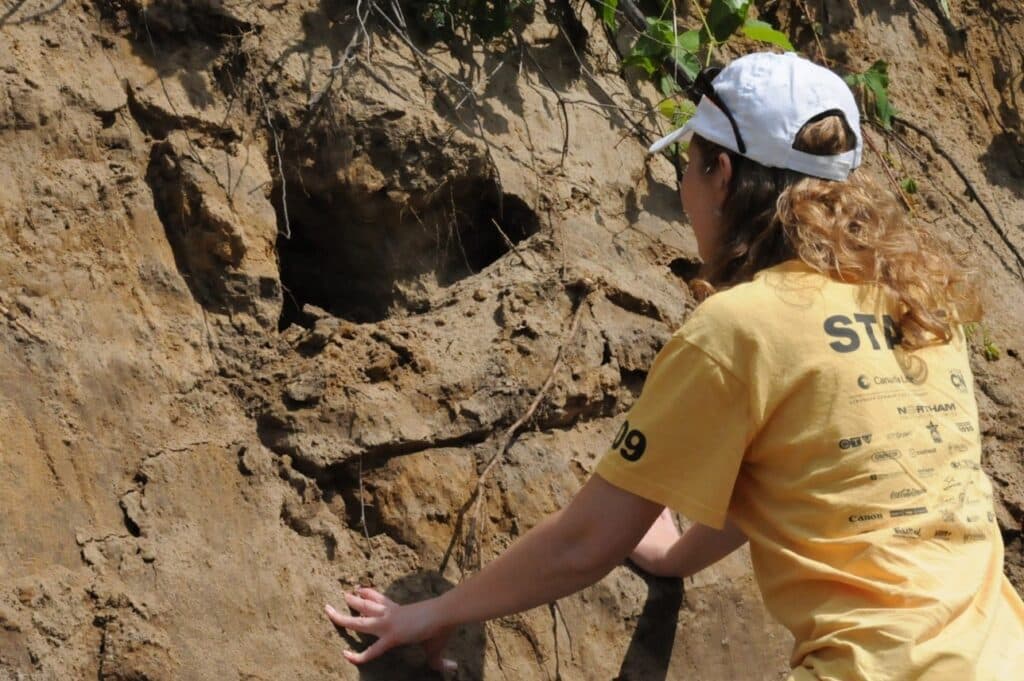
I had the honour back in 2009 while on a WWF-funded expedition. The Ontario Badger Project, initiated with funding from WWF-Canada, not only confirmed their presence in southern Ontario but also helped gather more information about this mysterious and elusive mammal. For example, badger burrows were identified in woodlots, an area previously thought to be unsuitable habitat for this species.
Badger sightings are so rare, in fact, that the southern Ontario population has not been seen in the wild — including the Norfolk Sandplains, their core breeding area — since 2016. As this population is isolated from other badgers in Canada, they’re at high risk of becoming extirpated (locally extinct).
Despite it having been a decade since a confirmed southern Ontario sighting report, including burrows or roadkill, COSEWIC — the independent scientific body that makes recommendations to the federal government about species classifications under the Species at Risk Act (SARA) — did not recommend an extirpated listing during their December 2025 assessment. Experts at the table felt that the search effort has not been sufficient to definitively rule out the existence of a population in this region. (COSEWIC also assessed the BC Interior population as Endangered and Central Canada population as Special Concern.)
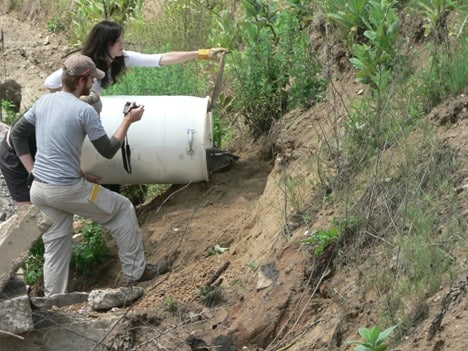
COSEWIC makes their recommendations based on the best available information and knowledge.
Although the southern Ontario population of American badgers has been classified as endangered since 2003 — meaning they technically benefit from the formal protections and strategic recovery planning offered under SARA — the funding to do so isn’t there. So, without monitoring there is no way to know precisely how many remain or where they are.
Of course, it’s even harder to prove a species no longer exists. Extensive surveys have to be completed, which are costly, time-consuming and not prioritized over other conservation efforts. That’s why so many species remain on the Endangered species list even after they may already be gone.
This is one of the many challenges of a system where the process of classifying, monitoring, protecting and recovering species at risk is rarely straightforward.
Stuck in the waiting room
There are a variety of reasons a government might decide not to protect a species. Aquatic and marine species in commercial demand, for example, often face long delays before being federally listed, or they are deemed to not need SARA protections regardless of the independent COSEWIC recommendation.
Both scenarios happened last December with the American eel: the government took 13 years for consultation and evaluation after COSEWIC assessed the species as threatened, only to reject the recommendation on the basis of “supporting valuable fisheries on the East Coast.”
Atlantic salmon, another economically important species, have been in limbo even longer. Many populations are also still under federal review, despite being assessed as threatened or endangered by COSEWIC back in 2010. In December, COSEWIC assessed an additional 19 Atlantic salmon populations. While a few northernmost populations are increasing as climate change warms rivers that were once too cold for salmon, the majority are continuing to decline.
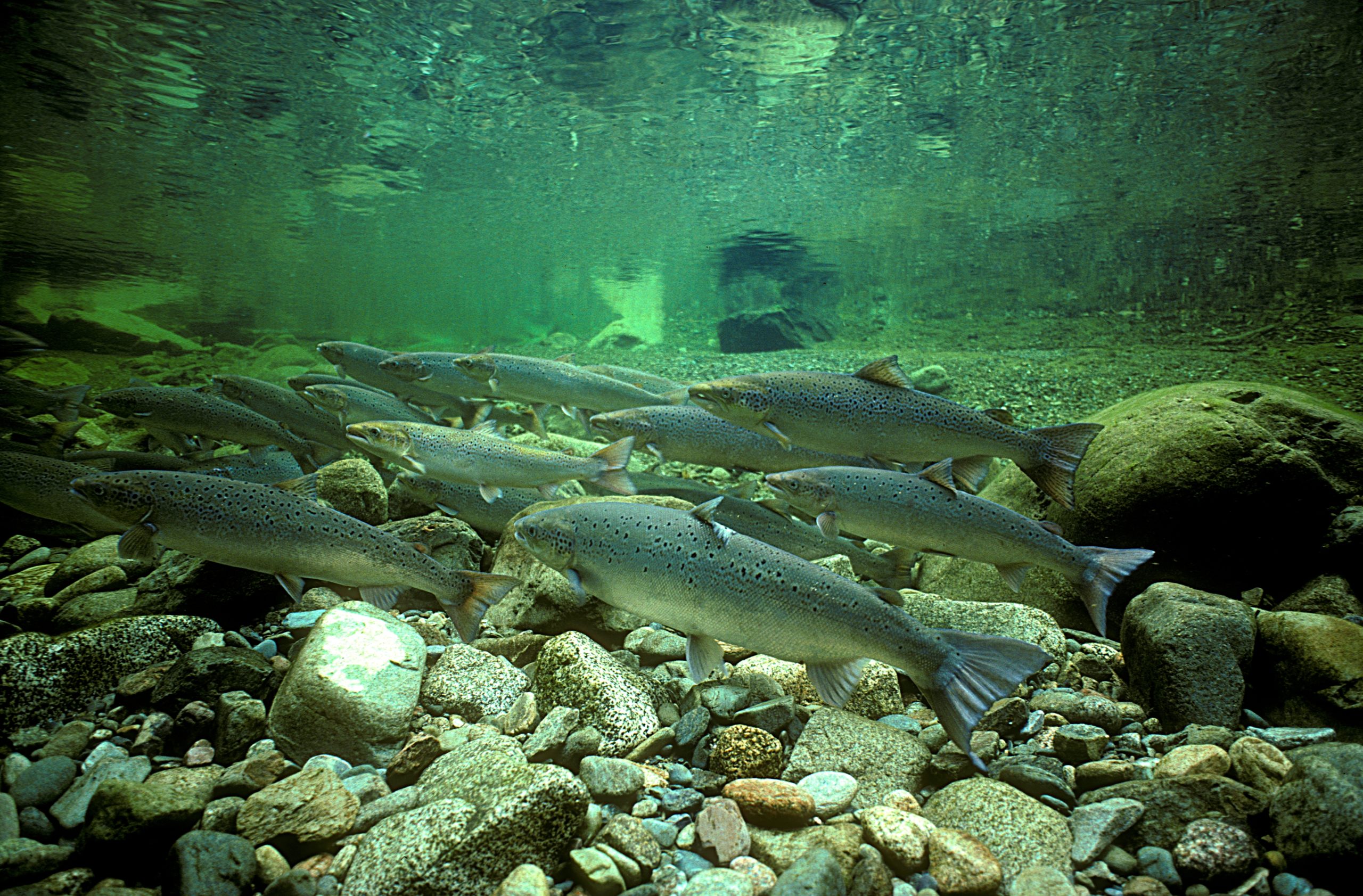
These long delays put conservation actions on hold, potentially worsening a species’ condition. In the case of Atlantic salmon, listing under SARA — and the legal protections that come with it — could push forward efforts to restore rivers and address threats from overfishing, pollution and dams.
Investment needed in early warning systems and nature
These harmful waits can be addressed with increased funding to monitor and act prior to the point of a species being officially considered at risk. Not only can this identify which species need interventions before it is too late— as might be the case with the American badger — but it can also help measure the effectiveness of conservation efforts.
And it can inform efforts, such as implementing wildlife safe crossings, or habitat management, that recover a range of species.
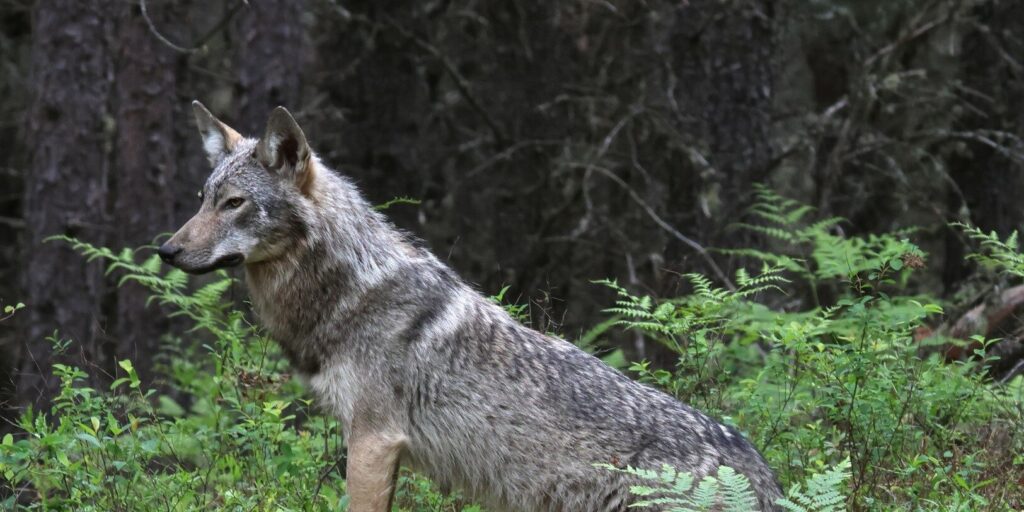
Our most recent Priority Threat Management research shows that implementing eight targeted conservation strategies, such as habitat restoration and protection, in the Lake Simcoe-Rideau ecoregion of southern Ontario could help ensure the long-term survival of 100 species at risk, including the barn owl, Eastern wolf and piping plover, at an annual cost of just $7 per Ontarian.
(Of course, the responsibility of at-risk species protection is shared between federal and provincial/territorial governments, so Ontario should be playing a central role in protecting the American badger. Instead, the province recently repealed their benchmark legislation with a defanged Species Conservation Act that removes arms-length, science-based accountability.)
The latest assessments from COSEWIC underscore a complex and sluggish federal system that simply isn’t working effectively enough. Species that are technically protected, like the American badger, often aren’t benefitting from on-the-ground action, while others, like Atlantic salmon, are studied but left to languish between assessment and listing.
As made clear by the stark findings of our Living Planet Report Canada 2025, the result has been decades of persistent declines. To turn that around, the government needs to decrease these delays and increase investments in protection, restoration and monitoring.
Because if we want to finally halt and reverse wildlife loss, the path to recovery for Canada’s species at risk can’t be a labyrinth.