With a little kelp from our friends: How Redd Fish is innovating marine restoration in BC’s Clayoquot Sound
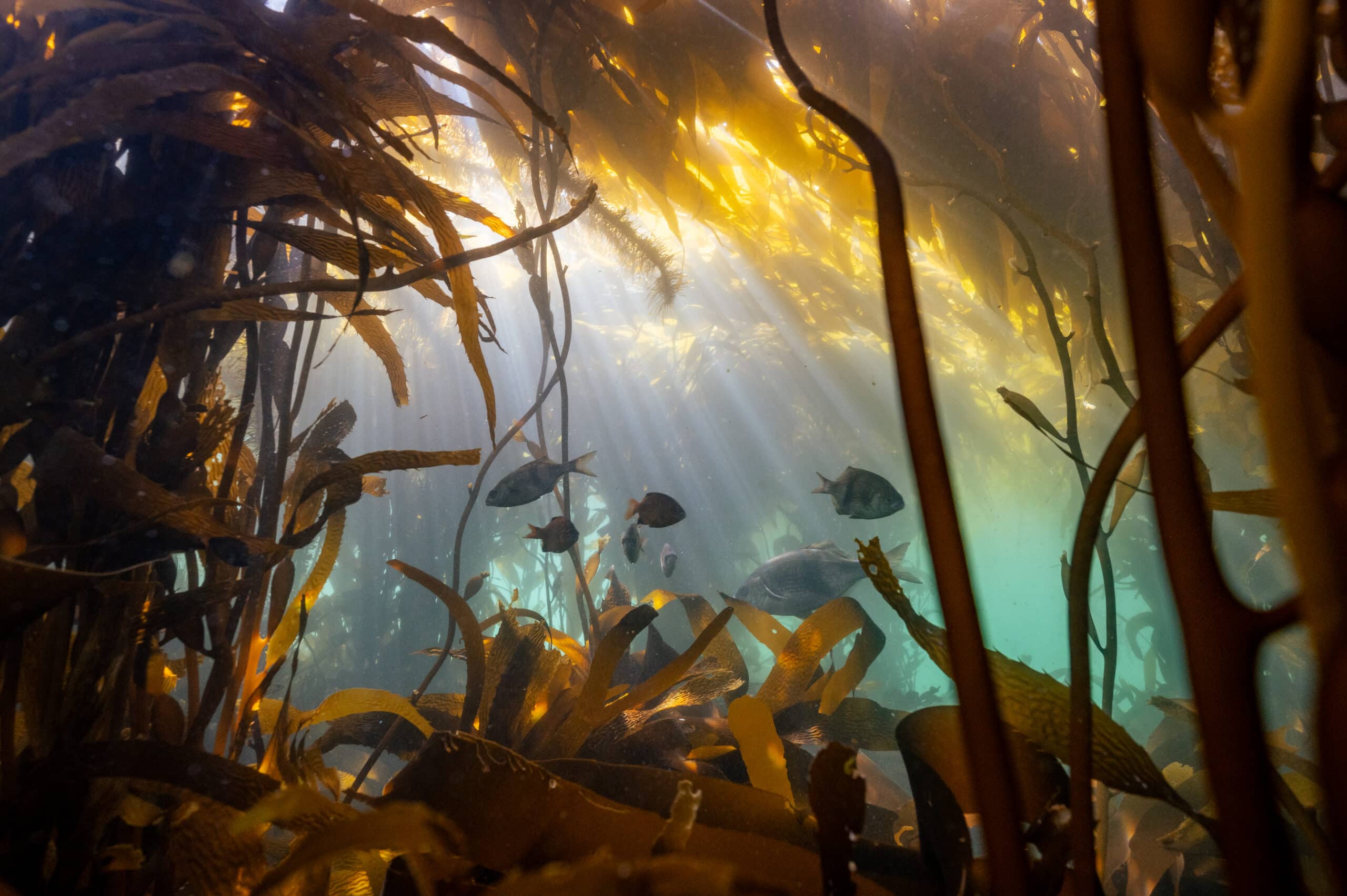
“Kelp is an incredibly quick-growing species — giant kelp, in particular — but watching it is nuts! You plant it when it’s a millimeter and it takes off so quick,” enthuses Emily Fulton, marine program manager for the Redd Fish Restoration Society, about this macroalgae’s ability to grow as much as 60 centimetres a day in good conditions.
“Even though you know it’s coming, it’s just spectacular to see habitat be created in such a short period of time. Like, it’s happening in front of your eyes on these beautiful sunny summer days.”
Fulton is excitedly talking about Redd Fish’s work on an Indigenous-led kelp reforestation project to restore marine habitat for juvenile Pacific salmon in Clayoquot Sound.
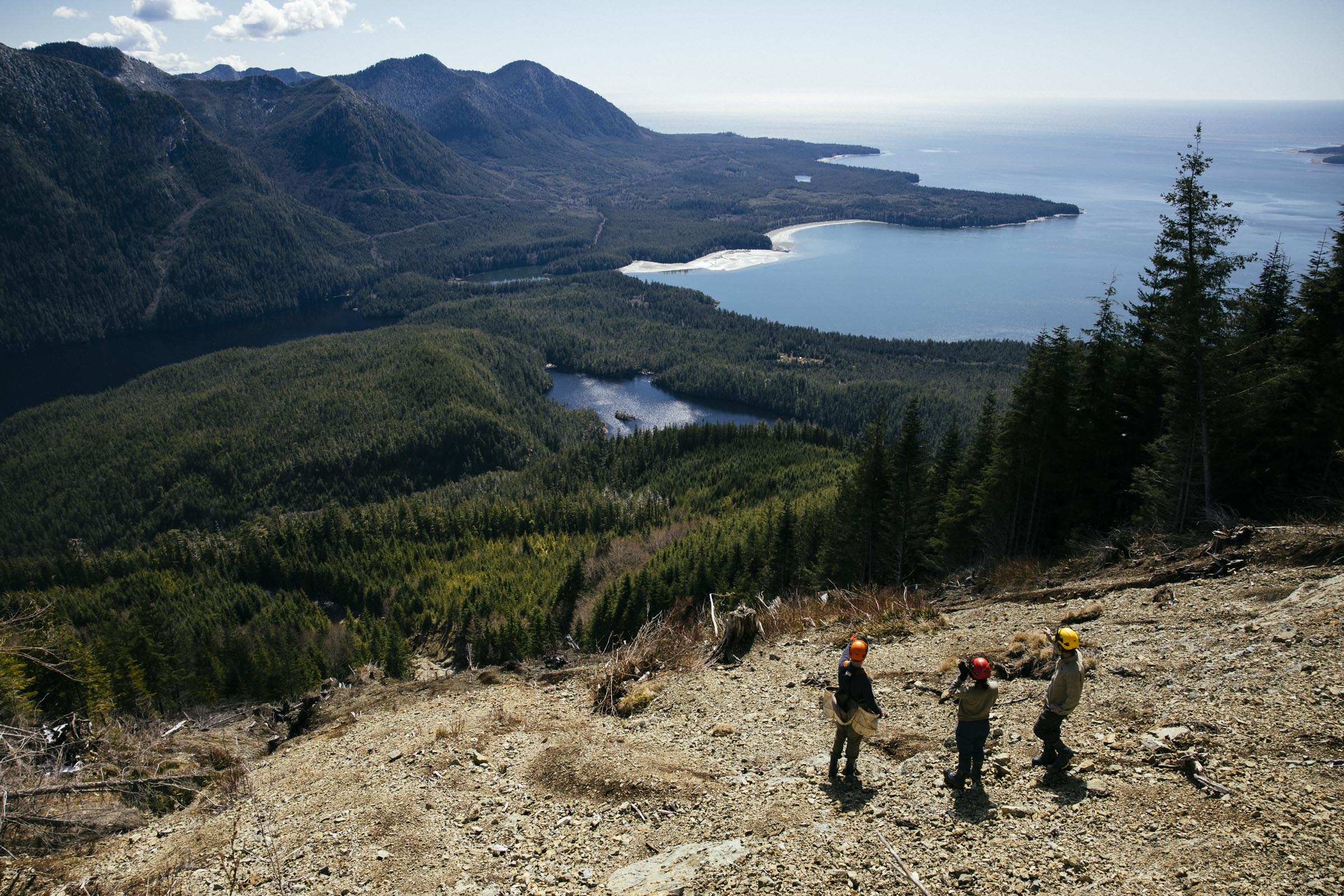
Comprising about 3,500 square kilometres of marine and terrestrial areas on Vancouver Island’s central-west coast, Clayoquot Sound is a beautiful and biodiverse region of deep water, shallow inlets and an archipelago of islands with tall trees, big mountains, steep valleys and what used to be wildly abundant wild salmon runs.
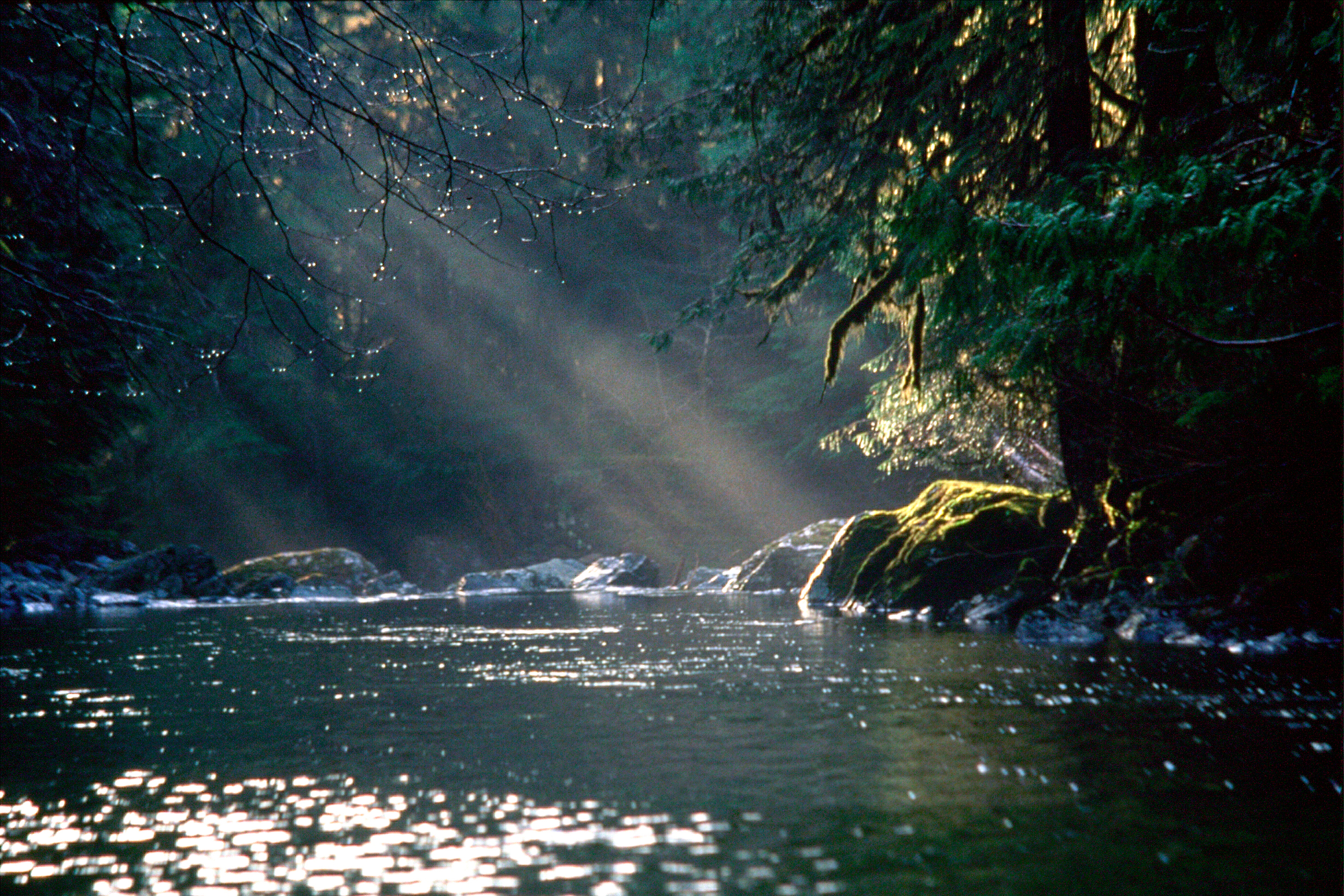
Stewarded by local First Nations for millennia, it’s also been a UNESCO Biosphere Reserve since 2000. But the Sound became more widely known in the early 1990s when a massive resistance movement — led by local First Nations and labelled the War in the Woods — successfully stopped its ancient forests from being clear cut.
Redd Fish came together in 1995 as a response to those protests, Fulton says. “With logging operations slowing down, there were a lot of forestry professionals who were put out of work. Redd Fish was formed as a collaborative effort between forestry professionals, biologists and First Nations governments to look at the problem that was created and ask, ‘What can we do now?’”
That problem was the degradation of wild salmon habitat from industrial logging practices. They’ve been working to solve it ever since through holistic restoration, starting on the mountaintops and working their way down.
“Clearcut logging and road building caused a lot of landslides,” Fulton says. “That sediment then enters the rivers in these valley bottoms and causes a whole bunch of destruction. So, we needed to address all these things before we look out into the estuary and nearshore marine.”
A salmon lifecycle is similarly holistic, beginning and ending in the same rivers and streams while spending most of the rest in the open ocean. But there’s also a transitory phase, between leaving the relative safety of freshwater and growing big enough to hit the high seas.
Think of it like kids at school. These young salmon are small, vulnerable and must learn osmoregulation so they can breathe saltwater, a process begun in coastal estuaries and saltmarshes. But then they move a little farther out to kelp forests, which offer a three-dimensional structure useful for finding food and hiding from predators.
(In fact, hundreds of species rely on kelp this way, including forage fish like sand lance, surf smelt and Pacific herring, which, like salmon, are ecologically, culturally and economically important for coastal communities. Kelp forests also act as buffers, reducing coastal erosion from climate-fuelled storm surges.)
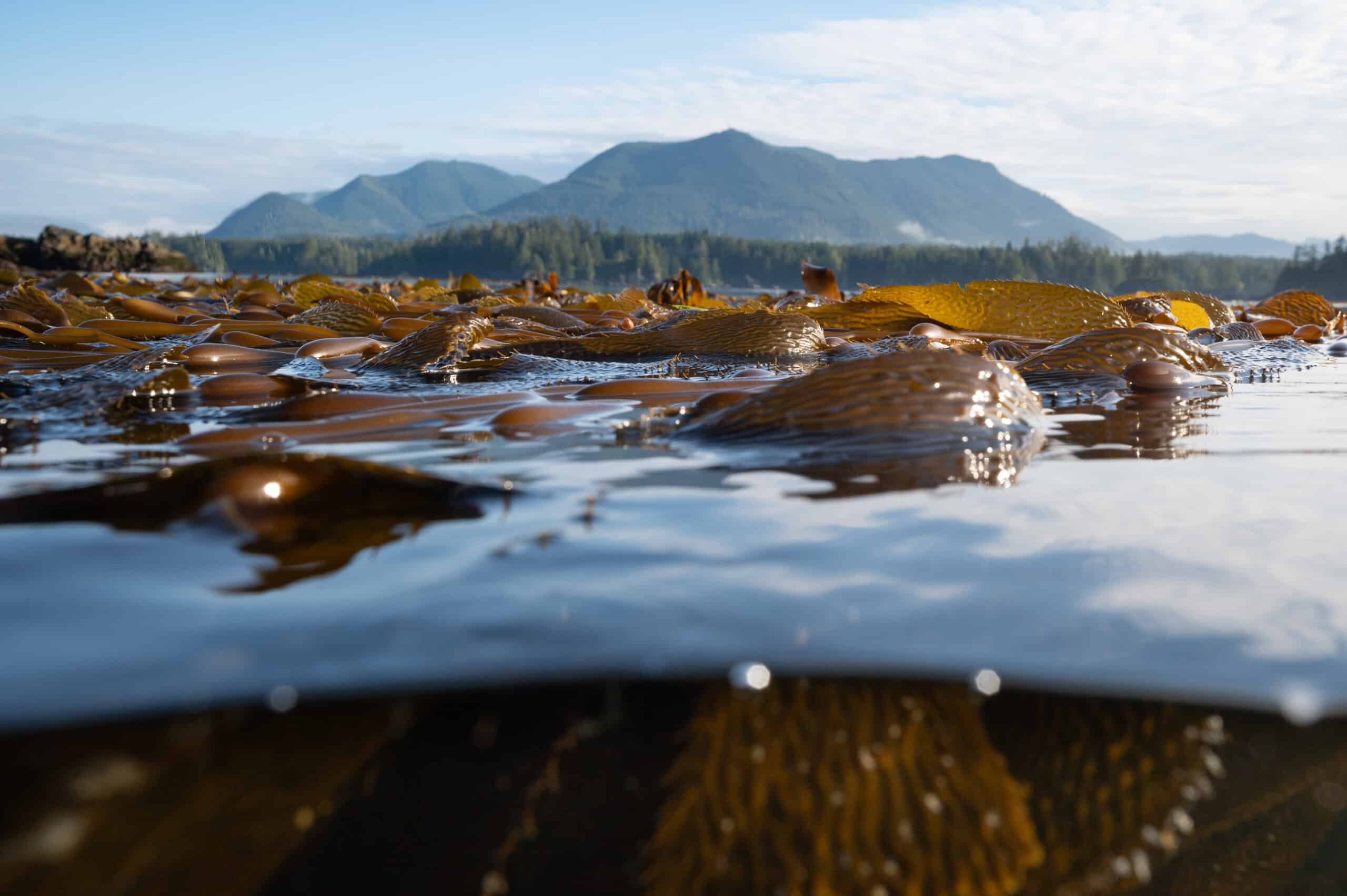
“These juvenile fish migrate through there for quite a while before going out into the Pacific and doing their mysterious salmon thing that we don’t fully understand,” Fulton says. “But between the river and the open water, there’s a lot we can do to protect and enhance the habitat that they rely on.”
In 2021, Redd Fish established a marine program after the five local First Nations on their board of directors identified kelp as a priority. But there wasn’t much information out there on the state of local kelp forests. So, they asked mariners about what changes they’d seen throughout their lives, and Traditional Knowledge-holders about longer-term First Nations history. Then they got a GPS and “a crappy little drone that sometimes worked” to start collecting data from select sites.
“[Kelp] form these big, beautiful complex underwater forests and, at low tide, you have this aerial footprint to see the spatial extent, so we’ve got an awesome data set on how wild kelp is doing,” she says.
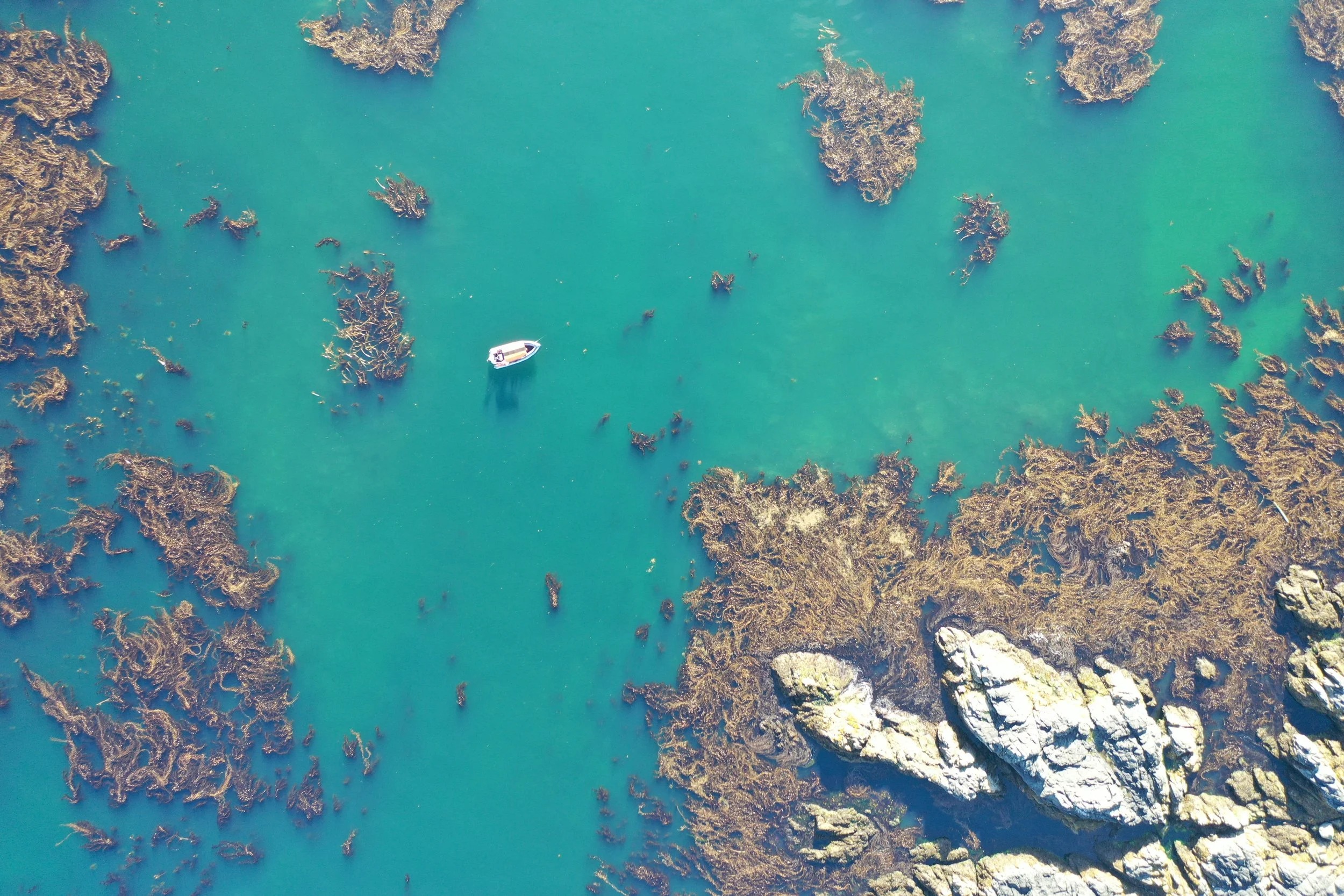
Kelp abundance naturally varies year to year, so they’re monitoring these sites to determine the long-term trend. But they already knew — from other researchers on the West Coast and around the world — that kelp is declining because it needs cool, nutrient-rich water to thrive, and, well, waters have been warming. (Around 60 per cent of kelp forests globally are declining in abundance.)
And they knew that kelp supports the wild salmon they work to protect and conserve. “So instead of waiting to have 10-plus years of data and then go, ‘Oh no, something bad is happening,’” Fulton says, “we wanted to figure out how to restore kelp before we’re ringing the alarm bells.”
A small pilot project with Toquaht Nation near Ucluelet three years ago taught their team about site selection, methods, permitting “and all of the unsexy stuff behind closed doors of a restoration project.”
From there, Redd Fish was approached by Tla-o-qui-aht First Nation, just outside Tofino, who wanted to see if a scaled-up kelp restoration project could enhance their existing efforts to bring salmon abundance back to their territory. After their knowledge-holders identified areas to work within, Redd Fish got going.
“And WWF was the first grant that we received,” Fulton says, “our first grantor who funded this project through the Seed Orchards program.”
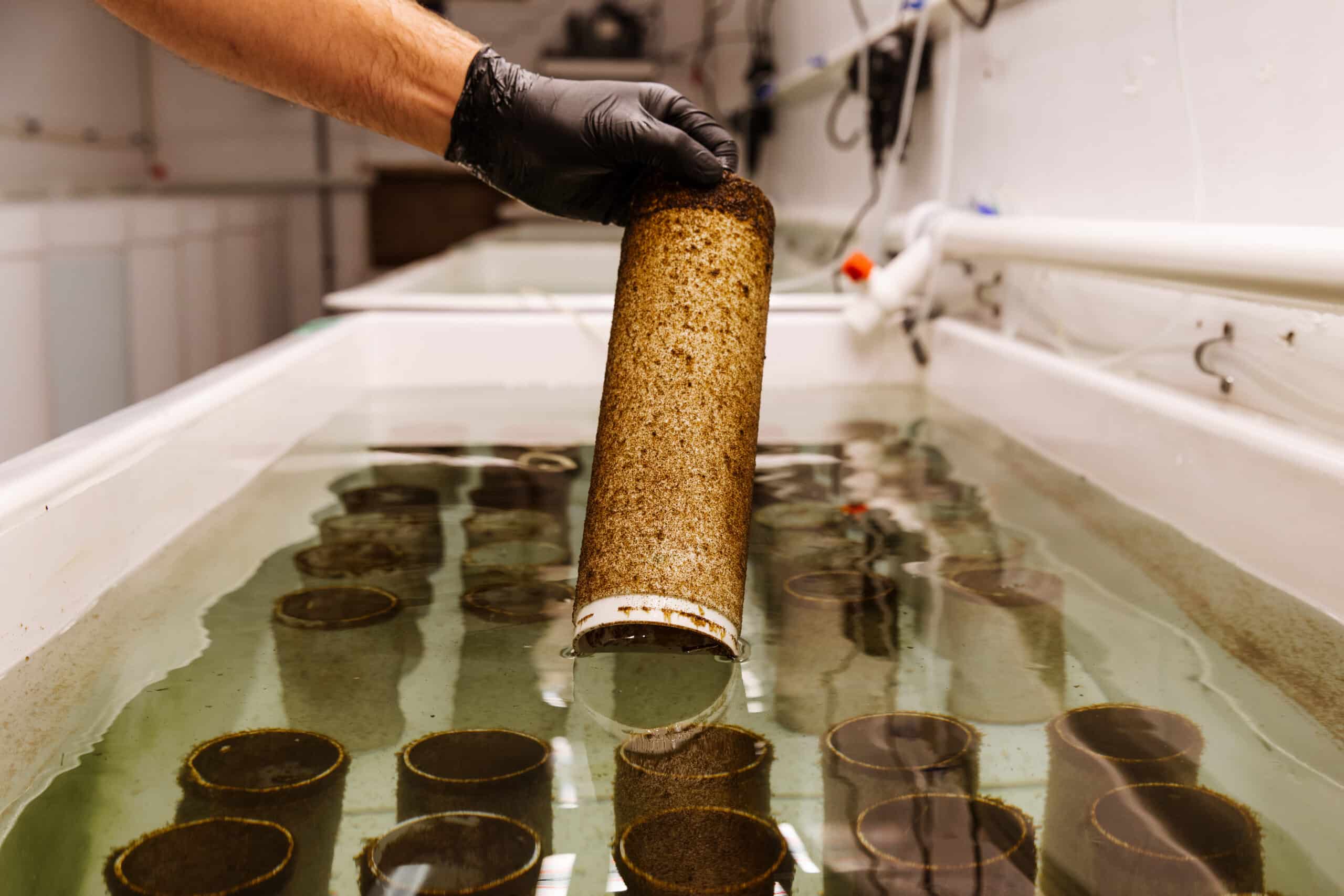
Redd Fish has since been growing giant kelp and bull kelp, first cultivating them in a land-based nursery before moving to an in-ocean nursery, essentially long lines several metres underwater but above the sea floor, Fulton says, “so it’s not going to be grazed by sea urchins or snails or things that love to eat baby kelp.”
Unlike a terrestrial tree, the kelp version of roots is called a holdfast, a sticky but stretchy tangle of what looks like udon noodles at the plant’s base, which grips onto rocks to anchor itself and withstand waves. (This is also how kelp attaches itself to the in-ocean nursery growing lines.) After selectively harvesting some kelp from those lines for transplanting, Redd Fish staff attach it to rocks, which they then sink to the seafloor at strategic sites with suitable growing conditions along salmon corridors.
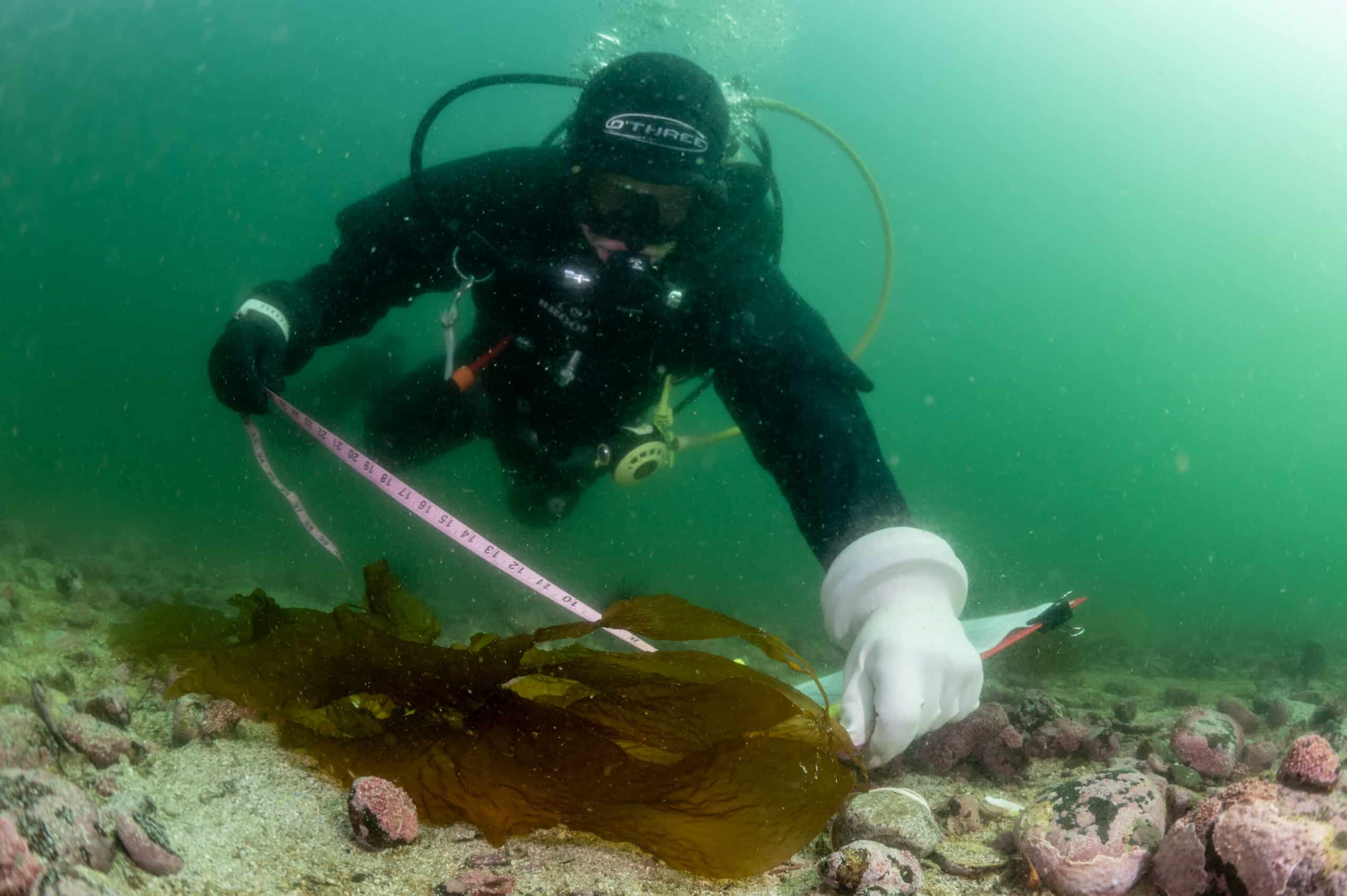
“As salmon leave their natal streams, they’re migrating past these nearshore areas where we’ve hopefully created more habitat that’s useful on their way out to the open water,” Fulton says.
“And we just harvested more reproductive tissue yesterday to take to our land-based nursery and grow up more kelp to transplant again in these areas in November and December.”
While this first year’s experiments have already shown incredible results, Redd Fish intends to keep iterating and collaborating to increase the effectiveness of this innovative restoration effort.
“We’re just a part of this puzzle and trying to figure it out so that, if and when we see kelp really declining in these areas that we work in,” she says, “we will be prepared.”