‘It’s about whether our voices matter’: Inuit communities call for reassessment of 14-year-old approval for iron mine expansion
On May 15 in Iqaluit, Nunavut, a group of Inuit hunters from the communities of Naujaat, Sanirajak and Igloolik held an outdoor press conference on Apex Beach to demand a re-assessment of Baffinland Iron Mines’ latest expansion plan.
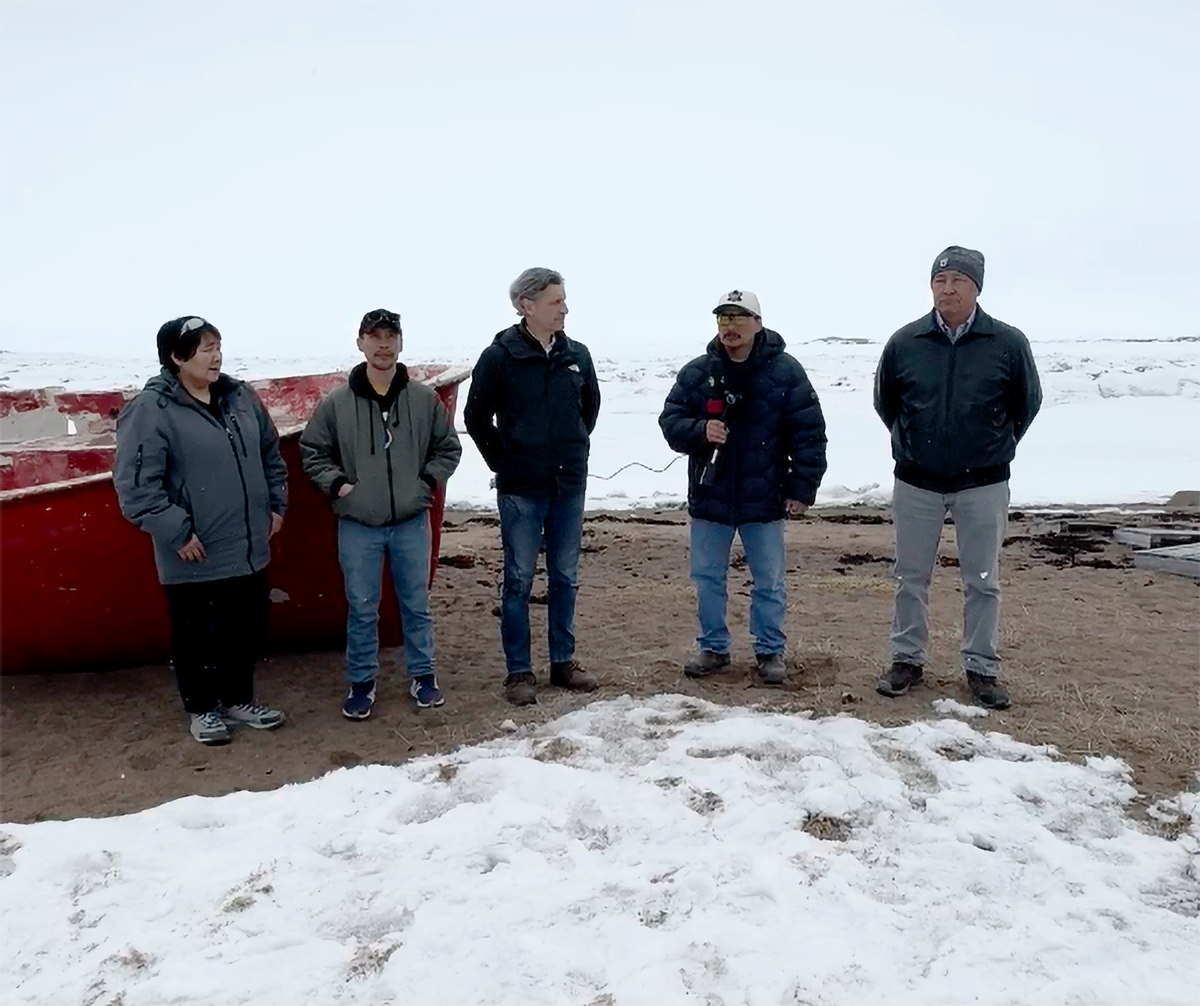
“This project is one that will impact our lives and our reliance on country food,” said John Ell-Tinashlu, chair of Naujaat’s Arviq Hunters and Trappers Organization (HTO), translated from Inuktitut and referencing community concerns over impacts to caribou and marine mammals.
“My future great grandchildren, their hunting grounds are going to be impacted.”
Before opening the Mary River Mine on northern Baffin Island, Baffinland received approval in 2012 to use a shipping route from Steensby Inlet, based on consultations that did not include the community of Naujaat. Instead, the company spent the next decade shipping from the closer Milne Inlet, a period that coincided with the Arctic’s warmest decade on record.
Now, Baffinland wants to expand its operations without a reassessment despite the significant environmental changes over that time.
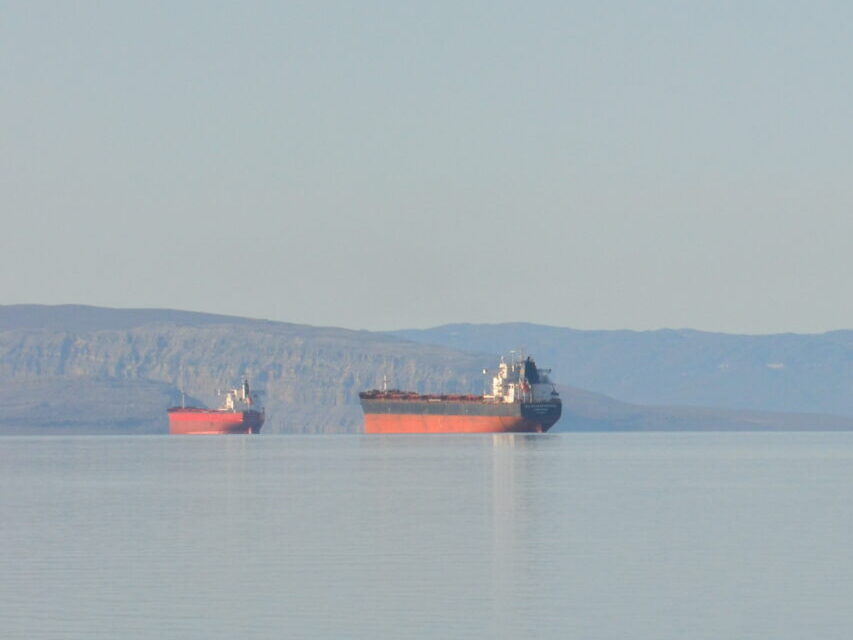
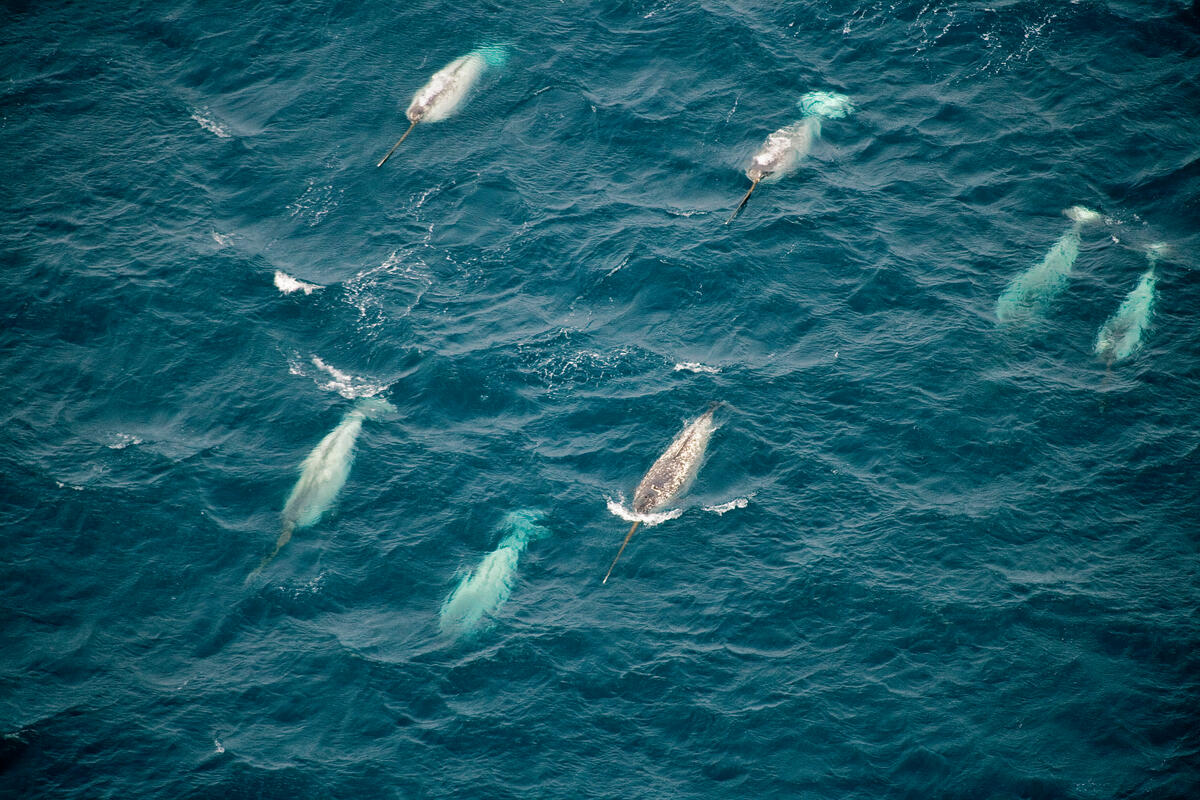
Baffinland’s plan is to build the Canadian Arctic’s first railway, which will cross caribou habitat, to a deepwater port in Steensby Inlet. Once loaded, massive ore carrier ships will then traverse the marine mammal habitats of Foxe Basin, a bowhead whale and walrus summering area, and Hudson Strait, a “superhighway for whales.”
“As we’ve seen in Mittimatalik (Pond Inlet), it really affected their community. And that was at six million metric tonnes [of iron ore],” added Paul Okalik, WWF-Canada’s lead Arctic specialist and the territory’s first premier, about the ongoing impacts from the company’s current shipping route.
The current route, which has returned to a 4.4 million tonne annual production limit this year, brings ships past the community of Pond. In 2022, the federal government rejected a proposed 12 million tonne on that route because wildlife impacts could not be “adequately prevented, mitigated, or adaptively managed.”
“We’re talking about a project that will be 18 million metric tonnes [with the new route]. I think we owe it to Naujaat to have a say about what will happen in their waters. I think we left that era long ago, where government would decide, far away, without hearing from us as Inuit.”
A few hours after the press conference, Oakville-based Baffinland filed for creditor protection in Ontario, citing $2.6 billion in debt, regulatory restrictions and high operating costs. The company has said mining operations will continue in 2026, supported by a $110-million loan from Export Development Canada. Baffinland also remains committed to construction plans in Steensby Inlet, expected to start soon and last three to four years.
Although some federal permits remain outstanding, Baffinland announced in January that they had all necessary authorizations to begin building that 149-kilometre railway and deep-water port.
But the fact remains that since the Nunavut Impact Review Board (NIRB) approved this plan in 2012, following environmental studies completed between 2005 – 2012, climate change has accelerated, the region has become a focus of national security and economic growth, and the scope and scale of mining impacts have now been experienced and studied.
Inuit communities and hunters living near the current shipping route have raised concerns for more than a decade, including how underwater noise from mine-related shipping is affecting marine wildlife populations and behaviour.
At the press conference last month, the three HTOs called for a re-assessment of the Mary River Project. They see the 2012 assessment as outdated, and in Naujaat’s case it did not include the HTO or the community’s involvement. An updated assessment would better address the prevention, mitigation and management of project-related effects, including cumulative impacts.
Unfortunately, the regulator recently denied their requests for a re-assessment, asserting that “the Mary River Project has been under almost continuous assessment” from 2008 to 2024. NIRB argues that there have been ample opportunities to “integrate new data, shared Inuit Qaujimajatuqangit [Inuit Knowledge], community observations and regulatory feedback” into ongoing decision-making about the project.
The impacts from existing operations of the mine, along with the profound changes that have been occurring in the Canadian Arctic since 2012, are why WWF-Canada supports the HTOs call for a re-assessment of the plan to triple production, build a railroad and deep-water port and dramatically increase traffic along this new shipping route.
For Arviq HTO and the community of Naujaat, this would be the first opportunity to raise their concerns and participate meaningfully in a review process. It would also reinforce Canada’s authority in the Arctic, which should be fundamentally rooted in Inuit rights and community-based governance, not extraction of raw materials for export to global markets.
As Arviq HTO chair, John Ell-Tinashlu, said last month: “This is not just about one project. It’s about whether our voices matter when decisions are made about our land and water.”