Growing hope: Q&A with Liz Hendriks, WWF-Canada’s head of restoration
Habitat loss and fragmentation are among the biggest drivers of wildlife decline in Canada, but protecting what remains is only part of the solution. Liz Hendriks, WWF-Canada’s vice-president of Restoration and Regeneration, explains why bringing it back involves so much more than planting trees — and how relationships must be at the core of any approach to conserving Canada’s nature.
People are often surprised to hear that wildlife populations are on the decline here in Canada, because we have all this space. How can it be that wildlife don’t have the habitat they need?
I think it’s simple. Our cities and our towns and our highways — and because when we develop and use the natural resources we need to have a successful life [forestry, mining, energy, etc.], we also take up habitats that wildlife need to live and thrive themselves. I imagine a Pac-Man eating up habitat. When we use nature, there’s a risk to that nature.
Protection of habitat is important, but we also need to restore it. For a lot of people, that concept can feel abstract. What are we actually talking about?
Protection is this idea that if we put a fence around nature, it will be okay over there. But we can also bring nature back. Let’s make sure we’re cleaning up after ourselves after we build the road, after we build the electrical hydro lines, and nature will protect us in turn. You have to maintain a relationship. It is really that continuum of care.
Some people think it’s just tree planting, but the reality is a lot bigger than that. What does real-life restoration look like?
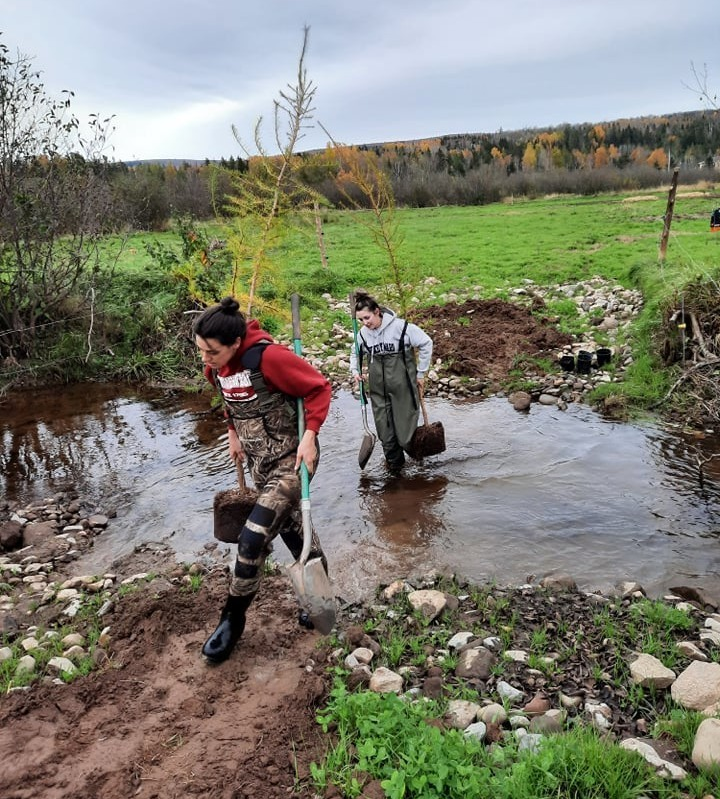
Think of restoration as a buffet of activities, from that bee-pollinator plant on somebody’s balcony to large-scale tree-planting or river restoration to help with flooding. There’s a huge range.
Some of my favourite projects are tree planting with river restoration, because then you’re stewarding the river and the soil — it’s helping with flood mitigation, soil health, soil pollution and carbon capture. The more activities you can include in a restoration project, the more you build resilience.
I know we’re doing some of this work in partnership with Katzie First Nation, specifically river restoration. Can you tell us about that work?
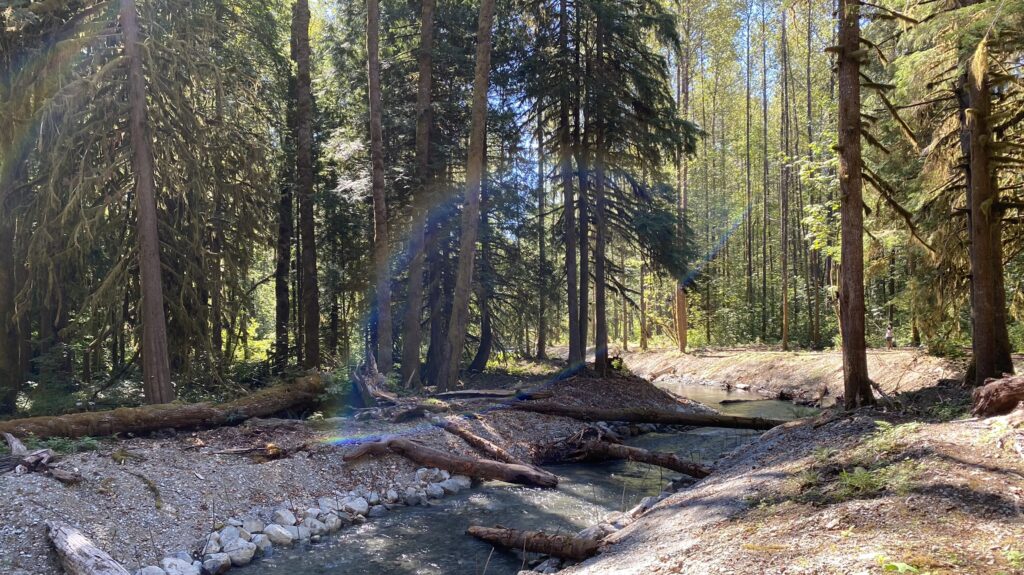
For Katzie First Nation, salmon are part of their family. When we first began our conversations years ago, we were really keen on helping to bring their family home, back to their land. The traditional territory of Katzie First Nation is part of a river lowland, and there was a landslide that blocked a spawning creek. So that restoration began with large machines that removed soil and put rocks along the shoreline. Within a year, we saw salmon return. It was so exciting.
Since then, the project has evolved to include tree planting, creating new spawning channels, and wildlife monitoring. We’ve seen an increase of bears returning, and when bears feed on the salmon on land, the remains deteriorate into the soil and naturally fertilize it.
Restoration is also about stewardship. Katzie First Nation now has a Land Guardian program; they’re finding their history on the land, and that really speaks to this idea that restoration is about relationship-building.
We also do a lot of marine restoration, can you talk about how that works?
We have active “blue carbon” restoration work. What is blue carbon? Planting trees is a type of carbon project. Planting eelgrass, kelp — that’s a blue carbon project. Coastal eelgrass and kelp beds provide massive amounts of carbon capture and hold the carbon into the ground. It’s like the marine version of the tree. But it also protects the shoreline. As oceans rise, as storms become more erratic and cause flooding and damage to our shorelines, kelp beds and eelgrass beds help protect the shoreline against that damage.
We know a lot of ecosystems in Canada have been negatively impacted by human behaviour and climate change. How do you determine if a place is a priority for restoration?
Our Science, Knowledge and Innovation team has done some fantastic work around restoration analysis of “converted” landscapes — which is intact nature that has been converted into roads, agricultural lands, energy infrastructure and other human uses — and it has helped us understand where there’s both wildlife benefits and carbon benefits.
Some of our programming, such as our Nature and Climate Grant Program, focuses on those regions where we know we’ll get the largest wildlife and nature benefits, as well as carbon benefits, with the restoration we’re doing.
We also know everyone can do restoration. It is not an obscure term. Plant your balcony plants, restore your backyard. It’s great for managing flooding at a property level. Then there’s the large-scale restoration, those big-hectare numbers, and we all have a role and relationships to build to grow those.
Do you have any stories that you could share with us about those kinds of partnerships?
Restoration is a story of hope. I think because we all have a relationship with the natural world, whether you’ve spent summers camping, love walking at your local park, supported a school program’s pollinator garden, or you just pass a neighbour’s yard and enjoy a tree that’s blooming, it is driven by positive impact.
There is so much potential in the field of work we do to be fighting against something or working to change legislation that just seems overwhelming. But restoration turns towards something positive. So, people really are motivated to get the work done.
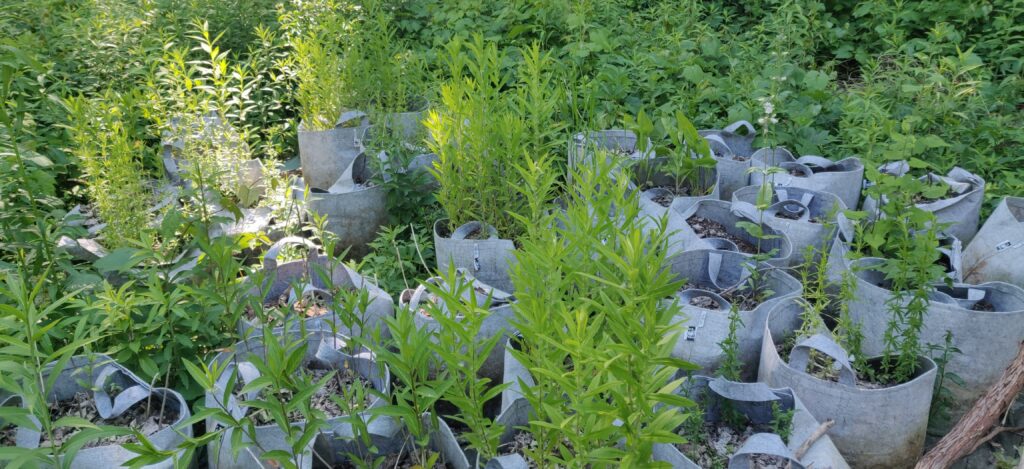
A few years ago, I was in downtown Toronto, and we’d supported an Indigenous partner that had access to a small space along the Humber River where they were planting a seed orchard. When I visited the site, I walked this small path along the river. It was this beautiful oasis.
They were creating seeds; they were using the plants for medicine and for teaching purposes. It was just such a powerful example of restoration as a way to reconnect, as a way to grow hope.
What do you hope to see from this in the future?
Nature is part of our value set. I want to see that value better represented in actions. And I want to match and meet the government working towards these global commitments of restoring 30 per cent of degraded lands and waters because this isn’t just about Canada.
This is about creating resilient communities, resilient ecosystems, and a resilient world. I think there is this real opportunity. We have this great momentum. We’re not quite there yet, but we can get there. I have hope.