Act Locally: How planting more ‘fire-resilient’ trees can help your community
Wildfires have become a fact of life for many in Canada. As climate change creates longer periods of hotter and drier weather, it is creating real risks for communities across the country, from remote Indigenous reserves and small towns to smoky southern cities.
Trees can actually play an important role in minimizing the impact of wildfires, which is why the Kamloops, B.C.-based Secwepemcúl’ecw Restoration and Stewardship Society (SRSS) has planted more than two million native trees to help restore burned forests in a way that also helps reduce future wildfires within Secwépemc traditional territory.
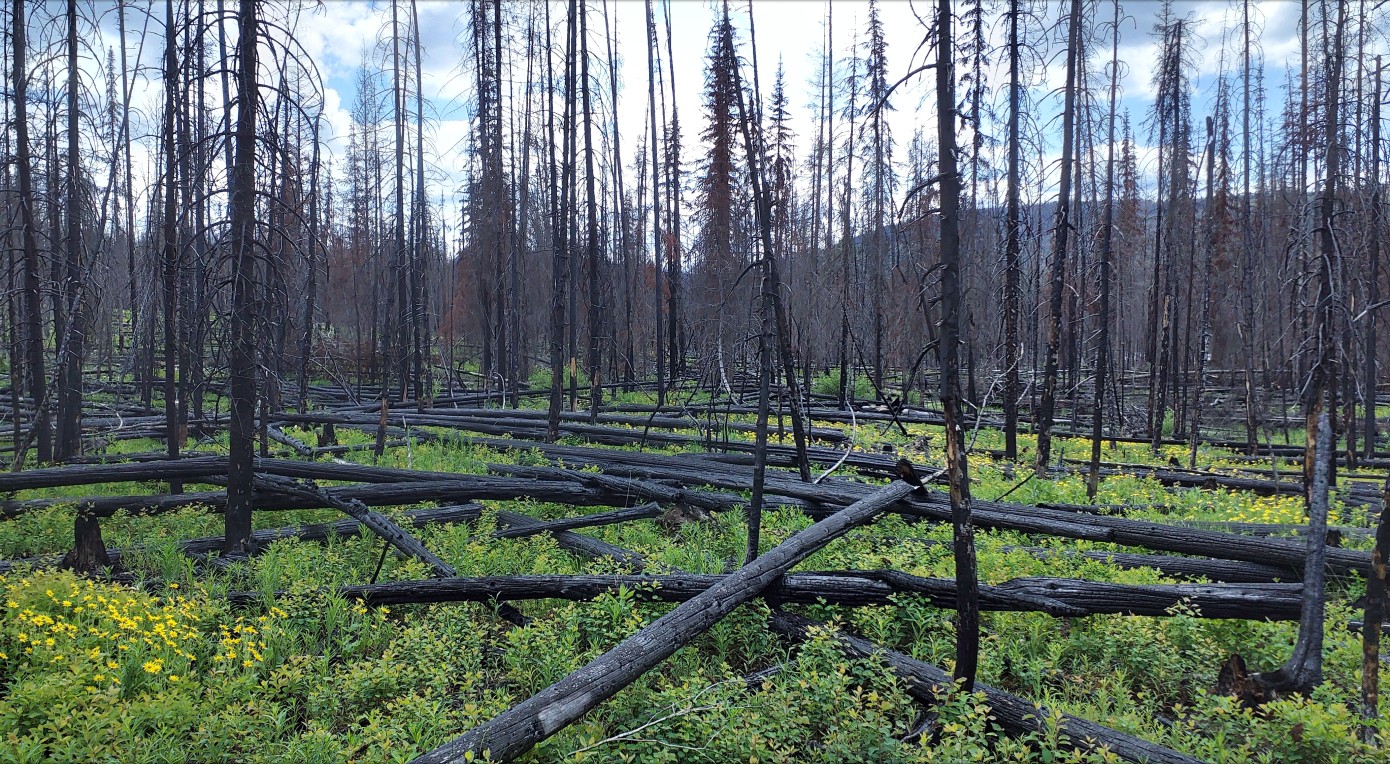
We spoke with Duff Warnock, a forestry management expert who works with SRSS, and Spencer Neufeld, WWF-Canada’s senior specialist for the B.C. Central Interior, to find out why fire-resilient trees matter, what makes some trees better able to withstand wildfires, and what you can plant in your own backyard to help strengthen your community.
What exactly are “fire-resilient” trees?
Spencer Neufeld: In simplest terms, they’re trees that are able to survive fire better than other species. When fires go through their areas, they don’t burn as often or as badly. They’re not fire-proof, but they don’t just scorch to the ground — and they recover better.
What is it about these trees that makes them able to stand up to wildfires?
Duff Warnock: The ways they survive vary. Some trees, like Douglas fir, ponderosa pine and larch develop thick bark as they mature that can make them better able to withstand a fire. Other species, like lodgepole pine, have serotinous cones that are closed until they are exposed to heat, at which point they open and release the seeds to the forest floor.
And many deciduous species [trees that shed leaves in fall] like aspen, cottonwood and birch, will hold more water in their stems to gain better resistance to fire. If that doesn’t work, and they’re burned and killed, their roots sucker up [a stress response where rapid-growing shoots emerge from a tree’s base or roots] so their offspring can thrive afterwards.
How is SRSS using fire-resilient trees in its forest restoration work?
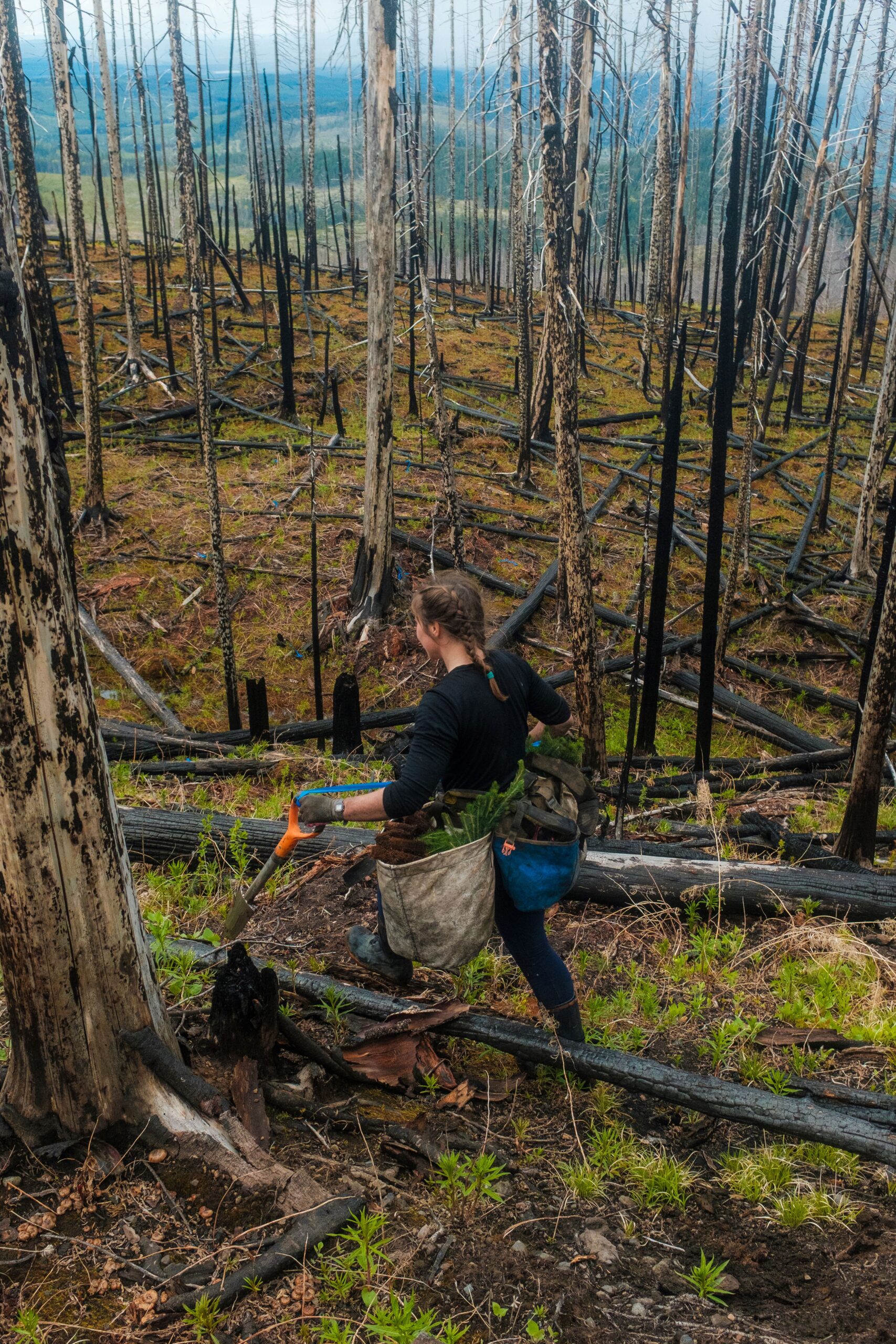
Warnock: We’re often planting large forests of trees; we may be planting 500,000 at a time. Our approach is to mitigate against climate change and its effects, including wildfires. That means we plant a variety of different species, so we’re not putting all our eggs in one basket, and we pick those species very carefully.
Our starting point is to engage with the Indigenous communities to get a better understanding of what species and areas they would like to see restored. Then we look at provincial stocking standards [provincial recommendation for number of trees in a hectare] for the region we’re working in and compare that to what we see in the field. From there, we go to the B.C. government’s Climate Change Informed Species Selection Tool, which tells us how all the species that grow in the zone will change over the next 80 years. It’s a pretty remarkable tool. It’s based on a number of different climate change models, not just one, and it helps us to make an informed choice about what to plant.
What other benefits can these trees bring?
Neufeld: Fire-resilient trees often exist in spaces that are wetter and cooler, so they can provide what we call climate refugia. These are spaces where animals can seek refuge when there’s a fire. For example, a small rodent would have a better chance of surviving under the roots of a tree that is fire-resilient than one that is not.
In addition, because fire-resilient deciduous trees often have large, leafy canopies, they do a lot to cool habitats, including [rivers and streams] when they are in riparian areas. And since their life cycle is usually shorter, they turn over more quickly, which means they provide more nutrients back into the ground. They tend to have many aspects that make the climate healthier.
Can planting fire-resilient trees, bushes and plants make a difference on a smaller scale, like in a backyard or a park?
Warnock: Yes, and doing so can help make your whole community more fire-resilient. But you have to be realistic. Planting a Douglas fir next to your house in hopes that it won’t burn won’t help much now, since it takes more than 80 years for it to get bark thick enough [to be fire-resilient]. A deciduous tree might be a better choice. It’s also really important to be aware of what’s suitable for your local area — you can talk to an urban forester or arborist for that kind of information.
What should Canadians keep in mind when planting fire-resilient trees on their properties?
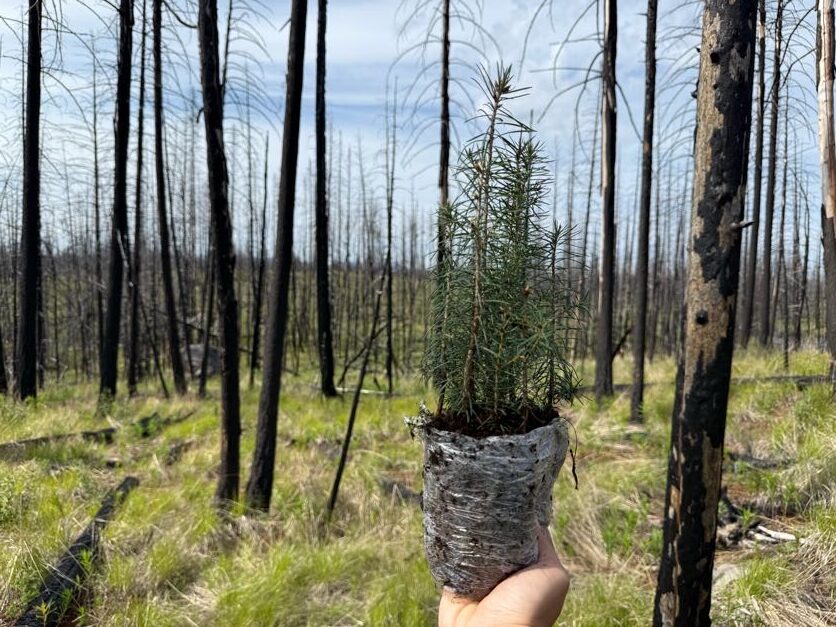
Neufeld: Planting native species is very important — you don’t want to be introducing invasive species. Look for those that will grow well in your climate. Honestly, most fire-resilient deciduous trees that are out in local forests would probably work in your backyard. There’s a wealth of information available. Most local governments have resources that can help. Here in B.C., for example, the FireSmart program has prepared some excellent guides.
How else can people use nature to help strengthen their neighbourhoods and communities against fire?
Warnock: Fire needs what we call a “fire triangle” — heat, fuel and oxygen. If you get rid of any one of those three, the fire will go out. Homeowners can’t control heat or oxygen, but they can control fuels. That’s why I recommend getting rid of as many flammable things as possible: cut back cedar and juniper bushes, move firewood away from buildings, clear out dry leaves from gutters. When you combine that with planting fire-resilient trees and bushes and plants, it gives you layers of protection.
Neufeld: You don’t have to cut all your trees down and plant new ones. You can work with what you have. It’s amazing how much of a difference it can make to just thin your trees. If you trim the branches about 15 feet up the base of a tree, and if you cut down dead trees or smaller trees that aren’t growing well, you can help make everything more fire-resilient. If a fire comes through or lightning hits the ground, it’s less likely to instantly light up like a matchbook.
Warnock: To help make your whole community safer, you need more widespread adoption. The more people do it, the more effective it will be.
This work is financially supported by Aviva Canada through the Nature and Climate Grant Program, the Barrett Family Foundation, the Government of Canada through the 2 Billion Trees program, Lowe’s, the Peter Gilgan Foundation and the Ronald S. Roadburg Foundation.
Act Locally is a blog series about how you can apply the nature-based climate solutions used by our NCGP participants to your own life.
See more in our Act Locally series:
- How to de-pave your property
- How to make your yard more nature-friendly with native shrubs
- How to help nature by preventing erosion in your community
- How native plants can help you take on invasive species
- How to help wetlands work for you
- How to enjoy the benefits of native grasslands in your own backyard