Eyes in the sky, walrus on the ice
It sounds like something out of a sci-fi movie: Mysterious shifting shapes on icy outcroppings and thousands of citizen detectives scanning satellite images for evidence of big, whiskered marine mammals.
While quite scientific, Walrus from Space is decidedly non-fiction — and it’s helping us study, and protect, one of the Arctic’s most iconic at-risk species.
Launched in 2021 by WWF-UK and the British Antarctic Survey, the initiative tackles a challenge in Arctic science: walrus haulouts are notoriously hard to monitor.
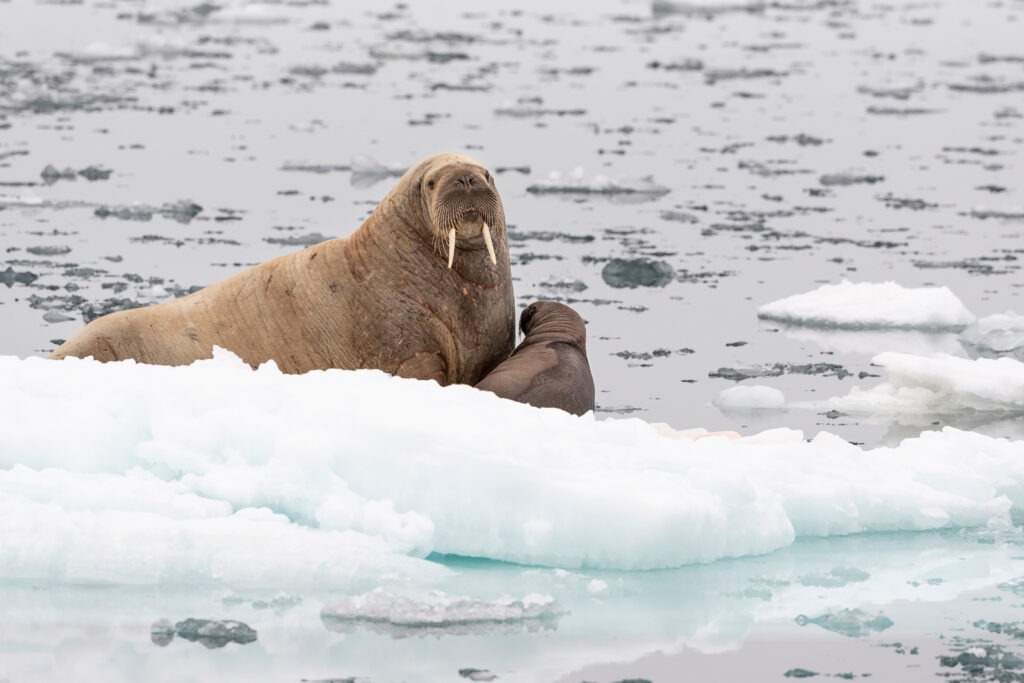
Whether on sea ice or land, these places where groups of walrus emerge from the water to rest between feedings, are in remote, often inaccessible areas. And getting close enough to count individuals can be disruptive to them, their habitat and costly. That’s when satellites prove useful: high-resolution image technology now makes it possible to spot walruses from a safe distance.
But there’s a catch: The volume of imagery is enormous, and that’s where the public comes in. Volunteer “walrus detectives” are helping sift through thousands of satellite images, identifying which ones contain walrus and which don’t.
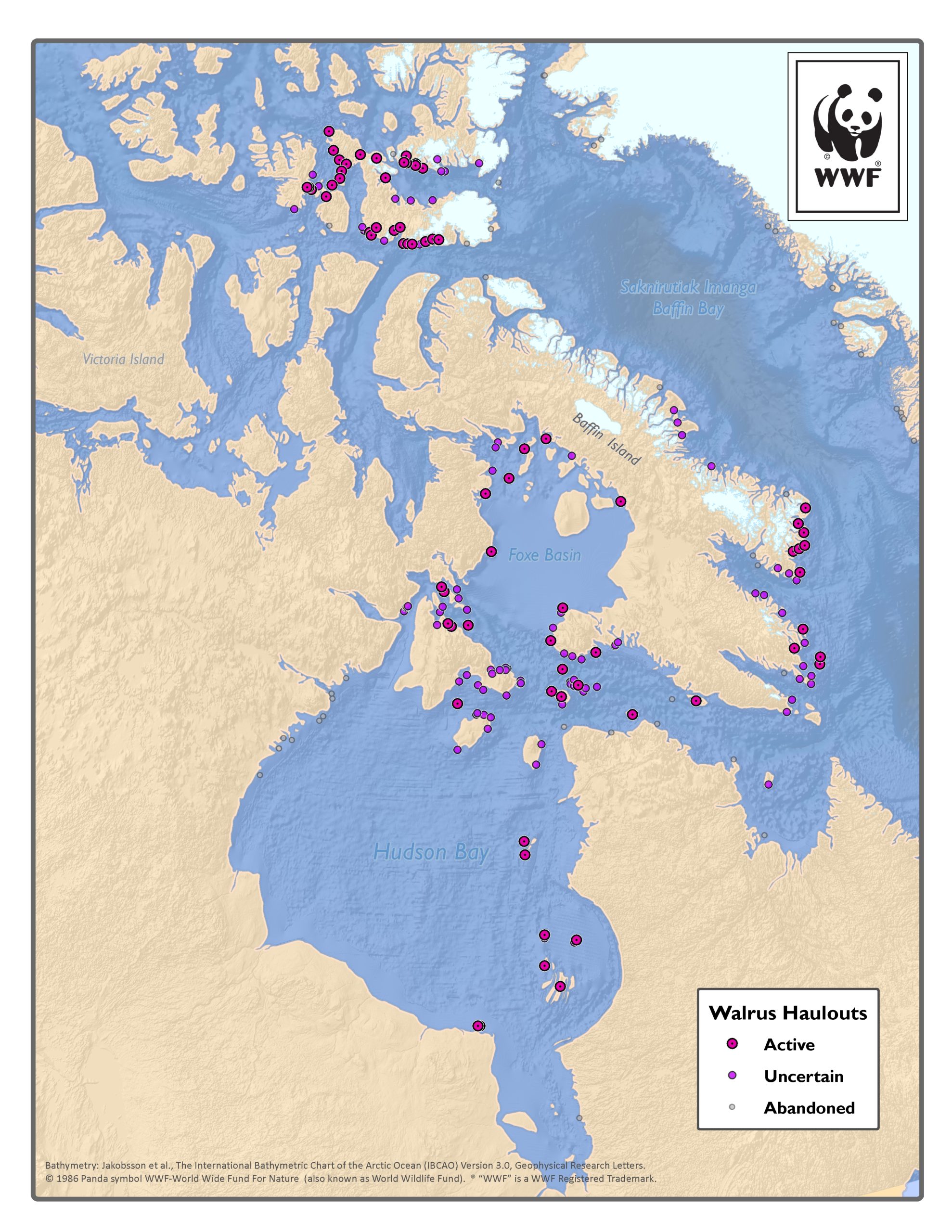
They can then move on to counting individuals and help researchers estimate haulout density, building a clearer picture of where walrus are gathering, how many there are, and how their behaviour has been affected as climate change and industrial impacts are reshaping their habitat in real time.
More than 37,000 participants from 68 countries have contributed so far. The result after five years of analysis is one of the most comprehensive databases of Arctic walrus haulouts to date — spanning Canada, Greenland and Norway — with the space-based findings confirmed via drone surveys and on-the-ground observations.
Knowing is only half the battle
Walrus from Space findings are complemented by Inuit knowledge from hunters and Elders as well as WWF-Canada’s Arctic Species Conservation Fund research and stewardship projects.
All this information is then used to help inform conservation planning, including walrus habitat protections proposed in the Nunavut Land Use Plan or mitigation efforts to reduce shipping impacts from underwater noise and dumping.
With Arctic waters seeing less sea ice and more industrial activity, understanding where walrus are and how they’re being affected is only becoming more urgent.
The good news is that helping has become so much easier. You just need a screen, some time, a willingness to look for smaller details in the bigger picture, and a desire to make a difference, one walrus at a time.
Ready to join the count? Learn more at the Walrus From Space website.