Come on, get happy: Eight fun facts about quokkas, nature’s most smiley species
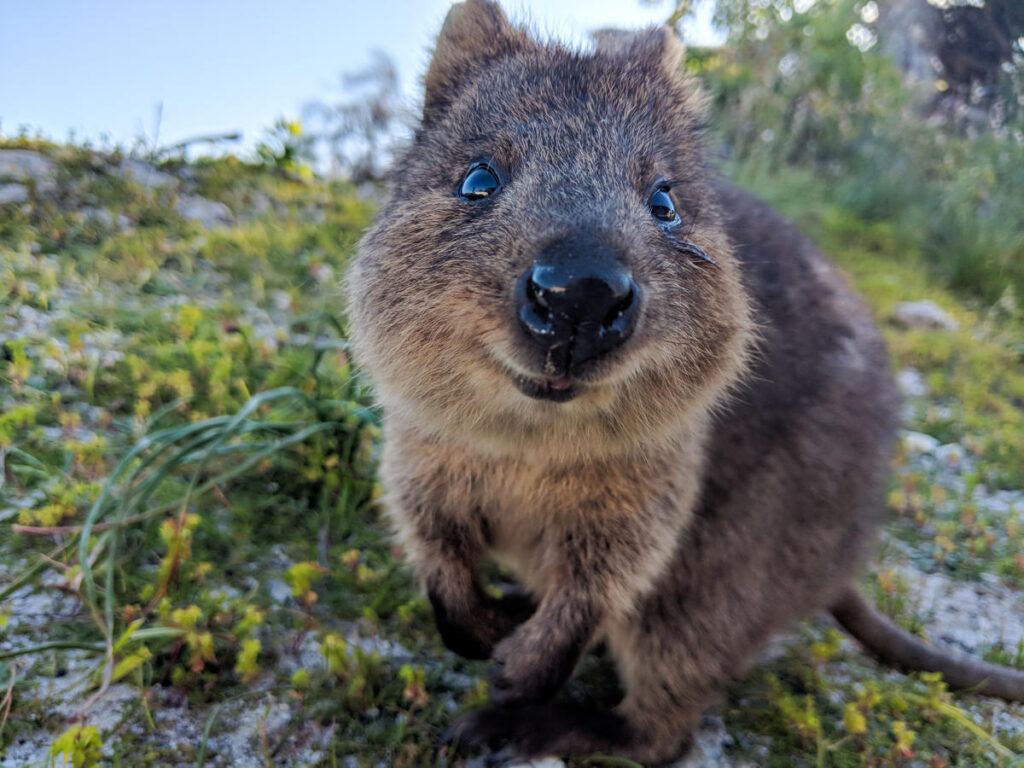
Boasting round faces and the appearance of a perma-grin thanks to their bone structure, quokkas have become smiley social-media darlings and are often called the world’s happiest animal.
But there’s more to these Australian marsupials than their meme-able mugs. Here are eight reasons to love the quokka — and one meaningful way to show it.
1. There’s an island (mis)named after them
After the quokka was described by a Dutch explorer as “a kind of rat as big as a common cat,” it inspired the name “Rottenest” (rat’s nest) island. The Whadjuk Noongar people, the traditional owners of the island near Perth, Australia, call it “the place across the water where the spirits are.”
Once widely distributed across southwestern Western Australia and its offshore islands, the largest current quokka colonies today are on what’s now called Rottnest Island and Bald Island, as well as a small mainland colony. Otherwise, quokkas can’t be found anywhere else offline.
2. Quokkas are related to kangaroos and wallabies
Rude Dutch dudes notwithstanding, quokkas aren’t even rat adjacent. Rather, they’re marsupials from the same family as kangaroos and wallabies known as Macropodidae. And just like their cousins, they move about by hopping and bounding with their small feet and short tails. Mothers also carry baby quokkas, known as joeys, in little tummy pouches.
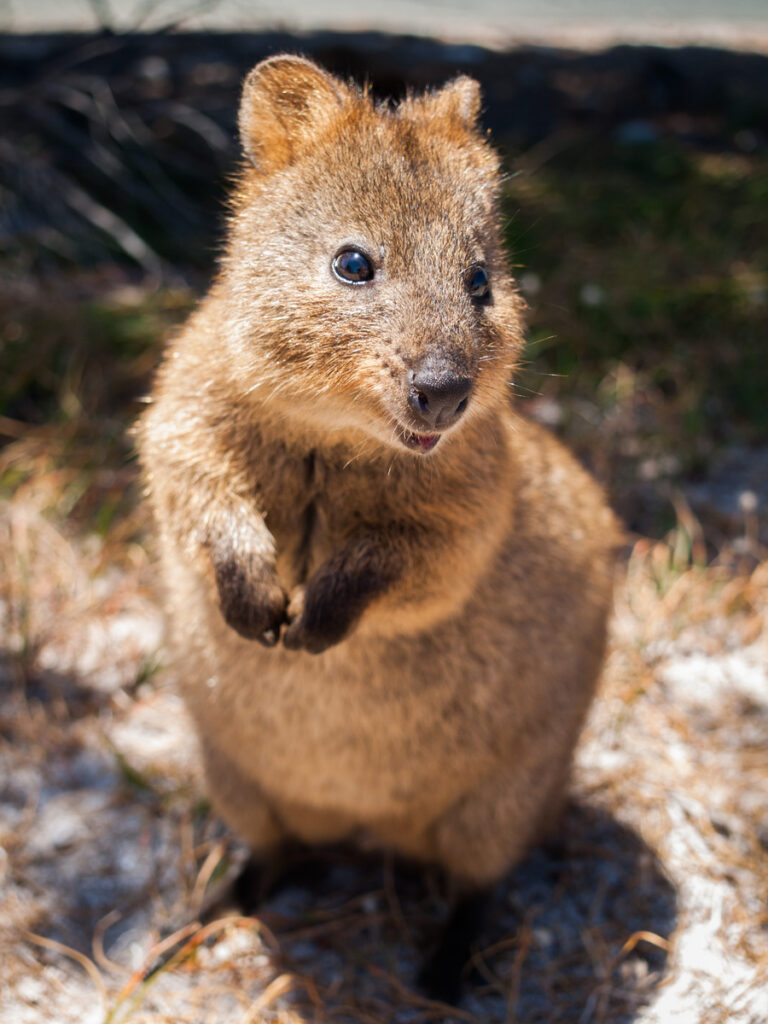
3. Quokkas are very peaceful and love sharing spaces
Unlike boxing kangaroos, quokkas aren’t very territorial. They are happy to coexist peacefully and gather in groups around scarce resources.
4. Undercover during the day, roaming by night
The mostly nocturnal quokka makes its home in swamps and scrublands, tunnelling through the brush to create shelters to nap away the heat of the day before emerging at night to eat.
5. Quokkas can go for long periods without food or water
Quokkas are beautifully adapted to the unpredictable Australian environment. When water is scarce, they dine on water-storing succulents. They can also go for weeks without eating by living off the fat stores in their short tails, a crucial adaptation for surviving in seasons when vegetation is hard to find.
6. Quokkas can climb trees
They can climb about two metres up a tree to grab a snack, if necessary! Quokkas usually prefer to munch away on native grasses or reach for leaves just above their heads.
7. Quokkas have two tummies
You may have heard that quokkas swallow their food whole. Or that they regurgitate it and then eat it again. In actuality, quokkas use their molars to grind up leaves and other tough treats, and while they don’t bring their food back up for seconds, they do digest it twice — once in each of their stomachs.
8. Quokkas are at risk of extinction
It may be a smiley survivor, but the quokka is no match for habitat loss, bushfires, foxes and feral cats. Sadly, quokkas are listed as Vulnerable on the IUCN Red List of Threatened Species.
Make your home happier with a quokka
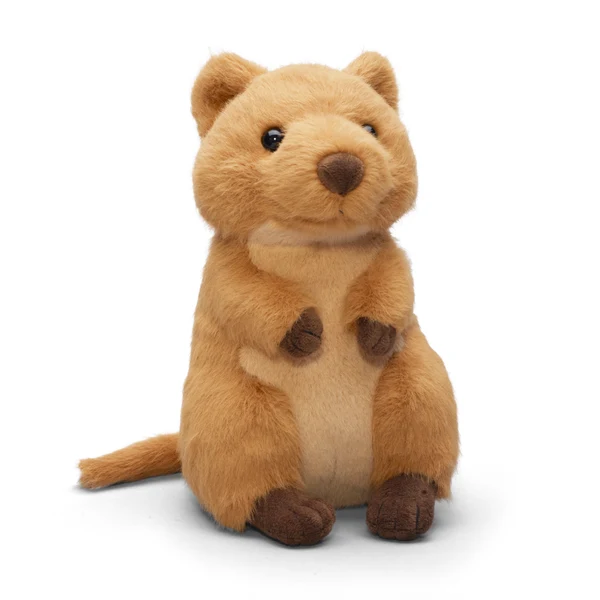
You don’t have to travel to Rottnest Island to see the happiest animal on Earth. With round, furry ears, plump cheeks and that signature smile, our true-to-life quokka plush is ready for its close-up.
Symbolically adopt a quokka for someone special — or for yourself, we won’t tell — to support conservation efforts that help species like these smiley marsupials thrive.
Each adoption kit includes a high-quality plush, personalized adoption certificate, educational poster with facts about the species and an optional reusable tote bag. A digital adoption kit is also available, which does not come with a plush. Both kits include charitable tax receipts for the donor.