Eight facts you didn’t know about the capybara
The capybara’s “keep calm and carry on” attitude and harmoniously hilarious interactions with other species have memed their way across the internet and charmed animal lovers around the world. But there’s more to this water pig than its friendly nature. (That’s not throwing shade, by the way, it’s in the dictionary!)
Find out eight capybara facts — and how you can symbolically adopt one today.
Capybaras are gentle giants
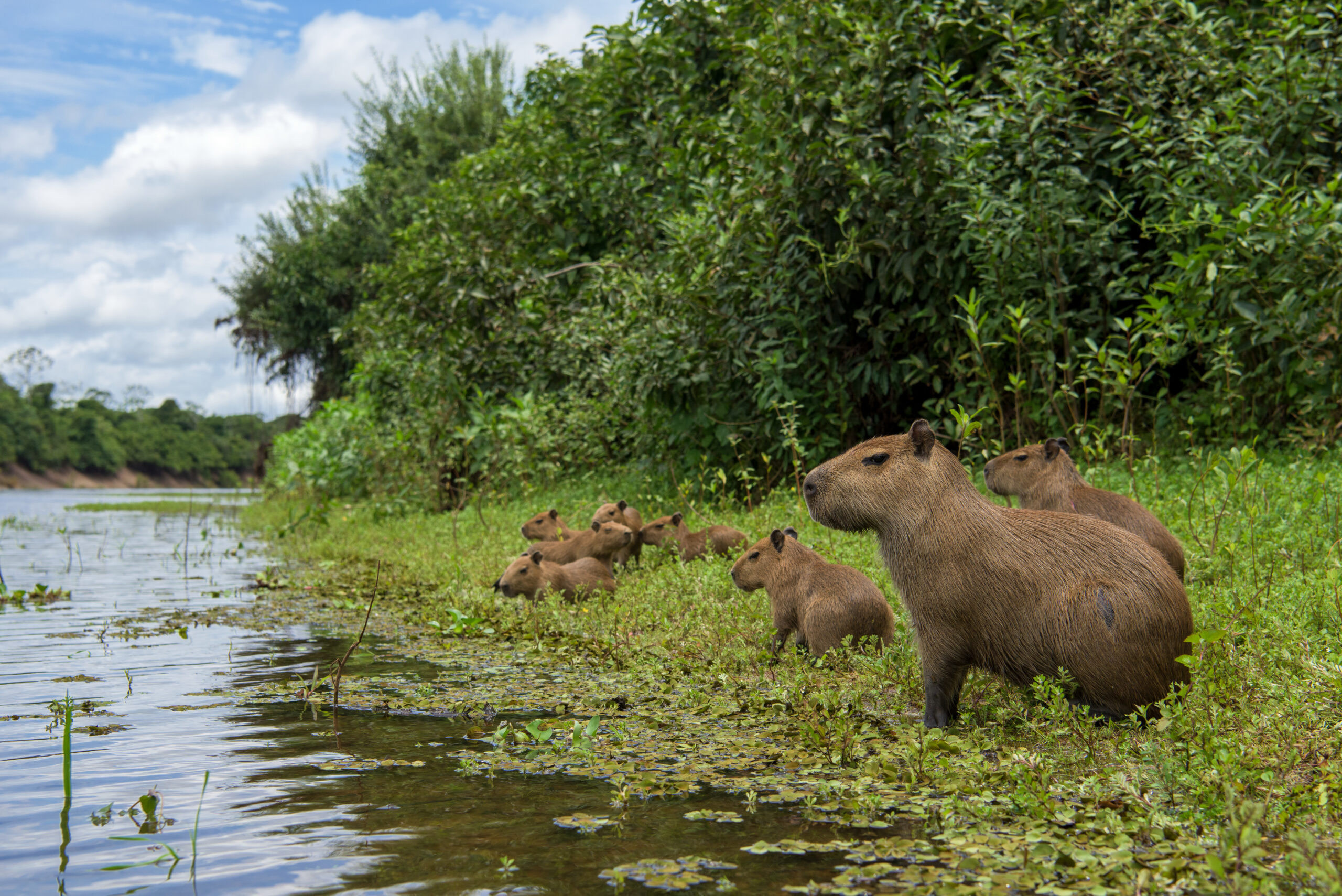
The capybara is the world’s largest rodent, with average adults standing 60 centimetres tall, up to 131 centimetres long and weighing around 50 kilograms. That’s about the size of a full-grown wolf or almost twice as big as beavers, the second-largest rodent.
Capybara teeth never stop growing
Like a beaver, a capybara’s teeth never stop growing. To help wear them down, they graze on a variety of aquatic plants, grasses and other vegetation like fruits and tree bark. They also seemingly never stop eating — a full-grown capybara can chow down as much as four kilograms of grass daily.
Capybaras are native to South America
They can be found in Brazil, Colombia, Venezuela and most other countries on the continent.
Capybaras are excellent swimmers
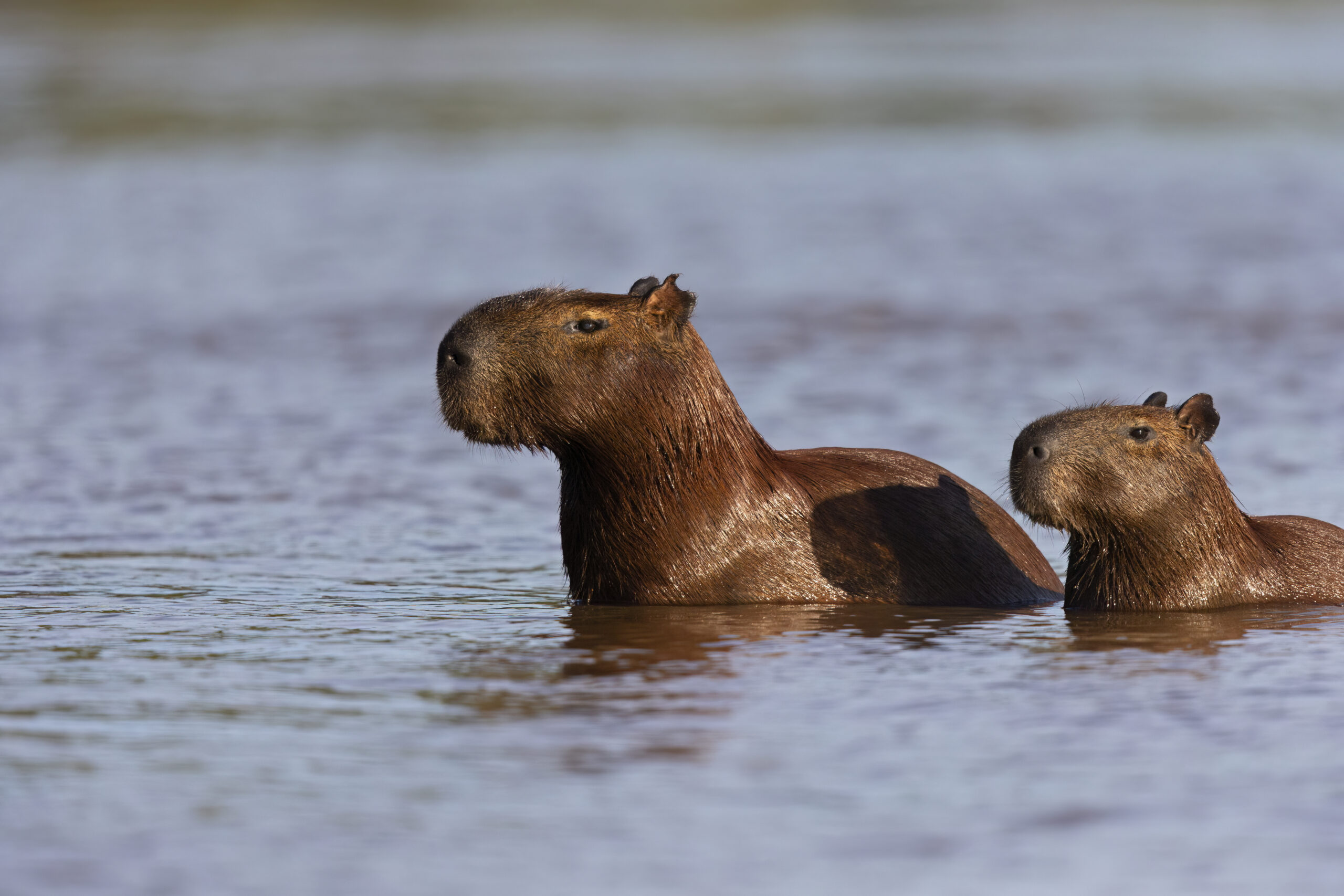
Their scientific name is Hyrochoerus hydrochaeris, literally “water pig,” These semi-aquatic mammals live in forested areas near lakes, rivers and wetlands, as well as seasonally flooded savanna and the edges of jungle ponds. They also have quick-drying fur and partially webbed feet that help them swim swiftly through the water.
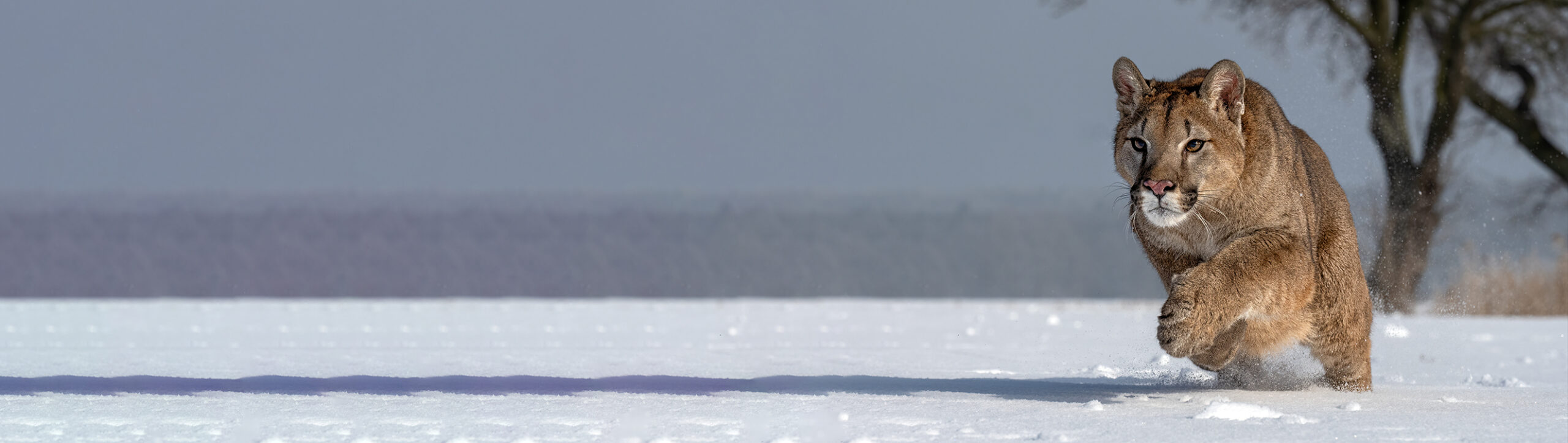
The capybara’s eyes, ears and nostrils are located on the top of their head, like a hippopotamus, allowing them to stay submerged for long periods of time and avoid jaguars, pumas and other predators. They can even sleep in the water with their eyes, ears and nostrils sticking out.
Capybaras eat their own poop (Yes, really)
Don’t judge! It’s difficult for capybaras to completely digest plants and grass, so they eat their own feces to extract more nutrients from the food they consume. Their poop also contains beneficial bacteria that help them digest the fiber in the plants they eat. Essentially, capybaras eat each meal twice, an evolutionary strategy called coprophagy.
Capybaras are most active at dawn and dusk
Known as crepuscular behaviour, capybaras tend to graze and socialize during dawn and dusk so they can stay cool during the hottest parts of the day and stay alert while their primary predators are out hunting.
They are social creatures
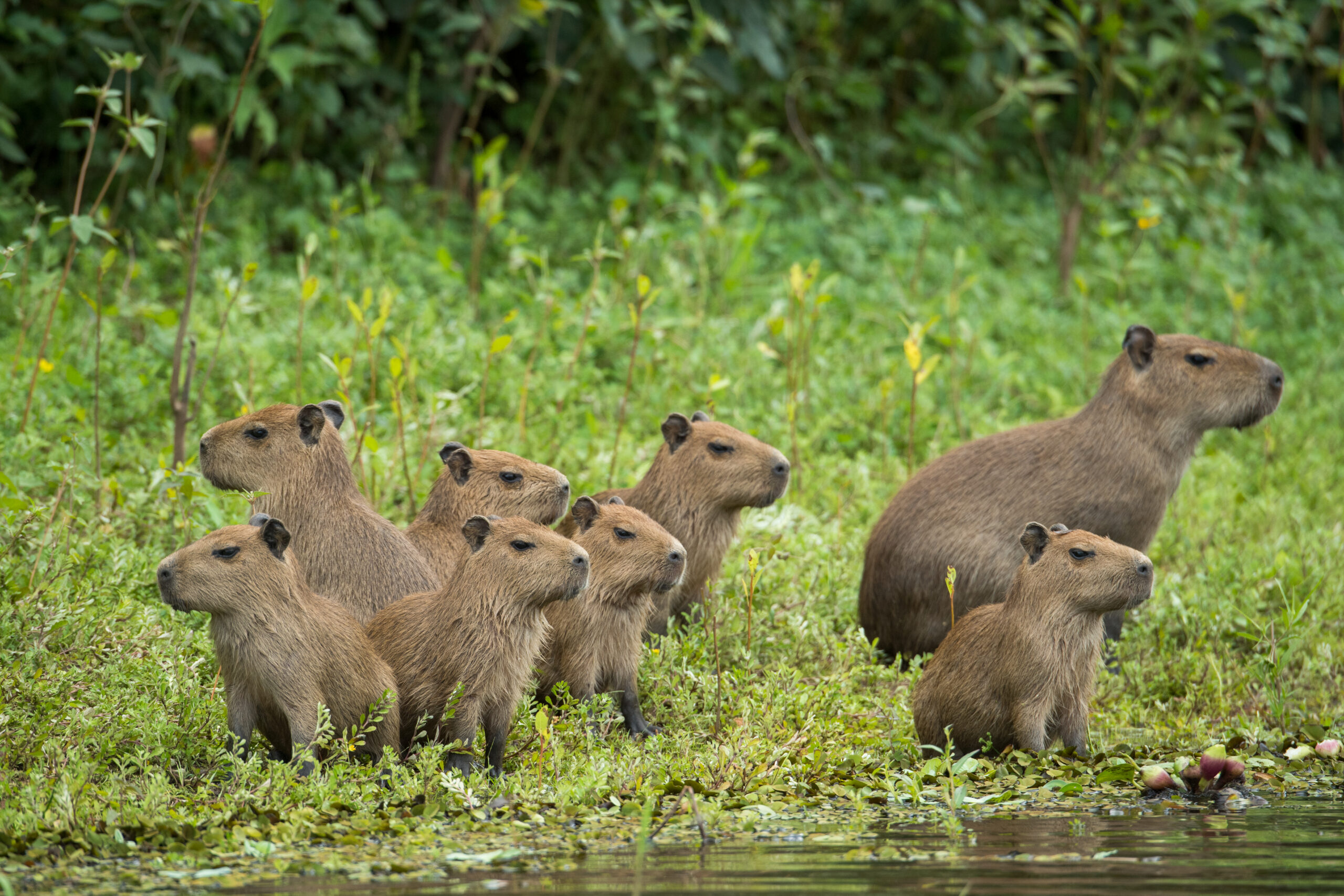
Capybaras live in groups called herds for safety and support. The species’ innately cooperative nature and strong social bonds offer protection from predators and help caring for each other’s young. During the dry season, up to 100 capybaras will gather together near water bodies.
Other animals like capybaras too
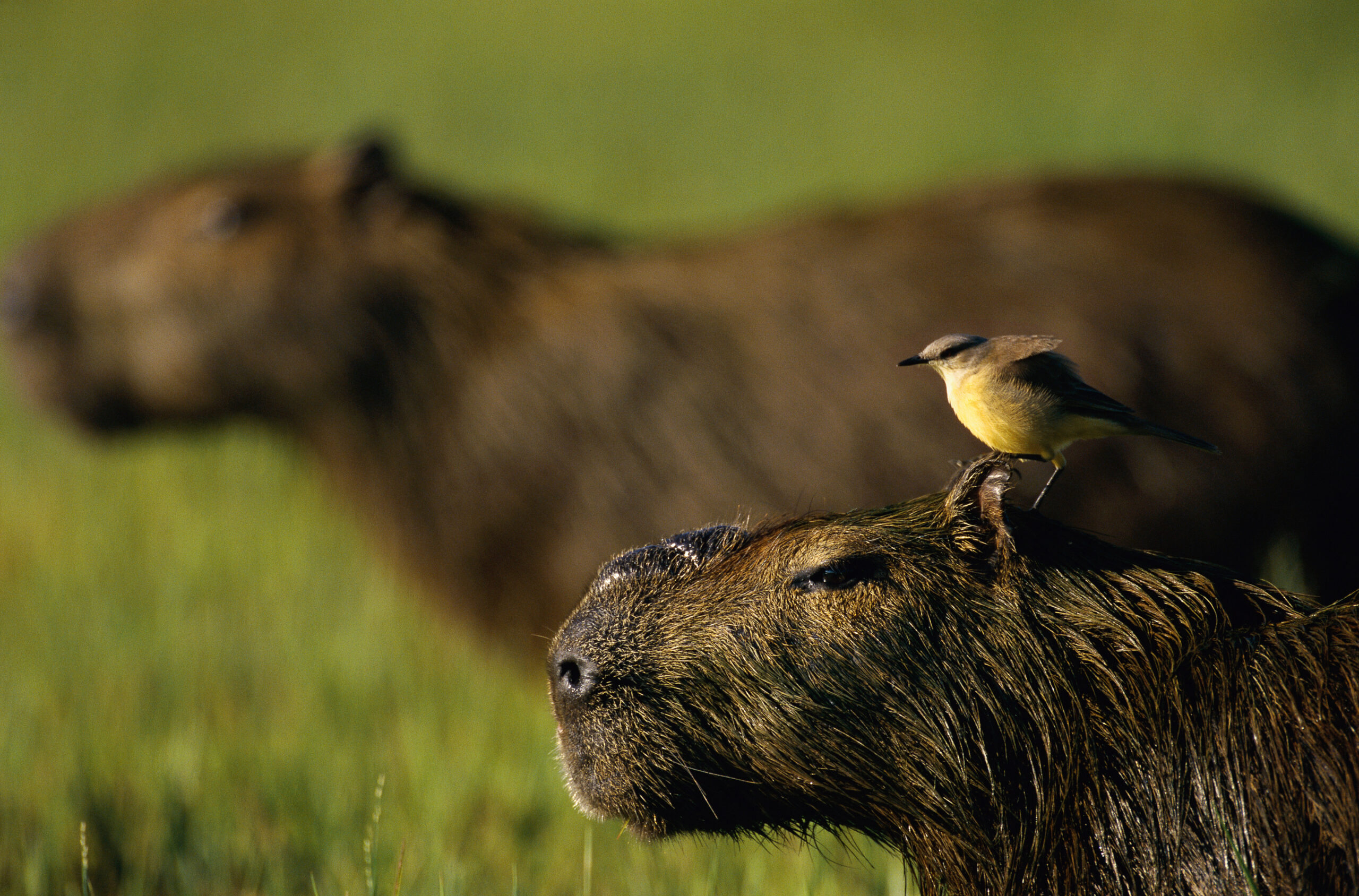
It’s not unusual to see a bird or another species perched on the capybara’s back. That’s because of the capybara’s gentle and calm temperament and something called mutualism. This symbiotic “you eat the bugs off my back, I’ll let you ride along” arrangement helps keep the capybara healthy while birds get snacks and transportation. It has also earned the capybara nicknames like “nature’s ottoman” and “moving chair.”
But are capybaras so likable that they can hang out with crocodiles? While viral videos have led to this common misconception, these rare moments are usually of captive capybaras and caiman, a smaller and less aggressive crocodilian species. Due to their size, caiman are unlikely to attack a healthy adult capybara (they will, however, prey on weak or juvenile capybaras if the opportunity arises) and, in their natural environment, capybaras avoid animals that eat them.
Why symbolically adopt a capybara?
Capybaras play an important role in their ecosystem by controlling plant growth and as prey for predators like at-risk jaguars. Though capybaras are not endangered themselves, deforestation and the conversion of wetlands is destroying their natural habitat. By symbolically adopting a capybara, you’re helping WWF restore and protect habitats for species in Canada and beyond.
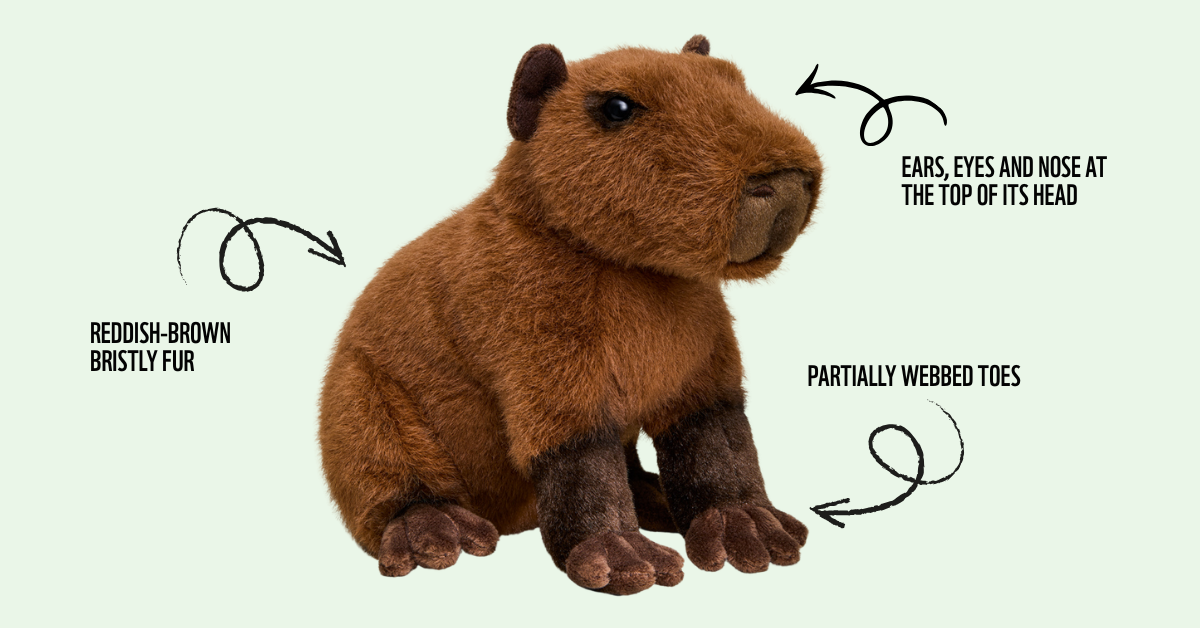
Each symbolic adoption kit includes a true-to-life plush animal designed with our species experts, an educational poster with facts about the chosen species and conservation work your gift makes possible, and a personalized adoption certificate — all wrapped up in a reusable (and optional) tote bag.
For more gifts that help wildlife thrive, visit wwf.ca/shop.