Apex predator and ecosystem protector: 10 grizzly bear facts
Whether roaming old-growth forests and alpine meadows or perching on rugged riverbanks with their strong jaws effortlessly seizing salmon mid-air, few animals typify Canadian nature quite like the grizzly bear.
But today, these natural habitats — their homes — are degrading and disappearing.
Find out more about this big and burly bear, the threats that they’re facing, and how you can help with these 10 grizzly bear facts.
1. They are the second largest of the three bears
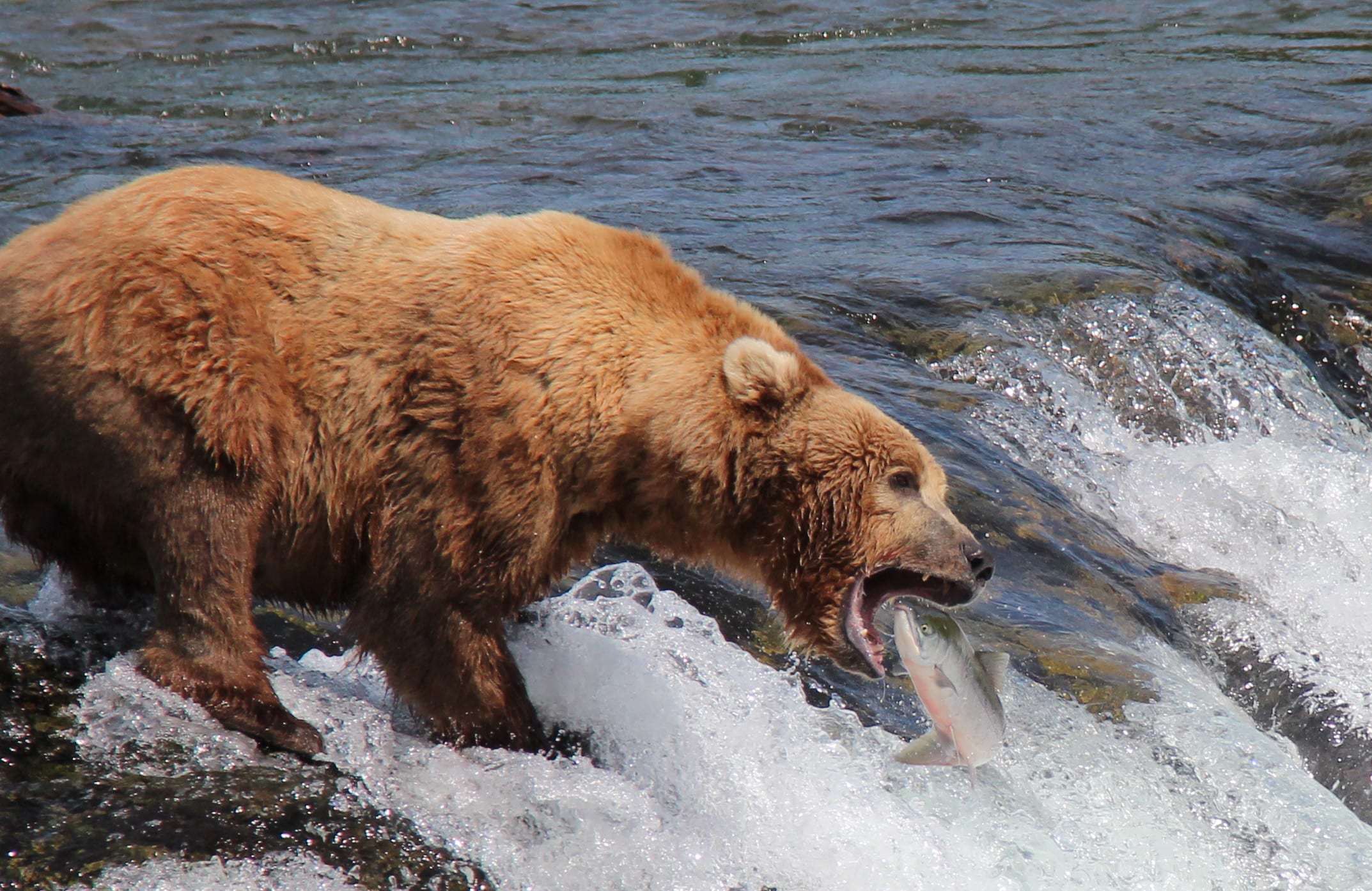
The black bear is the smallest of the three bear species found in Canada and the polar bear is the largest. The grizzly bear sits in the middle, with female grizzlies weighing 100 – 150 kilograms while males weigh 180 – 270 kilograms. When standing on their hind legs, grizzly bears can reach an imposing 3 metres tall and are known for their protruding shoulder hump, dish-shaped face, and short, round ears.
2. Grizzlies are seriously strong
With 8-centimetre fore-claws, powerful digging muscles that give them that shoulder hump, and an extraordinary bite force, grizzlies are apex predators for a reason.
3. They can run faster than the world’s fastest human
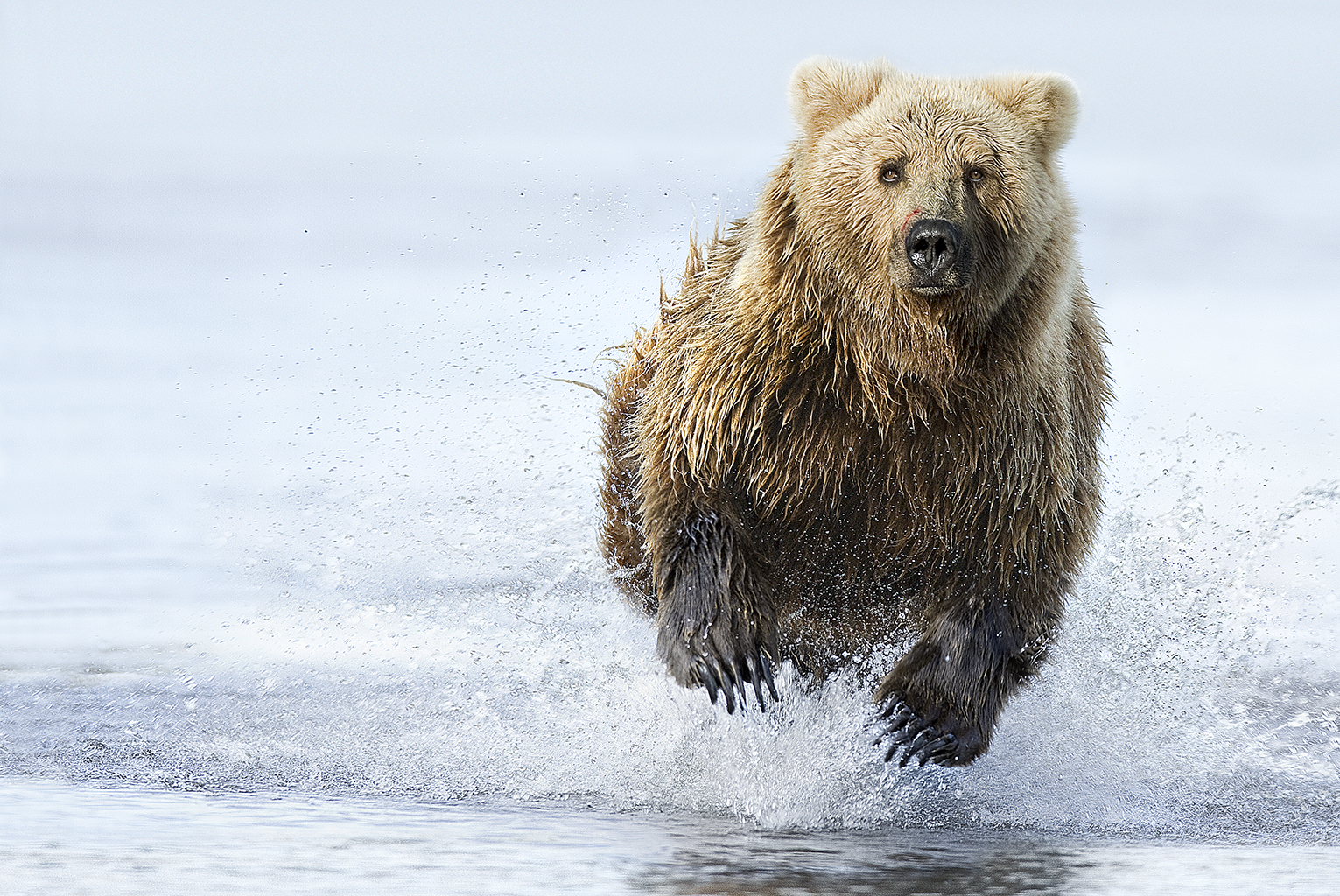
Despite their size, grizzlies are surprisingly speedy, sprinting as fast as 56 kilometres per hour and even sustaining 45 kilometres per hour over longer distances. Usain Bolt, humanity’s current record-holder, achieved a top speed of 44.72 kilometres per hour for just a few seconds during his 100-metre world record run.
4. Named for their fur not their fearsomeness
Rather that referencing the “grisly” scene of a successful hunt, grizzly bears are named for the distinctive silver-tipped fur that gives them a “grizzled” appearance. A type of brown bear, and not a subspecies as once thought, that fur can actually range from blonde to nearly black.
5. They aren’t true hibernators
Grizzly bears eat as much food as they can in the summer and fall to build up their fat reserves for a winter spent inside their den — gaining up to nine kilograms a week! But grizzlies don’t actually hibernate. Instead, they enter a state of dormancy called torpor (kind of like teenagers on the weekends). Their body temperature and heartrate slow down but they may occasionally wake up, move around or even leave their dens for food.
6. Don’t come between a mama bear and her cubs
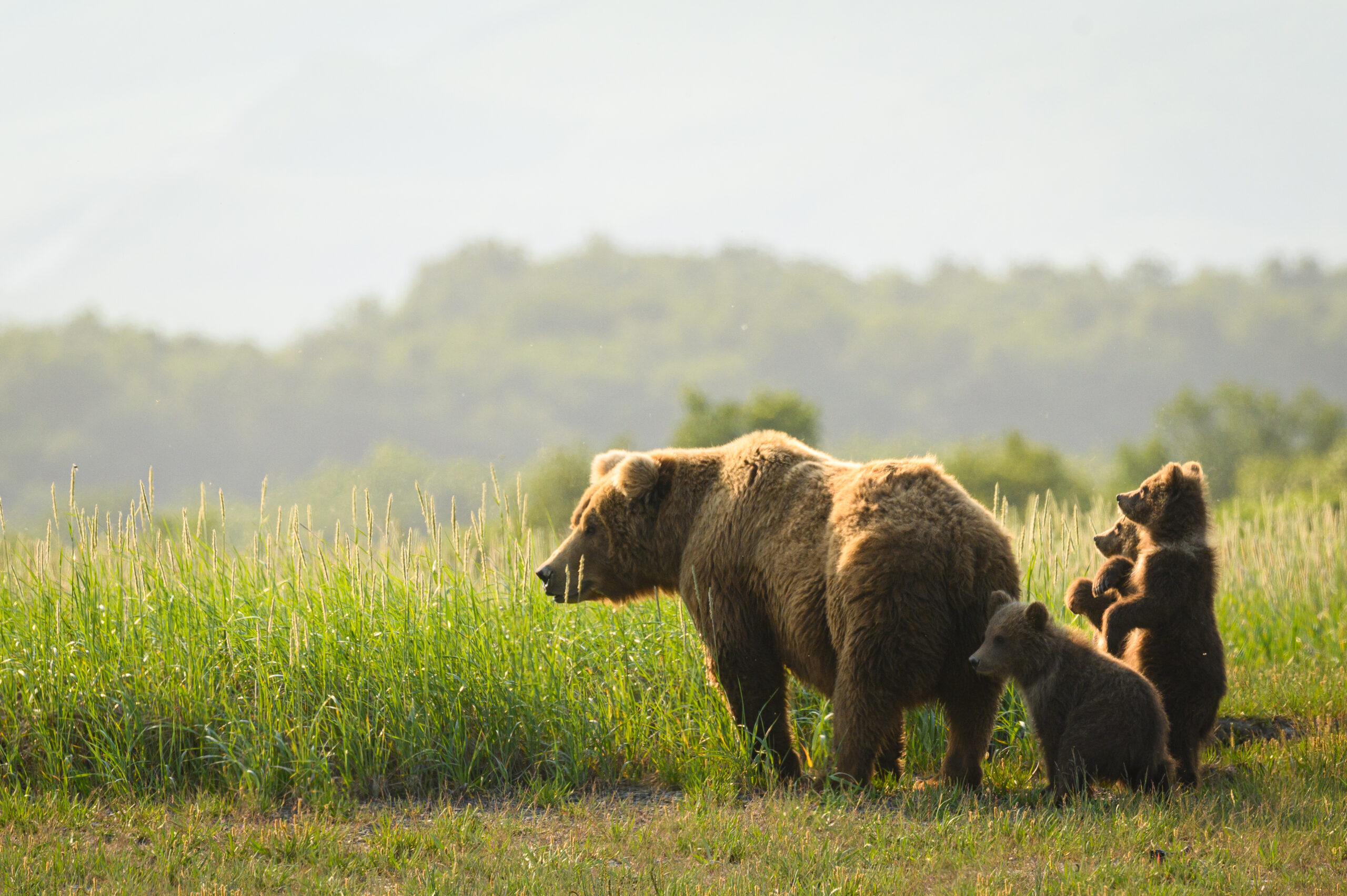
Come spring, female grizzlies may emerge from their den with one to three cubs in tow, which she will fiercely protect and take care of for up to two years. Because grizzlies have a low reproductive rate — they don’t reach sexual maturity until the age of five and only give birth every three to four years — it takes longer for populations to recover. That’s why it’s so important to do what we can to protect grizzlies and their habitats today.
7. The grizzly diet
How do grizzlies achieve their enviable physiques? They eat salmon, hoofed animals like caribou and deer, seals, small mammals and even whale carcasses. Despite their fearsome reputation, a grizzly bear’s diet also consists of fruits, roots, nuts and leaves. During berry season, they can spend half their time foraging and devouring berries. And in the fall, grizzlies can spend up to 20 hours a day eating up to 20,000 calories.
8. One of the biggest threats to the grizzly bear is people
Though notably strong and with remarkable endurance, this big bear has not been able to withstand human encroachment.
Grizzly bears disappeared from the Prairies in the 1880s and the small population once found in the Ungava peninsula of northern Quebec and Labrador has not been documented since 1948.
Today, the remaining western population — found in B.C., Alberta, Yukon, Northwest Territories and, to a lesser extent, Manitoba — is losing their natural habitats to homes, roads and extractive-industry infrastructure. This habitat loss and fragmentation also isolates bears, making it more difficult for them to find food and mates.
Grizzlies are also killed from direct human-related causes such as collisions with vehicles and trains, hunting and poaching, and defense of life and property.
9. Hybrid “grolar bears” have been documented
Grizzly bear and polar bear ranges overlap, but the two species are unlikely to come into contact due to differing habitat preferences. In a rare occurrence, a female polar bear mated with two male grizzlies, producing a lineage of eight hybrid bears known as “grolar bears.” Though grizzly bears are being spotted farther north more often, DNA analysis has yet to identify hybrids outside this family.
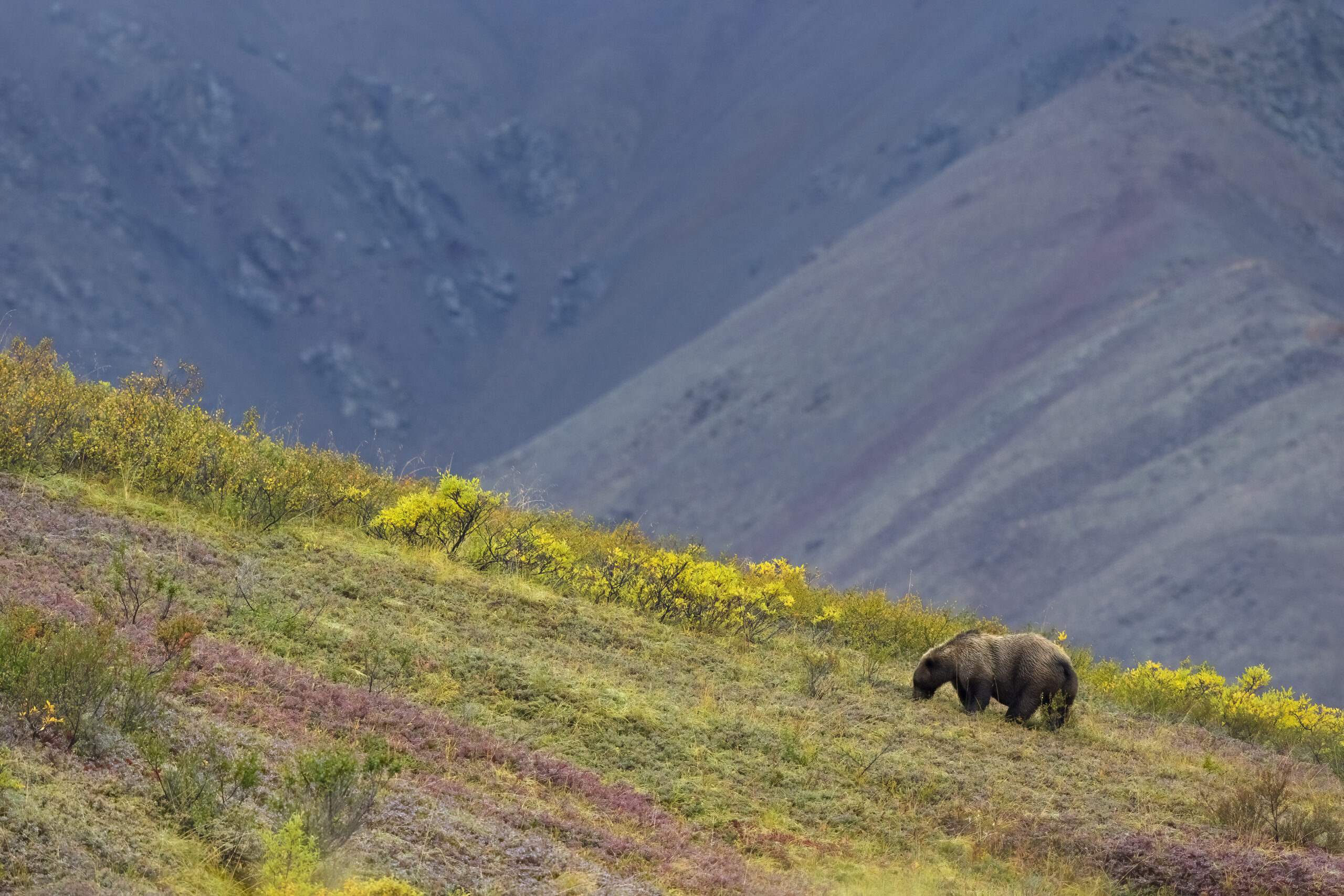
10. Grizzlies are natural influencers
Grizzly bears in Alaska’s Katmai National Park Preserve have gone viral in recent years as people across North America vote for the fattest bear. (No, this is not ursine body shaming, it’s celebrating the bear best prepared to survive winter).
They’re also one of nature’s strongest influencers. From dispersing seeds from the fruits and berries they eat through their scat to distributing nutrients from salmon (from both salmon carcasses and in their scat) to the West Coast’s remarkable forests, grizzly bears play a crucial role in maintaining the health of their ecosystems.
Habitat loss not only jeopardizes the future of grizzly bears, but the health of the ecosystems that depend on them. Donate now to help WWF-Canada restore and protect the important habitat of the grizzly bear and other Canadian species.