
What are log booms? Understanding their role and impacts in coastal ecosystems
Ever notice large clusters of harvested logs floating in rivers, lakes and coastal waters? They’re called log booms, and they are a longstanding — and sometimes problematic — approach in B.C. to transporting and storing logs.
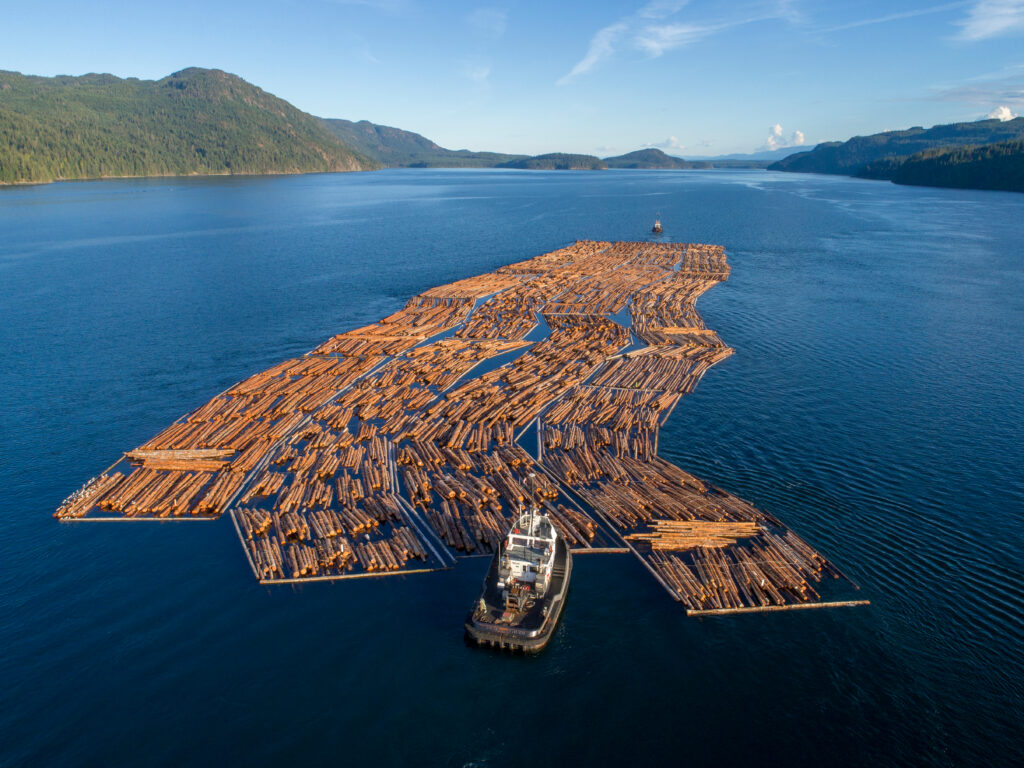
After harvesting, logs are dumped directly into coastal waters or inland lakes, assembled into booms and moved by tugboat to sawmills. Before being processed, these log booms are frequently stored in shallow coastal areas like estuaries, where freshwater from rivers mixes with the ocean saltwater to create what are often called “nurseries of the sea.”
Log booms are used to move and manage logs efficiently, but that comes at a significant environmental cost which can cascade through coastal and freshwater ecosystems. Although provincial regulations require permits and leases for log handling and storage, sensitive habitats like eelgrass beds can still be harmed.
Where are log booms found?
No other province depends on log booms the way B.C. does, largely due to its long coastline and mountainous landscape, which make transporting and storing logs in water the most practical option.
Log handling and storage areas are found along much of the B.C. coast, particularly in estuaries and sheltered bays, and they can also be found in some inland lakes.
There are over 1,000 log handling and storage tenures and tenure applications in B.C., covering over 12,000 hectares. These permits and leases allow a company to use a specific area of water or shore to sort, store and move logs. Many of these sites have been active for decades, causing significant negative impacts for people and nature.
How do log booms impact wildlife and nature?
They can affect different ecosystems and species in various ways.
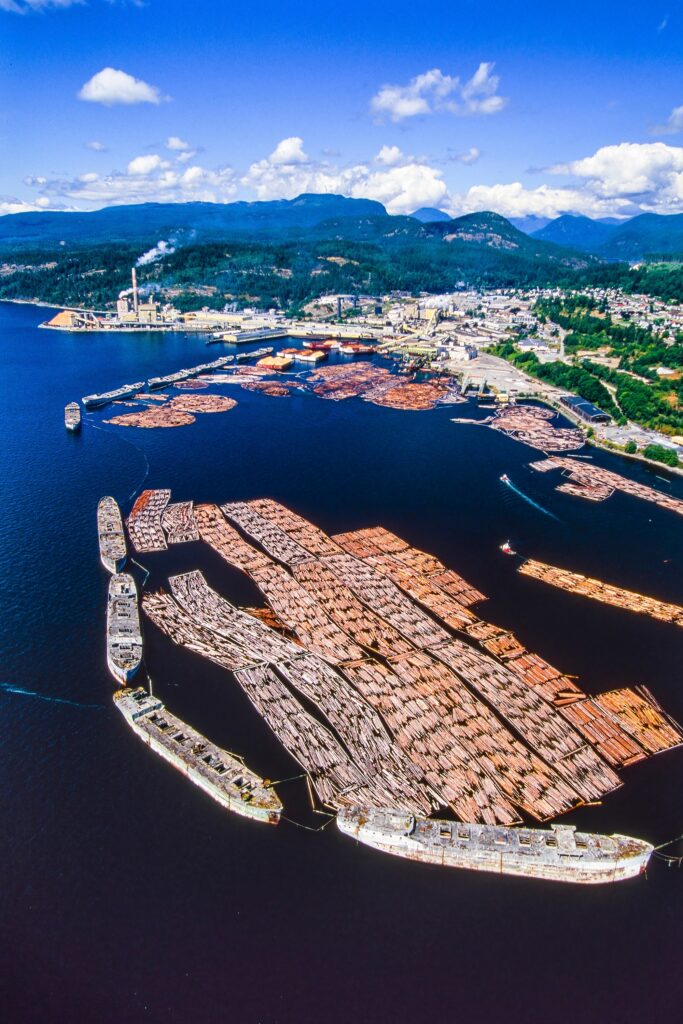
Coastal habitats: Dense rafts of floating logs block sunlight from reaching the water below, limiting the growth of underwater plants such as eelgrass. These plants are essential because they produce oxygen and provide food and habitat for fish and other wildlife.
As logs rub together, bark and wood debris fall into the water and sink to the sea floor. This material builds up and can smother bottom-dwelling organisms, eelgrass meadows and shellfish beds.
As the wood decomposes, it can reduce oxygen levels and change the water’s chemistry, making conditions more stressful for marine life.
Log booms can also physically damage habitats. When tides recede, grounded booms scrape and compact the sea floor, destroying sensitive habitats such as eelgrass beds. Escaped logs can wash up on the beach, littering shorelines and salt marshes.
Salmon: Log booms can degrade key salmon habitat, especially eelgrass beds that provide shelter and feeding areas for juvenile salmon. The loss of these habitats can reduce the survival rate of young salmon, in turn decreasing the availability of salmon as an important food source for many other species, including endangered southern resident killer whales, which almost exclusively feed on Chinook salmon.
Log booms can also act as artificial haul-out sites for seals, making it easier for them to hunt endangered or threatened salmon populations as the fish move through coastal and estuarine areas.
Food sovereignty and coastal livelihoods: Damage to coastal habitats and marine life can reduce access to traditional foods for First Nations and disrupt cultural and harvest activities in Indigenous territories.
At the same time, declines in fish and shellfish populations can have broader impacts on commercial and recreational fisheries, affecting local economies, food access and livelihoods in coastal communities.
In this way, log booms can impact both Indigenous food sovereignty and the social and economic wellbeing of people who rely on healthy marine ecosystems.
What can be done to safeguard habitats and species?
Site log booms carefully: Log booms should be located away from culturally important areas and ecologically sensitive habitats such as estuaries, eelgrass beds and salmon migration routes. First Nations and local communities should be part of the discussion when deciding if log booms can be sited in traditional territories or local fishing grounds, and in which specific areas.
Follow best practices: Update and follow best management practices for log handling and storage sites to reduce environmental damage and protect ecosystems. Including these practices in the regulatory framework governing log booms would help ensure they are enforceable by law and consistently applied.
Restore damaged sites: Restore coastal and freshwater areas historically impacted by log booms to help ecosystems recover.