Reindeer Games: Eight facts about Arctic reindeer and one great gift idea
While a few famous reindeer may be busy this holiday season, the activities of their wild Canadian cousins are virtually unknown. In honour of Santa’s eight iconic reindeer, here is a list of the top eight things you may not know about Arctic caribou.
1. Dashing names
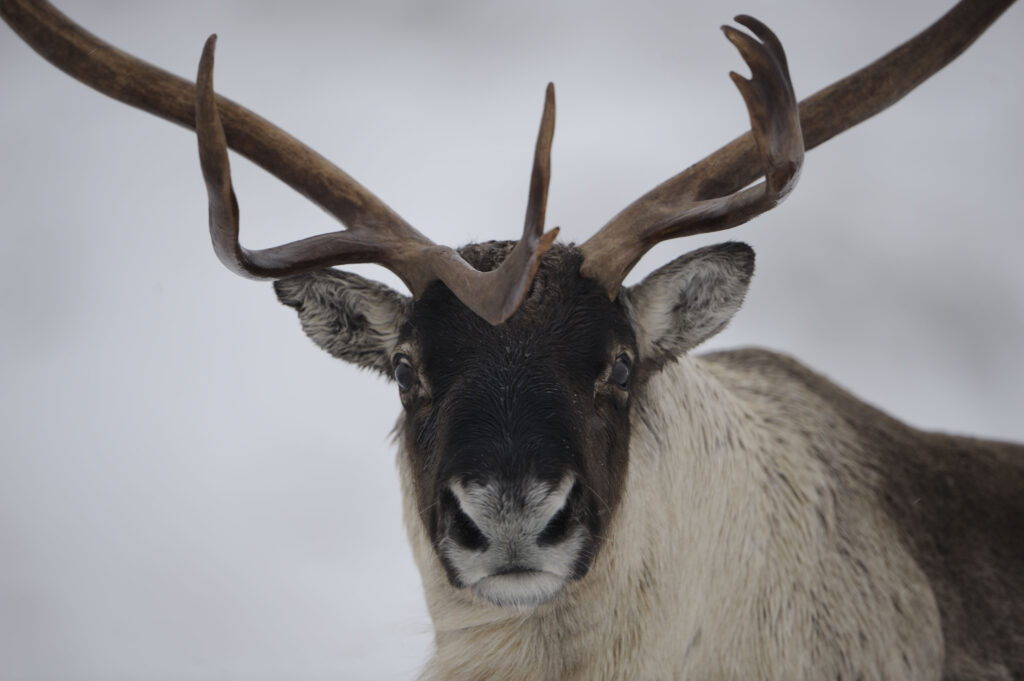
Did you know that caribou and reindeer are the same species? In Canada, we refer to Rangifer tarandus as “caribou” and they are typically wild. Elsewhere in the world they are called “reindeer” and often domesticated. The Canadian Arctic is home to hundreds of thousands of wild reindeer, we just call them by a different name.
2. Dancer’s range
Arctic herds of reindeer migrate north in the summer and south in the winter, with one herd travelling up to 2,500 km each year.
3. Prancer’s tools
Reindeer’s hooves are large and rounded, which they use for digging for food under the snow (also called cratering).
4. Vixens
They are the only member of the deer family where females also have antlers.
5. Comet-like speed
Reindeer travel up to 55 km per day and reach a top speed of 80 km/h.
6. Cupid’s role
Reindeer traditionally form single-sex herds, meeting up in the fall to mate.
7. Donners
Reindeer provide a significant source of traditional food and clothing for indigenous people in the North.
8. Blitzen
Blitzen is German for a flash of light, and scientists have found that reindeer’s eyes and vision change throughout the year as they deal with the full light of the sun at the summer solstice and pure darkness in the winter.
Ensure reindeer exist in more the just holiday tales
There is a dramatic overall downward trend across the majority of Arctic caribou herds in Canada, making caribou among one of Canada’s greatest wildlife conservation concerns. The Bathurst herd in the Northwest Territories, for example, has dropped from 472,000 individuals in 1987 to a critical low of 3,609 in 2025. The Baffin Island herd is down 95 per cent to only 5,000 individuals, although there are encouraging signs of recovery.

You can help populations rebound by symbolically adopting a reindeer. Proceeds fund conservation efforts throughout Canada, including in the Arctic where WWF-Canada works closely with Indigenous partners to:
- Protect Arctic caribou calving grounds
- Track the population status of the herds
- Support Inuit Guardians programs and the development of Inuit Protected and Conserved Areas (IPCAs)
- Fund research to understand how industrial development impacts caribou and their habitats
- Speak up on specific projects that threaten caribou to ensure the protection of this iconic Canadian species
Each plush adoption kit comes with a true-to-life plush, personalized adoption certificate, a stunning species poster, and a reusable tote bag. Or send a digital reindeer adoption kit as a gift today to help species at risk.
Visit the WWF-Canada store for more gifts that help wildlife thrive.